
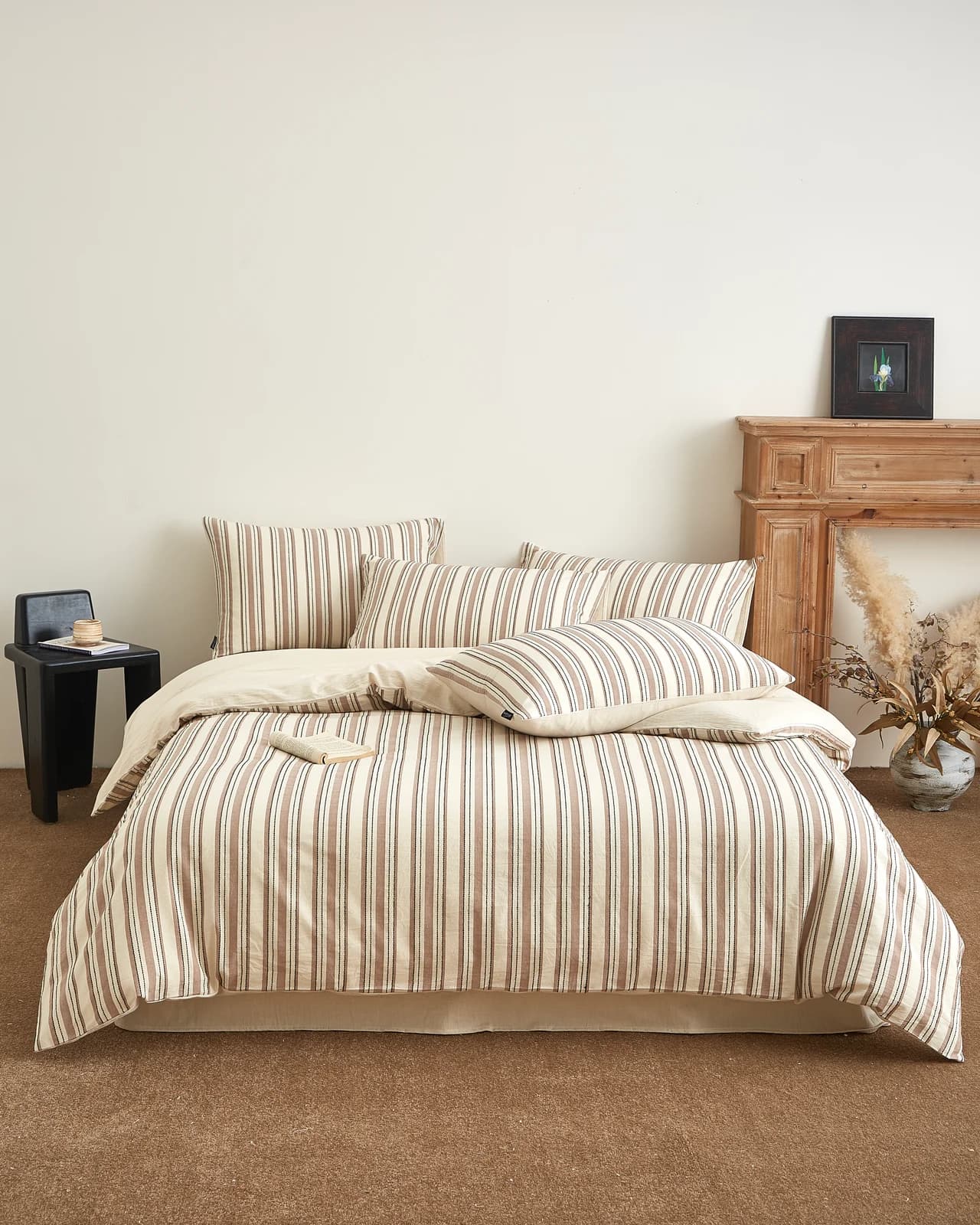
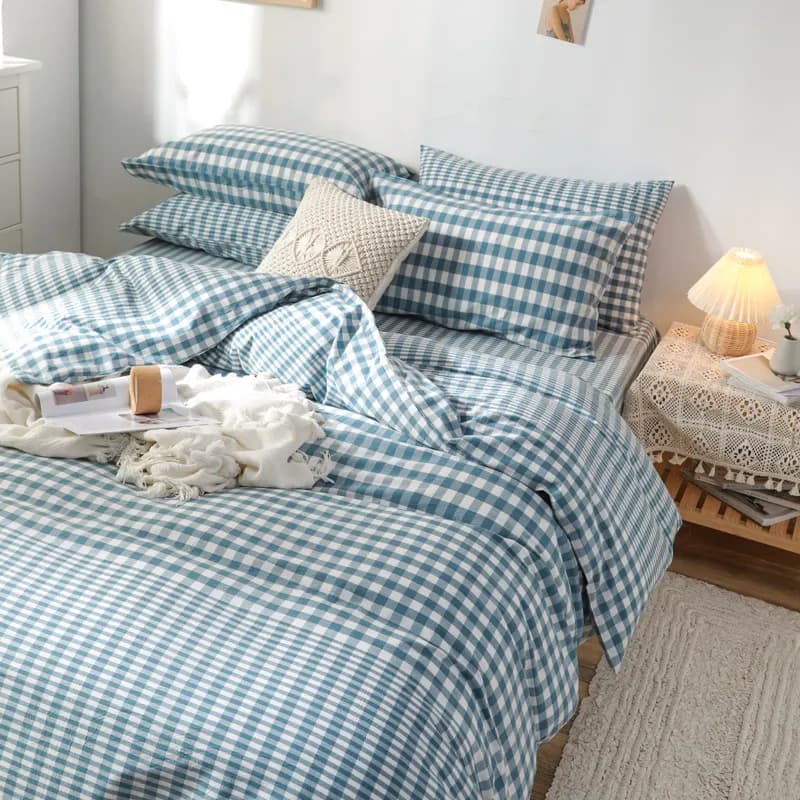
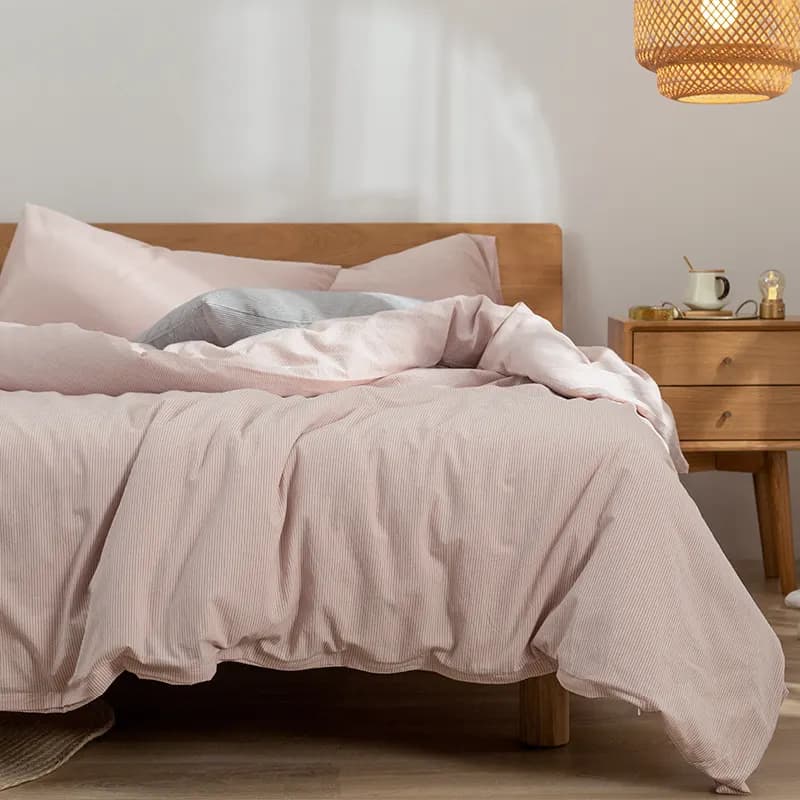
Choose bedding fabric by the finished construction and intended use: fiber, yarn, weave, density, fabric weight and finish work together. Cotton is a fiber, sateen is a weave and brushing is a finishing process; those names are not competing material categories. Compare samples made to a recorded specification, then confirm performance against the washing and use conditions in your buying brief.
Separate the six specification fields
Write fiber percentages first, followed by yarn information, weave, warp and weft density with units, fabric GSM and finish. A density code such as 133×72 needs its measurement basis; a yarn number needs its count system. Thread count describes construction, not a complete quality score. GSM describes mass per unit area. For a quilt, specify shell GSM separately from filling weight and total product weight. Two quotations using the same number can still describe different products if the component or unit is omitted.
Compare cotton constructions on the same basis
Percale and sateen describe different interlacing structures; twill has a diagonal structure, while jacquard describes patterned weaving. Cotton can appear in several of these constructions. Use matching composition and similar weight where possible when comparing hand and appearance, and record any differences rather than attributing everything to the weave. Examine seam behavior, opacity, surface sheen and drape in a finished sample. A single TC value does not establish shrinkage, pilling resistance or suitability for an industrial laundry.
Treat brushing and washing as specified finishes
Brushed cotton has a raised surface; a washed finish changes the supplied hand and appearance. Ask which finish is included and whether the sample represents bulk production. Compare initial lint, surface uniformity and appearance after the agreed care process. Do not assume a soft first touch proves long service life. For a seasonal assortment, consider how the buyer will describe the texture and care requirements, then validate the exact finished construction rather than promising a universal warmth ranking.
Identify cellulose fibers and brands accurately
Lyocell, viscose and modal need their correct fiber descriptions. TENCEL is a brand, not a substitute for stating the actual fiber and percentage; verify the documentation for any branded-fiber claim. A bamboo feedstock claim does not by itself establish whether the finished fiber is viscose or lyocell. Ask for traceable composition and the appropriate destination-market label. Do not transfer one producer's process, solvent-recovery figure or environmental claim to every product using the same generic fiber name.
Read cooling names as questions, not test results
Ice silk is a marketing description, not enough information to identify composition. Request the actual fiber blend, construction, finish, shell weight and filling details. If cool-touch or moisture-management performance is important, agree the test method, conditions and evidence for the quoted fabric. A photograph, fiber name or smooth hand cannot establish a measured cooling result. Compare the complete quilt under its intended conditions rather than treating a shell claim as proof about the entire filled product.
Build a sample comparison that can guide acceptance
Select candidate products from the linked categories and use one comparison sheet. Measure before and after the agreed laundering process, recording dimensions, shade, seam condition and appearance. State methods, units and acceptance limits before testing. Keep one approved reference and identify the sample revision. If a supplier changes composition, weight or finish to reach a price, request a new comparison rather than accepting it as equivalent. Certification scope and product-performance evidence should be checked separately.
Turn the selection into a quotation request
Send the chosen catalogue references, intended use, component list, finished dimensions and the fields below. Mark mandatory requirements separately from preferences so suppliers can identify suitable alternatives without silently changing the specification. BeddingTextilePro requires at least 100 sets for every color-and-size combination, with no pooling across colors or sizes. Ask the quotation to confirm construction, sample scope, packaging and any unresolved evidence. That creates a buying decision tied to a real product, rather than an unsupported claim that one fiber is always best.
Fabric comparison and RFQ fields
| Field | Candidate A / candidate B |
|---|---|
| Identity | Catalogue reference; composition percentages; brand evidence if claimed |
| Construction | Yarn and count system; weave; warp/weft density and units |
| Weight and finish | Fabric GSM; shell/fill separately; brushing/washing/other finish |
| Finished item | Components; dimensions; seams; closures; care process |
| Evidence and acceptance | Sample revision; method; limits; result; unresolved differences |
| Order | Each color × size quantity; packaging; destination; quote exclusions |
Frequently asked questions
- Is sateen a different fiber from cotton?
- No. Sateen is a weave; a sateen fabric can use cotton or another stated fiber. Record both composition and weave.
- Does higher thread count prove better quality?
- No. Assess the complete construction, finished sample and evidence for the required use instead of treating TC as a universal quality score.
- Are TENCEL and lyocell interchangeable labels?
- No. TENCEL is a brand. State the actual generic fiber and percentage and verify the right to make a branded-fiber claim.
- Does ice silk identify a fiber or verified cooling result?
- Neither on its own. Ask for composition and construction, then request relevant evidence if cooling performance is part of the specification.
- What is needed to compare two fabric prices?
- The same finished component scope, dimensions, composition, construction, finish, quantities, packaging and delivery basis, with substitutions declared.
Shop by fabric
Featured products
Related reading
- Sourcing Bedding in China: Supplier Checks to Approved Order
- Sourcing Bedding in Nantong and Dieshiqiao: Verify the Supply Route
- Sateen vs. Twill vs. Waffle vs. Brushed: A Cotton Bedding Weave Guide
- Tencel vs Cotton Bedding for Wholesale Buyers
- What Is GSM in Bedding? How to Spec Quilt & Duvet Weight
- What Is the Best Thread Count for Hotel Sheets?
- Bamboo vs TENCEL Bedding: Compare Supplier Samples for Your Range
- 13372 High-Density Cotton Explained: Why It Matters for Bedding Buyers
Sourcing bedding for your market?
Factory-direct quotes, 100-set minimum per color and size combination, full OEM/ODM customization. We reply within one business day.