In short
GSM (grams per square meter) is the weight of a fabric and the number used to spec how light or warm a quilt or duvet is. It differs from thread count, which measures weave density. Wholesale buyers use GSM to match quilt and duvet weight to season and climate: lighter for summer, heavier for winter.
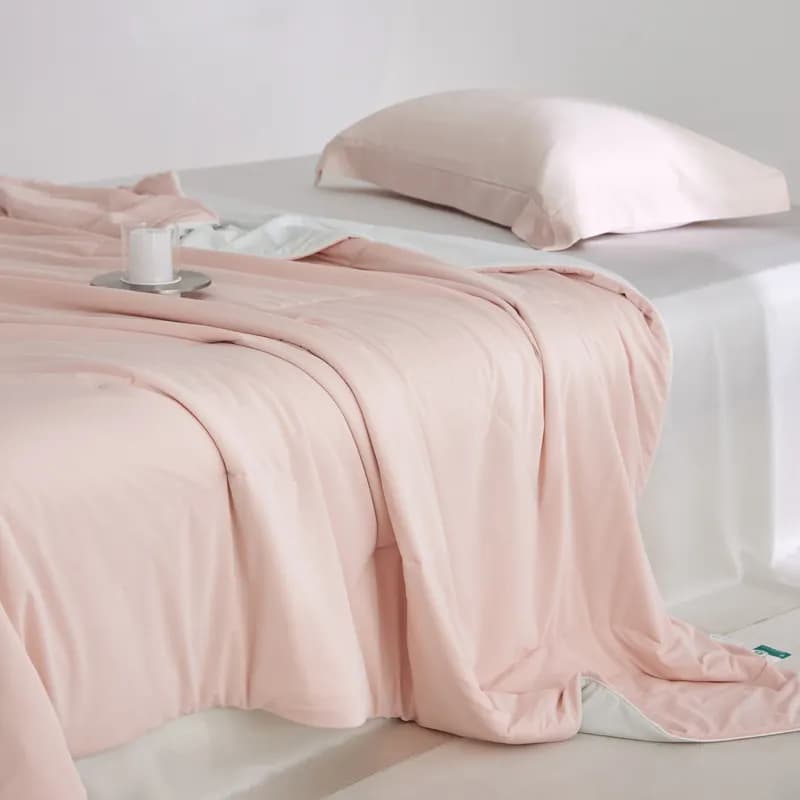
GSM is the fabric weight — and it's how you spec a summer vs winter quilt. Here's what the number means and how to use it.
GSM stands for grams per square meter — it's the weight of a fabric, and it's the number you use to spec how light or warm a quilt or duvet is. It's often confused with thread count, but they measure different things: thread count is about weave density, GSM is about weight. Here's how to use GSM when sourcing.
GSM vs thread count
Thread count is the number of threads per square inch (a measure of how tightly a sheet is woven). GSM is how much a square meter of the fabric weighs. A sheet has a thread count; a quilt or duvet is best described by GSM. You'll often see both on a spec sheet because they answer different questions: feel/density vs weight/warmth.
How GSM maps to season and warmth
- Light / summer quilts: roughly 120–165 GSM — cooling fibers like ice silk, modal and Tencel for hot weather.
- All-season: a mid GSM that works most of the year.
- Winter / warm: higher-fill duvets (specified by fill power and weight) for cold climates.
How to spec GSM for your market
Match GSM to your buyers' climate. For Gulf, Southern Europe and tropical markets, lead with light cooling quilts around 130–165 GSM. For cooler markets, offer warmer weights and down duvets. Our cooling quilts run light (for example ice silk at 165 GSM, Tencel at 130 GSM) precisely for hot-weather programs.
Thread count tells you how a sheet feels; GSM tells you how warm a quilt is. Spec quilts by GSM, and match it to the climate you're selling into.
BeddingTextilePro is a Nantong B2B supplier of bedding sets, summer quilts and hotel linen on source-factory direct supply — locked, dedicated production lines at large-scale Nantong mills, goods shipping direct from the mill — with a 100-set MOQ, full OEM/ODM customization and OEKO-TEX support. Request a wholesale quotation and our export team will reply within one business day.
Frequently asked questions
- What does GSM mean in bedding?
- GSM stands for grams per square meter — the weight of a fabric, and the number used to spec how light or warm a quilt or duvet is.
- What is the difference between GSM and thread count?
- Thread count measures weave density (threads per square inch) and describes how a sheet feels, while GSM measures weight and describes how warm a quilt or duvet is — they answer different questions and often both appear on a spec sheet.
- What GSM is right for a summer quilt?
- Light summer quilts run roughly 120–165 GSM in cooling fibers like ice silk, modal and Tencel; our cooling quilts sit in this band, for example ice silk at 165 GSM and Tencel at 130 GSM.
- How do I choose GSM for my market's climate?
- Lead with light cooling quilts around 130–165 GSM for Gulf, Southern European and tropical buyers, and offer higher fill weights and down duvets for cooler markets — match the weight to the climate you're selling into.
Sources & references
Featured products
Shop by category
Explore our services
Sourcing bedding for your market?
Factory-direct quotes, 100-set MOQ, full OEM/ODM customization. We reply within one business day.