In short
For a credible sustainable bedding line, Tencel (Lyocell) is generally the stronger, more genuinely eco-friendly choice, produced in a closed-loop process, while bamboo is usually chemically processed viscose. Both feel silky and are marketed as eco, but they are made very differently; wholesale buyers stocking a private-label eco range should weigh durability and defensible sustainability claims.
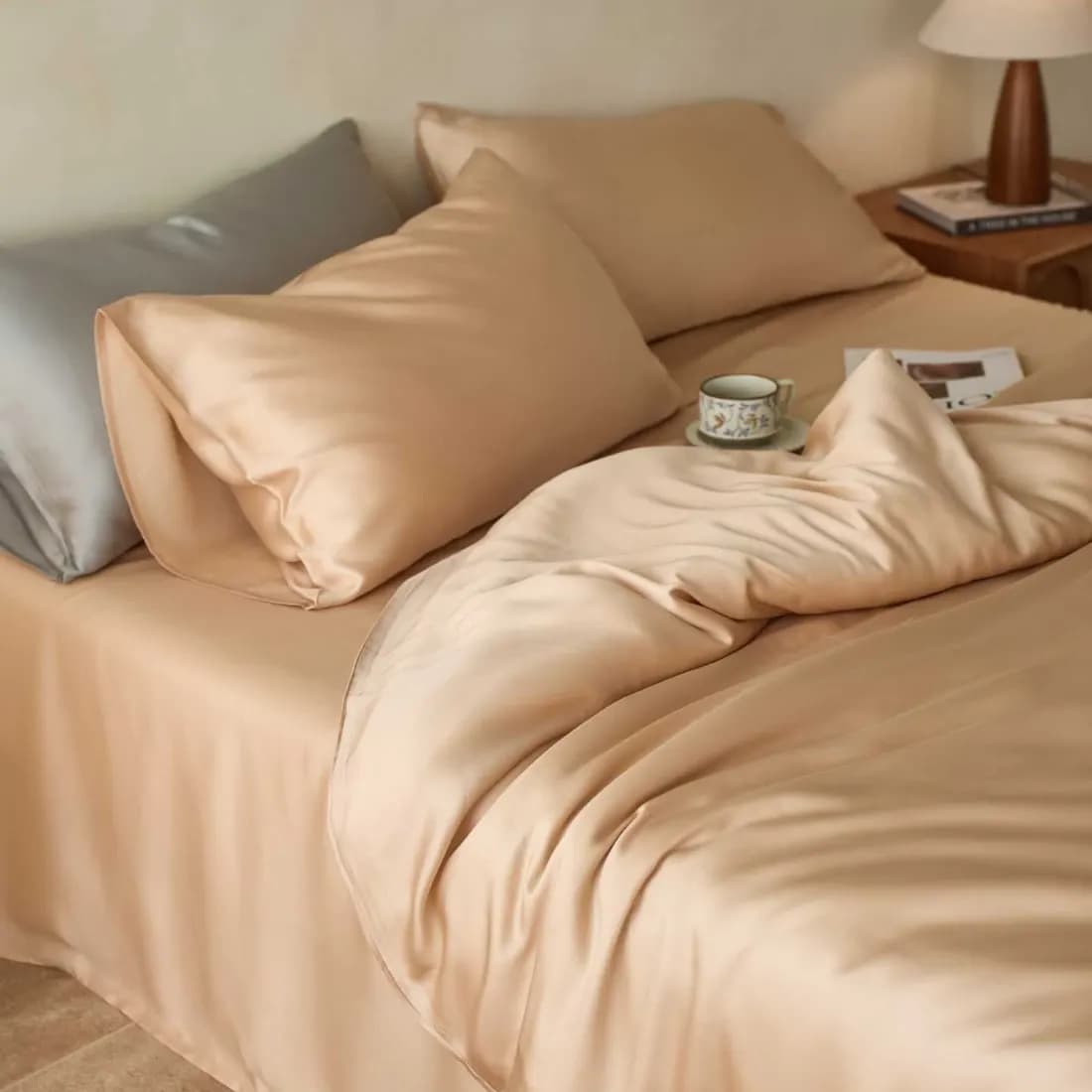
Both are marketed as eco — but bamboo viscose and Tencel are made very differently. Here's which to stock for a credible sustainable line.
Bamboo and Tencel are both sold as eco-friendly, silky-soft bedding fibers — but they're made very differently, and that difference matters for both your sustainability claims and your product's durability. The short answer for wholesale buyers: Tencel (Lyocell) is generally the stronger, more genuinely sustainable and more certifiable choice; "bamboo" bedding is usually bamboo viscose, which is softer-sounding but more chemically processed.
How each fiber is made
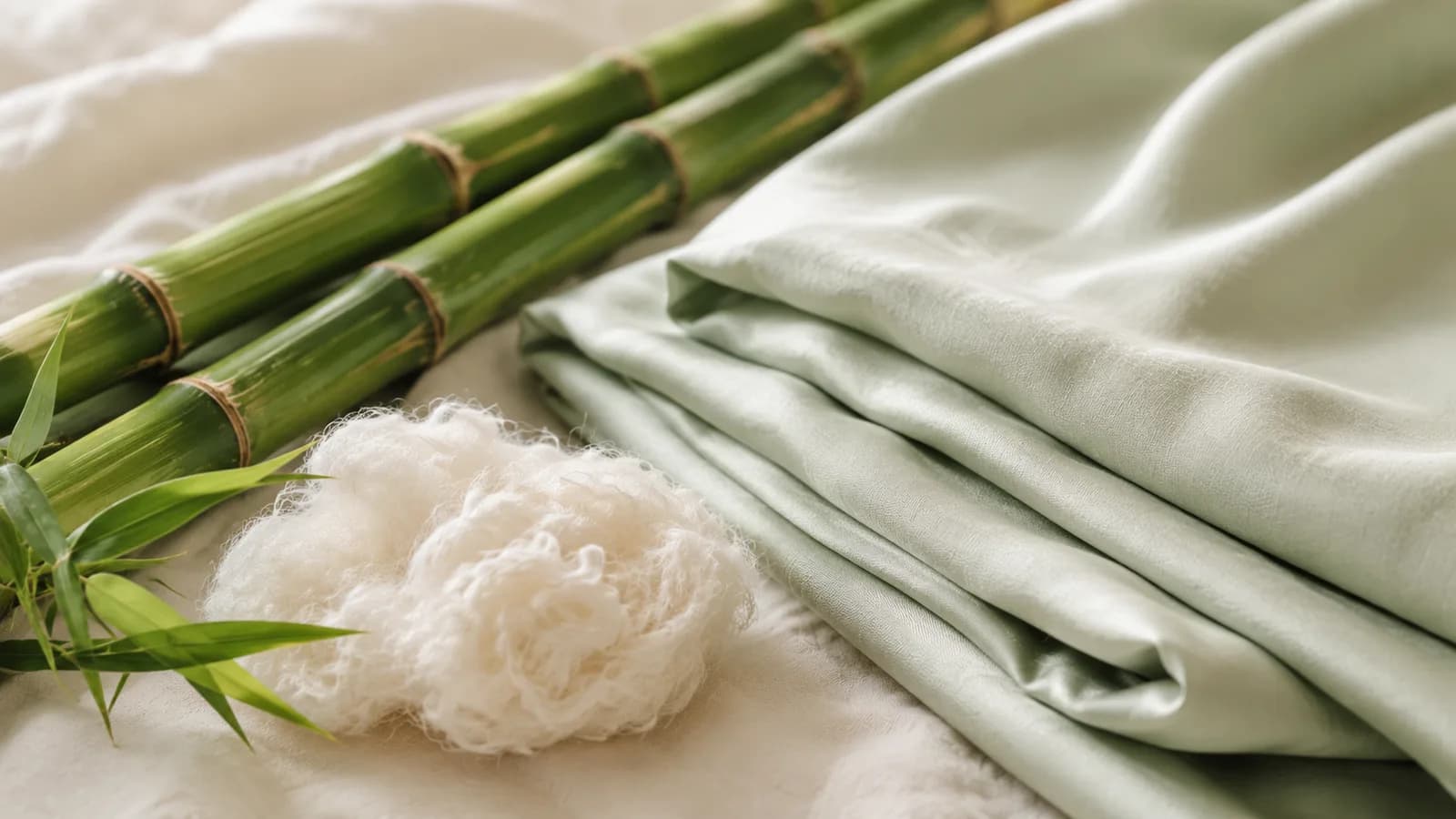
- Bamboo bedding is almost always bamboo viscose (rayon): bamboo pulp dissolved with strong chemicals in an open process. The result is soft, but the eco story is weaker than the name suggests.
- Tencel is Lyocell: cellulose (usually eucalyptus wood pulp) dissolved in a non-toxic solvent in a closed-loop system that recovers ~99% of the solvent — a genuinely lower-impact process.
Durability and feel
Both feel smooth and cool, but Lyocell is typically stronger (especially when wet), more colorfast and more resistant to pilling, so it holds up better through repeated laundering. Bamboo viscose can feel slightly softer out of the bag but tends to be less durable.
| Bamboo (viscose) | Tencel (Lyocell) | |
|---|---|---|
| What it really is | Bamboo viscose / rayon | Lyocell from wood pulp |
| How it's made | Strong chemicals, open process | Non-toxic solvent, closed-loop |
| Eco story | Weaker than the name suggests | ~99% solvent recovery, genuinely lower-impact |
| Durability | Less durable | Stronger, esp. when wet |
| Pilling / colorfast | Less resistant | More colorfast, resists pilling |
| Feel | Slightly softer out of bag | Smooth and cool |
| Best for | Only if market asks (be transparent) | Credible, certifiable eco line |
Which should you stock?
For a credible, defensible eco line, Tencel/Lyocell is the safer bet — it's better documented, more durable and easier to back with certification. If a market specifically asks for "bamboo," be transparent that it's bamboo viscose. We supply Lyocell/Tencel sets and cooling quilts from a 100-piece MOQ with OEKO-TEX support, so your sustainability claims are easy to stand behind.
"Bamboo" sounds greener; Tencel usually is greener. For a sustainability story you can defend, lead with Lyocell.
BeddingTextilePro is a Nantong B2B supplier of bedding sets, summer quilts and hotel linen on source-factory direct supply — locked, dedicated production lines at large-scale Nantong mills, goods shipping direct from the mill — with a 100-set MOQ, full OEM/ODM customization and OEKO-TEX support. Request a wholesale quotation and our export team will reply within one business day.
Frequently asked questions
- Is bamboo or Tencel more genuinely eco-friendly?
- Tencel (Lyocell) is generally the more genuinely sustainable choice. 'Bamboo' bedding is almost always bamboo viscose (rayon), made by dissolving bamboo pulp with strong chemicals in an open process, whereas Lyocell uses a non-toxic solvent in a closed-loop system that recovers about 99% of the solvent.
- Which fiber is more durable, bamboo or Lyocell?
- Lyocell is typically stronger — especially when wet — more colorfast and more resistant to pilling, so it holds up better through repeated laundering. Bamboo viscose can feel slightly softer out of the bag but tends to be less durable.
- Which should I stock for a credible sustainable line?
- For a defensible eco line, lead with Tencel/Lyocell — it's better documented, more durable and easier to back with certification. If a market specifically asks for 'bamboo,' be transparent that it's bamboo viscose.
- Can I source Lyocell/Tencel with certification at a low MOQ?
- Yes — we supply Lyocell/Tencel sets and cooling quilts from a 100-piece MOQ with OEKO-TEX support, so your sustainability claims are easy to stand behind. Factory-direct sourcing from Nantong keeps the certifiable eco fiber at workable wholesale pricing.
Sources & references
Featured products
Shop by category
Explore our services
Sourcing bedding for your market?
Factory-direct quotes, 100-set MOQ, full OEM/ODM customization. We reply within one business day.