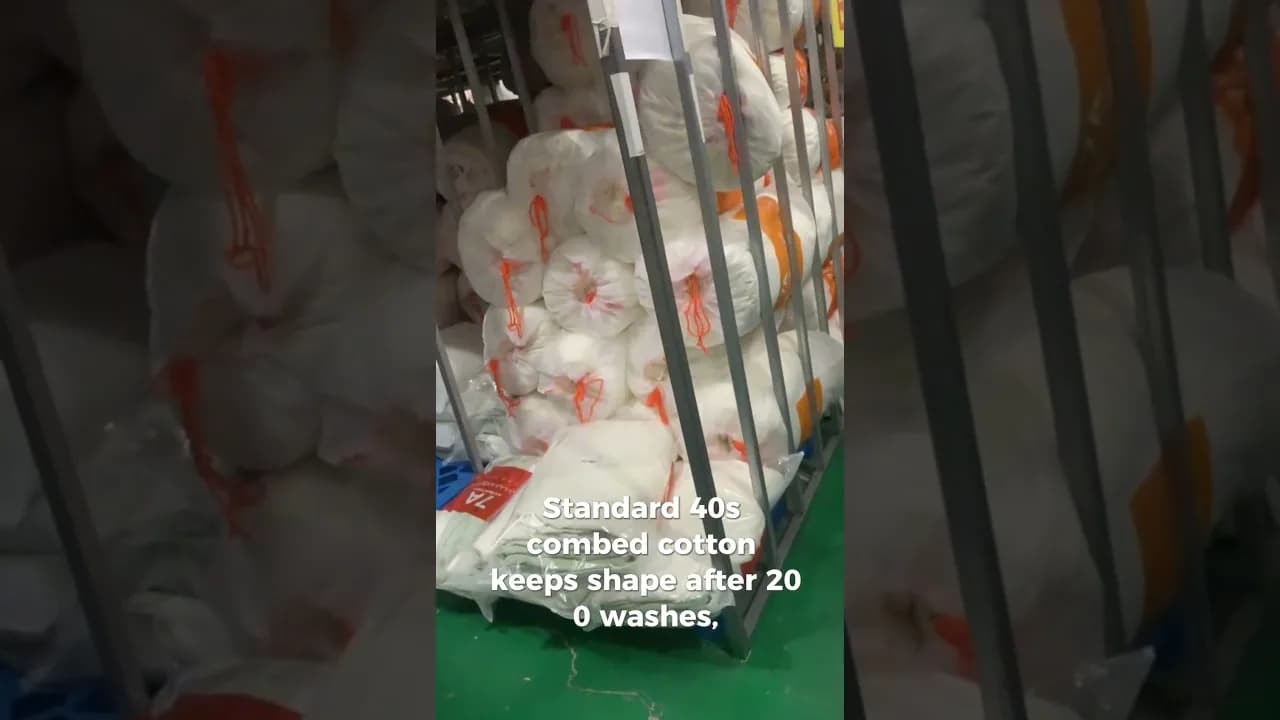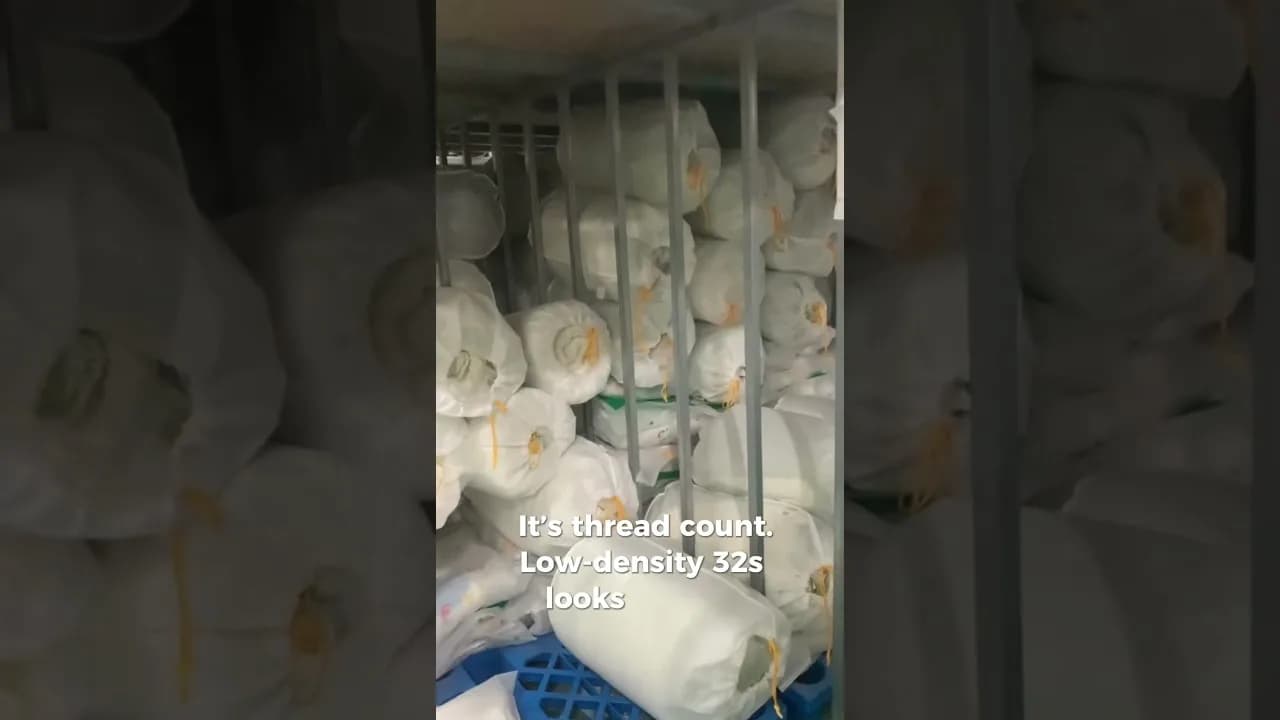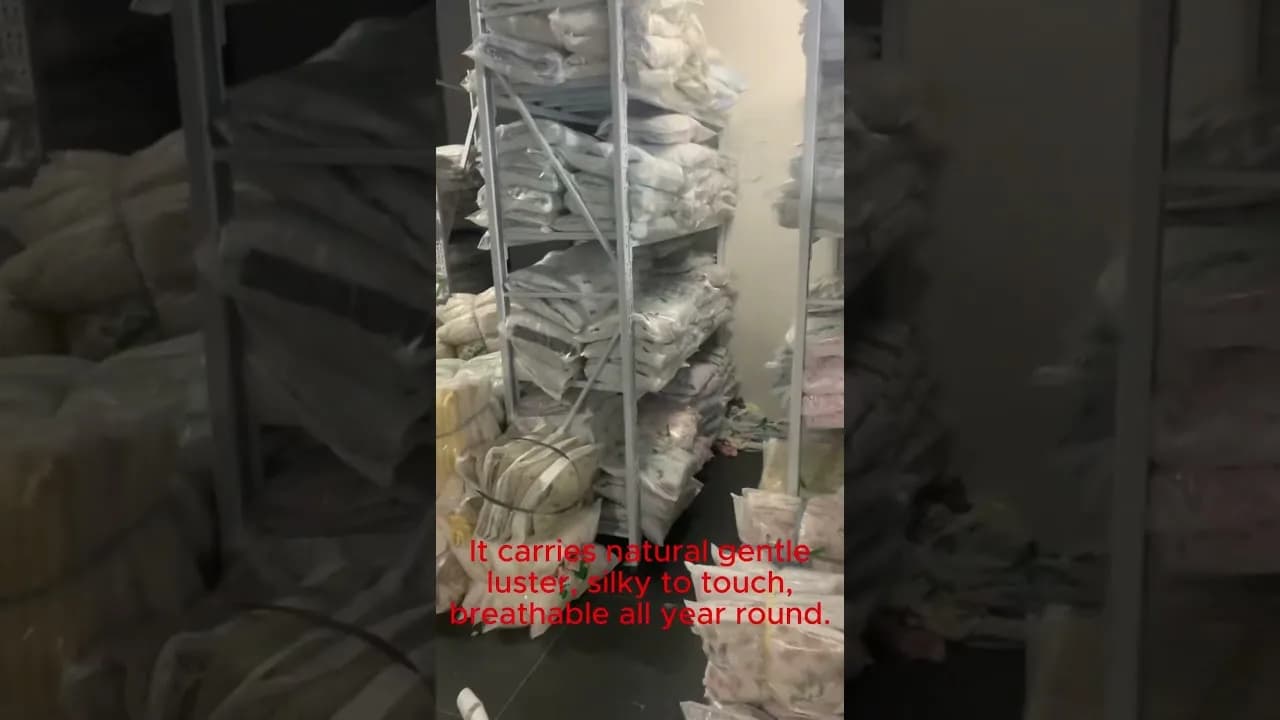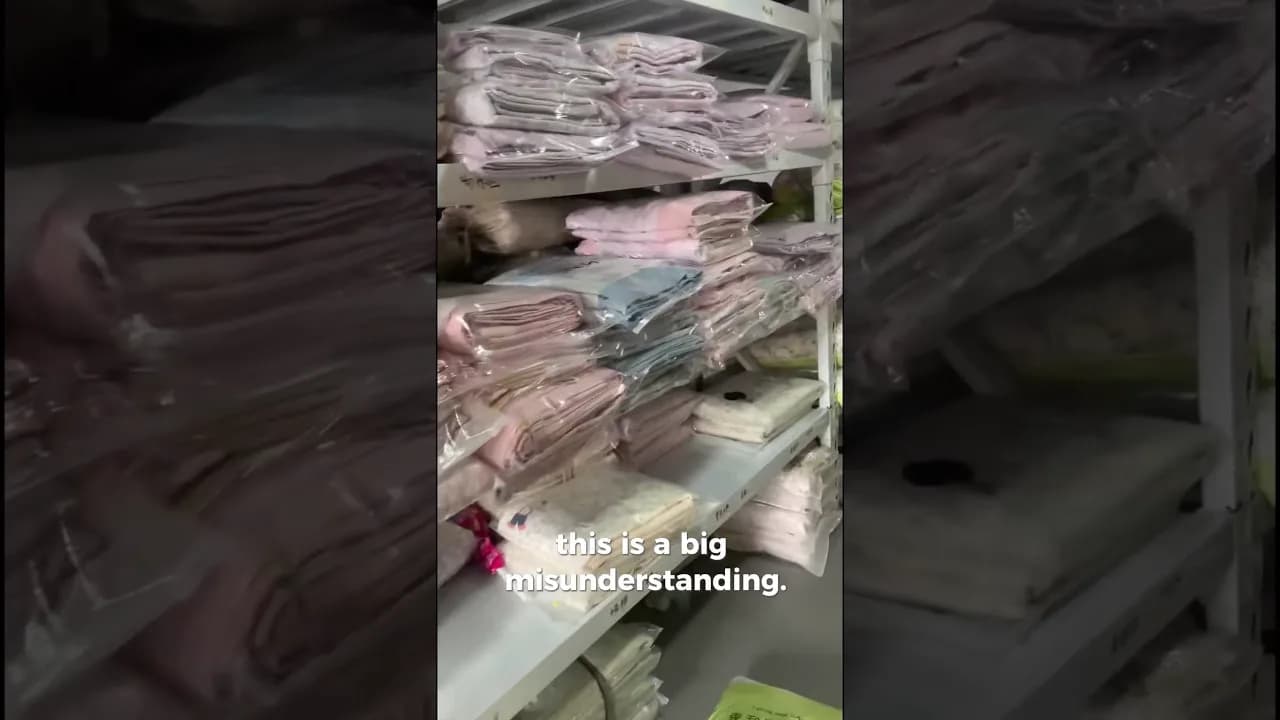
In short
- Video focus: 60S cotton is not automatically more breathable for summer. Its fine yarn can make a light, airy sheet, but it can also be woven densely into a warm, low-airflow sateen. Specify weave, finished GSM, thread density and finish alongside 60S; for hot sleepers, test the actual fabric rather than buying a yarn-count claim.
- Buyer value: Compare finished 60S constructions for the target climate
- Next step: Request fabric specifications.
A common assumption is that finer 60S cotton must be the coolest choice for summer. The video corrects that shortcut: comfort depends on the finished fabric construction, not yarn count alone. Use this buyer's guide to turn a vague 'breathable' request into a usable bedding specification.
How to use this fabric guide
Treat the named yarn count or construction as one field in the RFQ. Compare fibre, yarn construction, weave, warp-and-weft density, finished GSM, finish and a physical sample. A finished-fabric claim needs evidence from that finished construction; the yarn number alone is not a performance grade.
No: 60S cotton is not automatically more breathable in summer. As this video points out, that is a common misunderstanding. 60S only tells you that the yarn is fine; summer comfort comes from the finished construction: weave, thread density, cloth weight, finishing and how the fabric handles moisture. A light 60S percale can feel airy, while a dense 60S sateen can feel smooth but hold more still air. For buyers, the useful question is not 'is it 60S?' but 'what fabric has actually been woven from it?'
Why yarn count cannot answer the breathability question
In the English cotton-count system, 60S is a finer yarn than 40S. Fine yarns give a mill more design options: they may reduce fabric weight or allow more threads to be packed into the same area. Those are opposite outcomes for airflow. Air permeability is a property of the whole fabric, not a reward automatically attached to a higher count. Research on cotton fabrics identifies yarn dimensions, fabric cover and structural density as interacting variables; cotton's ability to take up moisture is useful, but it is not proof that every cotton sheet will feel cool.
| Light 60S percale | Dense 60S sateen | |
|---|---|---|
| Yarn | Fine 60S cotton | Fine 60S cotton |
| Construction | Plain weave, lower cover, lighter finished cloth | Sateen weave, higher cover, smoother finished cloth |
| Airflow | Usually more open when the density and weight are lower | Usually lower when the fabric is packed densely |
| Feel | Crisp and dry-touch | Smooth, fluid and closer to the body |
| Summer fit | Useful for hot sleepers when sample testing confirms it | Useful for a luxury hand; verify it is not too warm for the market |
| Buyer check | Ask for weave, GSM and density | Ask for weave, GSM and density |
Four specification levers that change summer comfort
Start with weave. Percale's one-over, one-under structure often gives a crisp surface; sateen's longer floats create a smoother, more fluid hand. Then read density and finished GSM together: either can make a fabric feel more substantial even when its yarn is fine. Finally, check finishing and the intended laundering programme. A buyer should compare samples after their expected wash process, because a label claim cannot show how a fabric will drape, ventilate or recover in real use.
| What to request | Why it matters | A useful buyer question |
|---|---|---|
| Weave | Controls surface, drape and open space between yarns | Is this percale, sateen or another construction? |
| Warp × weft density | Shows how tightly the yarns are packed | What is the actual ends-and-picks specification? |
| Finished GSM | Keeps a light yarn from hiding a heavy cloth | What is the finished fabric weight after washing? |
| Sample after laundering | Confirms hand, shrinkage and comfort in use | Can we assess a washed sample in our climate and laundry? |
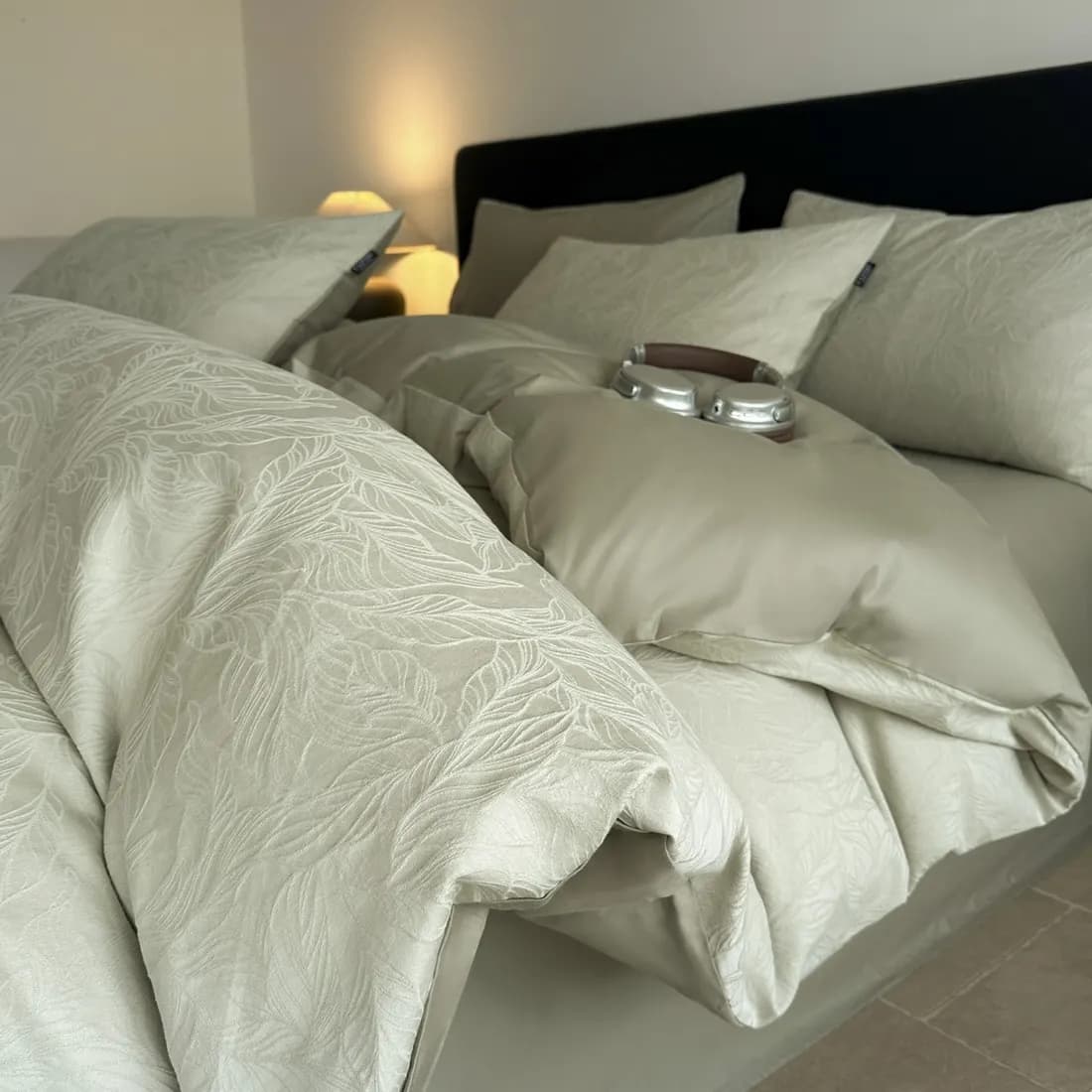
How to specify a 60S summer sheet without guessing
Write the brief around the end use: hot and humid guest rooms, dry heat, air-conditioned retail, or a premium all-season collection. Then request a named weave, finished GSM, density, fibre content and care method—not just '60S'. If cooling is a central promise, compare two or more laundered samples in the intended climate. This avoids a frequent sourcing error: choosing a finer yarn for a summer programme and receiving a dense construction designed for a soft, warm hand instead.
A five-step summer fabric check
From 'breathable' claim to a usable fabric decision
- 01
1. Define the sleeper and climate
Separate hot, humid and non-air-conditioned use from an air-conditioned luxury-room brief.
- 02
2. Choose the construction
Compare percale and sateen by hand, density and finished weight—not by label alone.
- 03
3. Ask for the full specification
Record 60S only alongside fibre, weave, warp × weft density and GSM.
- 04
4. Launder the samples
Check shrinkage, hand and comfort after the wash process the set will actually receive.
- 05
5. Approve the finished fabric
Use the approved sample as the reference for bulk, not a yarn-count headline.
For a premium summer programme, we can coordinate samples on locked, dedicated production lines at large Nantong mills against a written weave, density and finished-weight brief. Explore our sateen bedding sets for a smooth premium direction, or compare the yarn-count ladder before setting the target fabric.
What to include in your enquiry
Compare finished 60S constructions for the target climate
60s Floral Sateen 100% Cotton Four-Piece Bedding Set · What Is GSM in Bedding? How to Spec Quilt & Duvet Weight · Request fabric specifications
Technical specifications from related products
These values come from the linked product records. They describe related options and do not claim that the video shows the exact SKU unless it is explicitly marked as an exact product.
60s Floral Sateen 100% Cotton Four-Piece Bedding Set
- Material
- 100% Cotton
- Yarn Count
- 60s / 300TC
- Weaving
- Sateen jacquard
- Dyeing
- Reactive printing
- Fabric Density
- 173 × 113
- Weight
- 120–140 GSM
- Style
- Minimalist floral
- Function
- Soft · warm · skin-friendly · moisture-wicking · breathable
White 300TC Cotton Sateen Bedding Set
- Material
- 100% Cotton (combed)
- Weave
- Twill-sateen · silky lustrous face
- Thread count
- 300TC standard — 200 / 300 / 400 TC customizable
- Color
- Hotel white (custom colors available)
- Hand
- Silky · smooth · lustrous drape
- Function
- Breathable · durable for commercial laundering
- Season
- All-season
100% Cotton 13372 Four-Piece Bedding Set
- Material
- 100% Cotton
- Yarn Count
- 40s / 200TC
- Weaving
- Twill
- Dyeing
- Reactive printing
- Fabric Density
- 13372
- Weight
- 120 GSM
- Style
- Minimalist
- Function
- Soft · warm · skin-friendly · moisture-wicking · breathable
Frequently asked questions
- Is 60S cotton good for summer bedding?
- It can be, but 60S alone does not decide it. A fine 60S yarn can be made into a light percale that feels airy or a dense sateen that feels smoother and warmer. Confirm the weave, density, finished GSM and washed sample for the intended climate.
- Is 60S cotton more breathable than 40S?
- Not automatically. 60S means a finer yarn; breathability depends on the finished fabric's cover, weave, density and weight. A lightly constructed 40S may move more air than a densely woven 60S.
- Which weave is better for hot sleepers: percale or sateen?
- Percale is often the more open, crisp option; sateen is usually smoother and more fluid. Neither is universally cooler. Compare finished samples with their actual density and GSM, especially when a property or brand has a specific climate target.
- What should I ask for in a breathable bedding specification?
- Ask for fibre content, yarn count, weave, warp-and-weft density, finished GSM and a laundered sample. These details define the cloth more reliably than a standalone 'breathable' or '60S' claim.
- Can 60S bedding be developed for a summer collection?
- Yes. A 60S brief can be developed as a light summer fabric when the construction is deliberately specified and sampled. Coordinate the sample against your climate, wash process, hand-feel and retail or hospitality position before approving bulk.
Technical references
Similar fabric options
Related guides
Shop by category
Explore our services
Sourcing bedding for your market?
Factory-direct quotes, 100-set MOQ, full OEM/ODM customization. We reply within one business day.