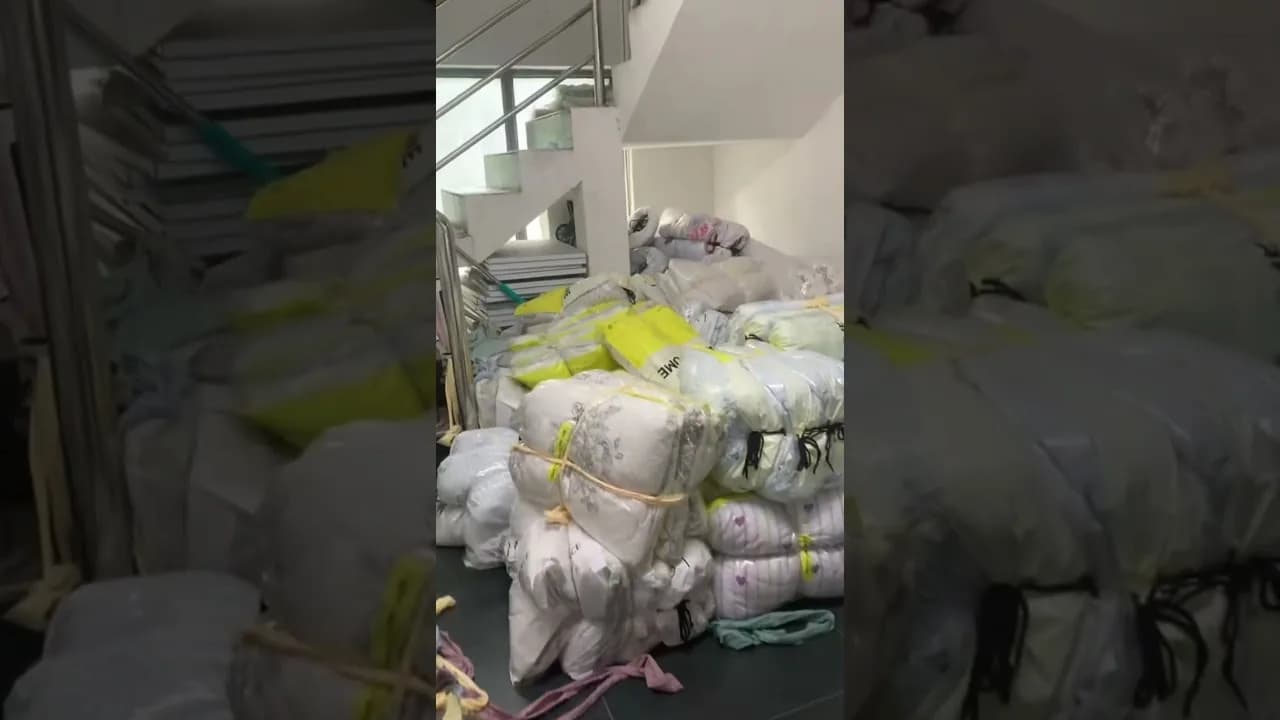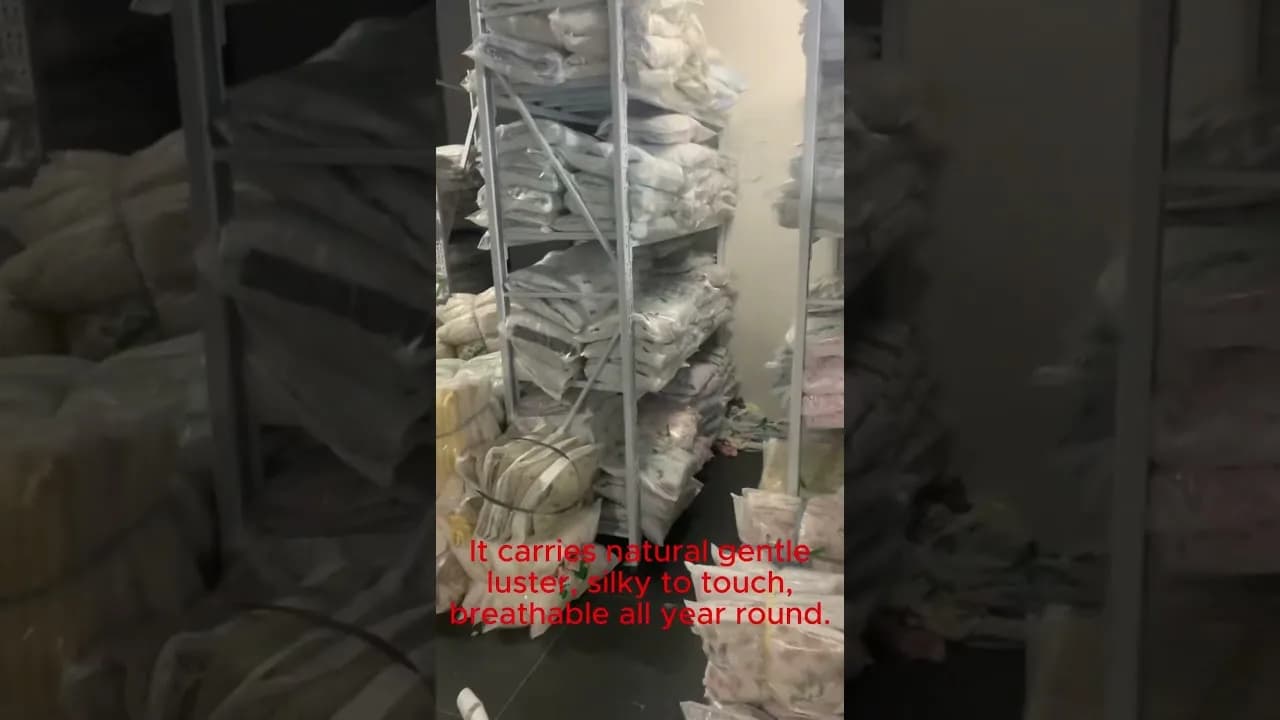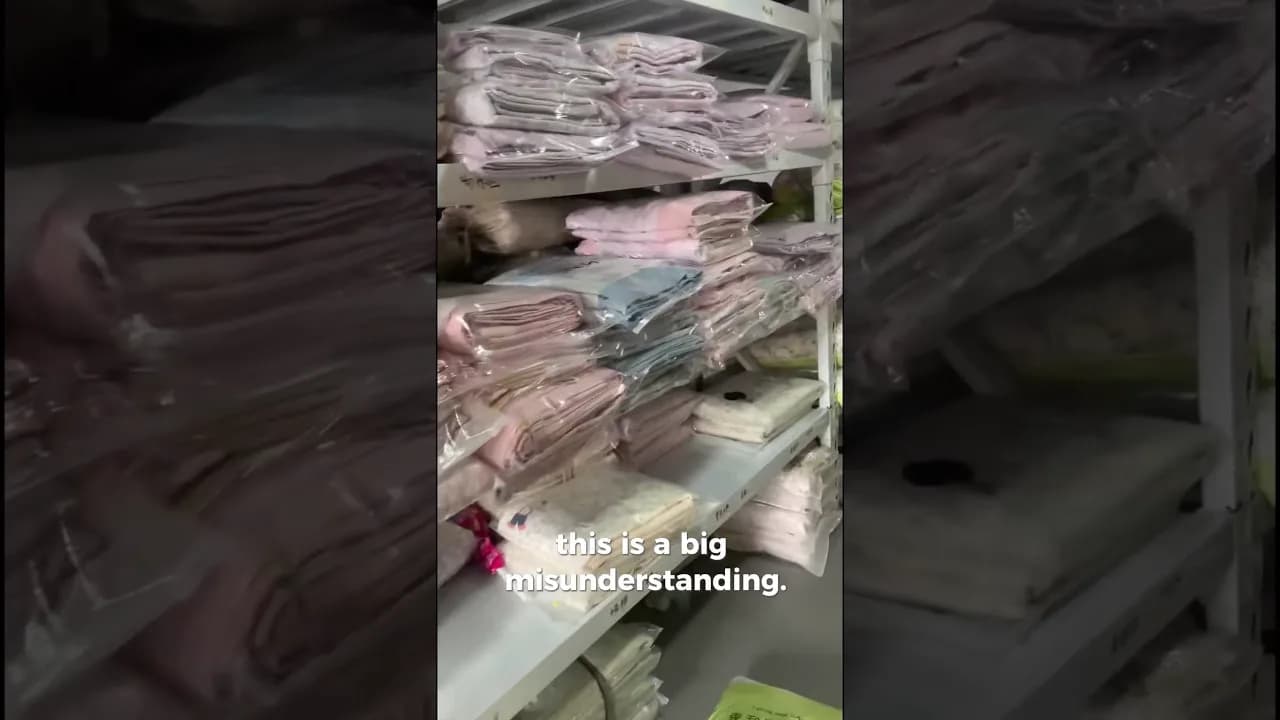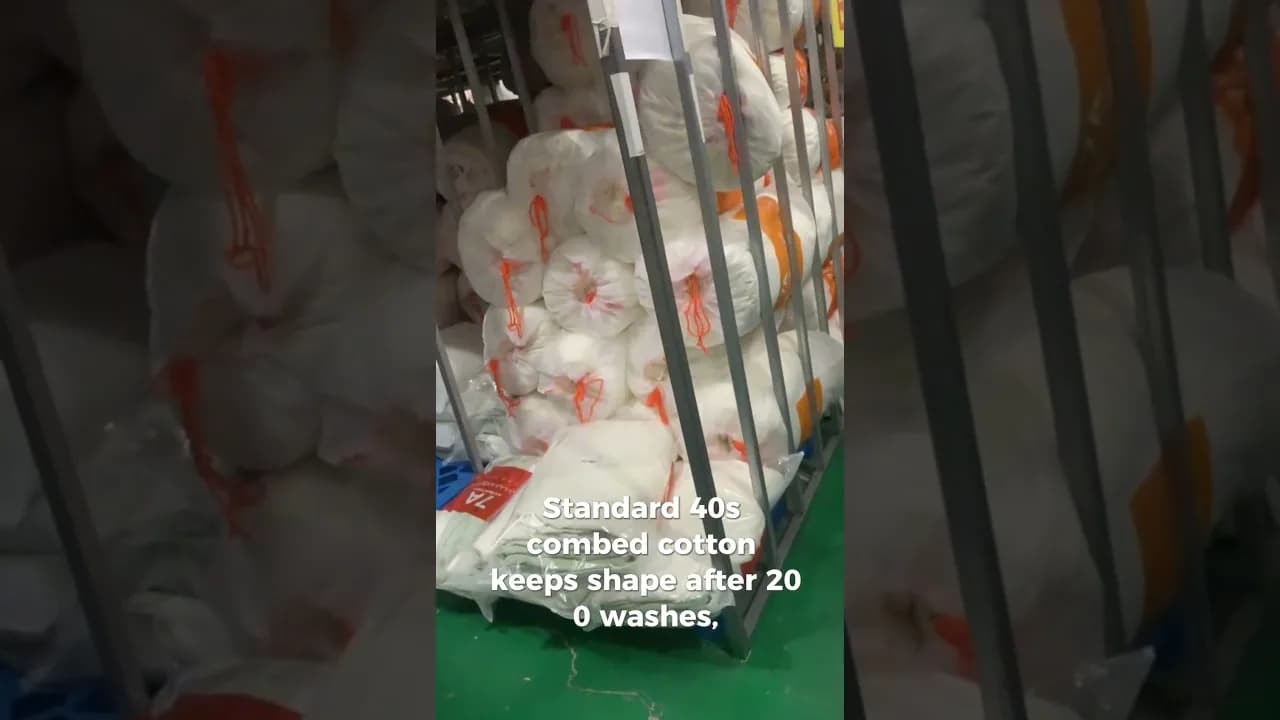
In short
- Video focus: 60S tells a buyer that the yarn is fine; it does not prove that the finished bedding is warm. A 60S yarn can support either a lighter, more open fabric or a denser sateen. Fibre + yarn + weave + density + GSM + finish determine finished-fabric performance, so compare construction data and samples.
- Buyer value: Compare complete 60S fabric constructions before sampling
- Next step: Request fabric specifications.
This video discusses 60S cotton and warmth, but yarn count alone cannot predict a finished sheet's thermal comfort. For a useful B2B comparison, hold fibre, yarn construction, weave, thread density, finished GSM and finish together, then compare actual samples in the intended room and wash conditions.
Technical values below come only from linked on-site product records. Treat them as related-option data unless the page explicitly marks an exact product match, and confirm the final order against its own approved sample and written specification.
Direct answer
This page explains the video topic for a bedding buyer and connects it to a documented product or category, the fields that still need comparison, and the next commercial action. Use visible video evidence and linked on-site data only; confirm the final programme through a written specification and approved sample.
How to use this fabric guide
Treat the named yarn count or construction as one field in the RFQ. Compare fibre, yarn construction, weave, warp-and-weft density, finished GSM, finish and a physical sample. A finished-fabric claim needs evidence from that finished construction; the yarn number alone is not a performance grade.
This video discusses 60S cotton and warmth. For a bedding buyer, 60S establishes yarn fineness only; it does not prove heat retention. Fibre + yarn + weave + density + GSM + finish determine finished-fabric performance. Compare complete constructions and actual samples rather than treating the count as a warmth grade.
What 60S tells a buyer
In the English cotton count system, a higher number means a finer yarn. A 60S brief still needs fibre composition, yarn construction, weave, ends and picks, finished GSM and finish. The mill can use the same nominal count in fabrics with different airflow, weight, hand and thermal comfort.
| RFQ field | Why it matters | What to compare |
|---|---|---|
| Fibre and yarn | Set material and yarn structure | Composition, count, ply and twist if specified |
| Weave and density | Change surface and airflow | Weave plus warp ends and weft picks |
| Finished GSM and finish | Change mass, hand and permeability | Finished values and allowed tolerance |
| Sample | Shows the combined result | Compare under the same room and wash conditions |
How buyers should compare 60S samples
A controlled sample comparison
- 01
Match the brief
Ask each supplier to quote the same fibre, weave, density, finished GSM and finish.
- 02
Check the documents
Confirm the sample label and specification sheet describe the same construction.
- 03
Wash consistently
Use the intended care method and keep the comparison conditions equal.
- 04
Approve the result
Judge hand, airflow and thermal comfort on the finished samples, then retain the approved reference.
Compare related product options
| Related option | Category | Material / construction | Supply route |
|---|---|---|---|
| White 300TC Cotton Sateen Bedding Set | Cotton Sateen Sets | 100% combed cotton, woven as a lustrous twill-sateen; supplied at 300TC and customizable to 200/300/400TC. | Similar fabric options |
| 100% Cotton 13372 Four-Piece Bedding Set | High-Density Cotton Sets | 100% cotton, reactive-printed for high color fastness. | Similar fabric options |
| Solid 100% Cotton 13372 Four-Piece Bedding Set | Solid Cotton Sets | 100% cotton, reactive-dyed for high color fastness. | Similar fabric options |
Buyer and search-intent fit
Use the video for visual context, then compare the linked product specification and a physical sample against the intended application. Send the target market, application and required customization with the enquiry so the quotation is tied to a written brief.
- Keyword
- 60S cotton bedding
- Related terms
- heat retention bedding · warm cotton sheets · high thread count warmth
- Primary intent
- Informational
White 300TC Cotton Sateen Bedding Set · Yarn Count Explained (40s / 60s / 80s / 100s): What It Means for Bedding Quality · Request fabric specifications
Technical specifications from related products
These values come from the linked product records. They describe related options and do not claim that the video shows the exact SKU unless it is explicitly marked as an exact product.
White 300TC Cotton Sateen Bedding Set
- Material
- 100% Cotton (combed)
- Weave
- Twill-sateen · silky lustrous face
- Thread count
- 300TC standard — 200 / 300 / 400 TC customizable
- Color
- Hotel white (custom colors available)
- Hand
- Silky · smooth · lustrous drape
- Function
- Breathable · durable for commercial laundering
- Season
- All-season
100% Cotton 13372 Four-Piece Bedding Set
- Material
- 100% Cotton
- Yarn Count
- 40s / 200TC
- Weaving
- Twill
- Dyeing
- Reactive printing
- Fabric Density
- 13372
- Weight
- 120 GSM
- Style
- Minimalist
- Function
- Soft · warm · skin-friendly · moisture-wicking · breathable
Solid 100% Cotton 13372 Four-Piece Bedding Set
- Material
- 100% Cotton
- Yarn Count
- 40s / 250TC
- Weaving
- Twill
- Dyeing
- Reactive dyeing
- Fabric Density
- 13372
- Weight
- 130 GSM
- Style
- Minimalist solid
- Function
- Soft · warm · skin-friendly · moisture-wicking · breathable
Frequently asked questions
- Does 60S cotton automatically make warm bedding?
- No. 60S identifies yarn fineness. Fibre, yarn construction, weave, density, finished GSM and finish determine the finished fabric, so two 60S fabrics can feel and perform differently.
- What should a buyer request with a 60S quotation?
- Request composition, yarn construction, weave, warp-and-weft density, finished GSM, finish, sizes and a physical sample. Compare suppliers on the same specification rather than the count alone.
- Which fields should be compared besides yarn count?
- Compare fibre, yarn construction, weave, warp-and-weft density, finished GSM, finish and the approved sample. Add a relevant finished-fabric test only when the intended claim requires it.
- Can I request a physical bedding sample?
- Yes. Send the target use and construction brief, then request a sample carrying the same specification that will govern the bulk order.
- Are the linked products the exact item in the video?
- Only links explicitly marked Exact Product are confirmed matches. Other links are related products or similar fabric options for comparison.
Technical references
Similar fabric options
Related guides
Shop by category
Explore our services
Sourcing bedding for your market?
Factory-direct quotes, 100-set MOQ, full OEM/ODM customization. We reply within one business day.