TL:DR
- Video focus: 21S means a relatively coarse yarn; it does not prove that bedding will wick moisture, breathe better or keep a sleeper dry. Fibre + yarn + weave + density + GSM + finish determine finished-fabric performance. Ask for the complete construction and compare finished samples with a suitable absorbency or wicking method.
- Buyer value: Request finished-fabric evidence instead of inferring performance from count
- Next step: Request fabric specifications.
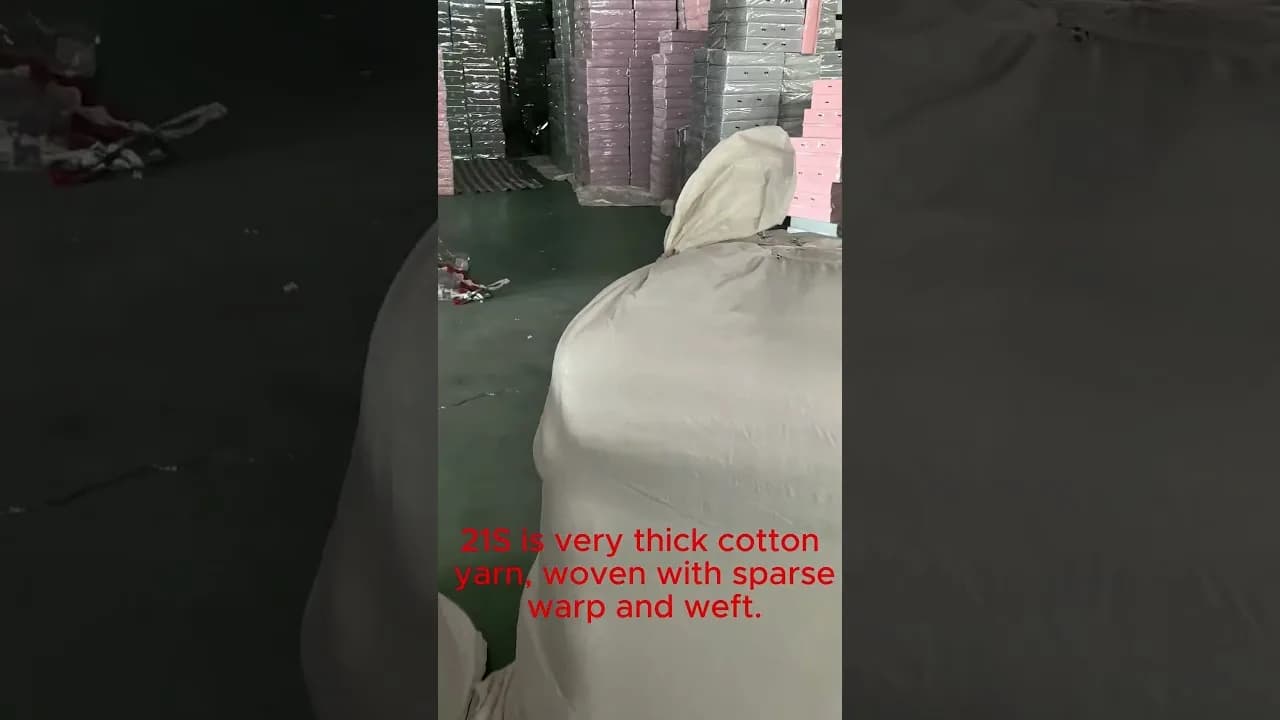
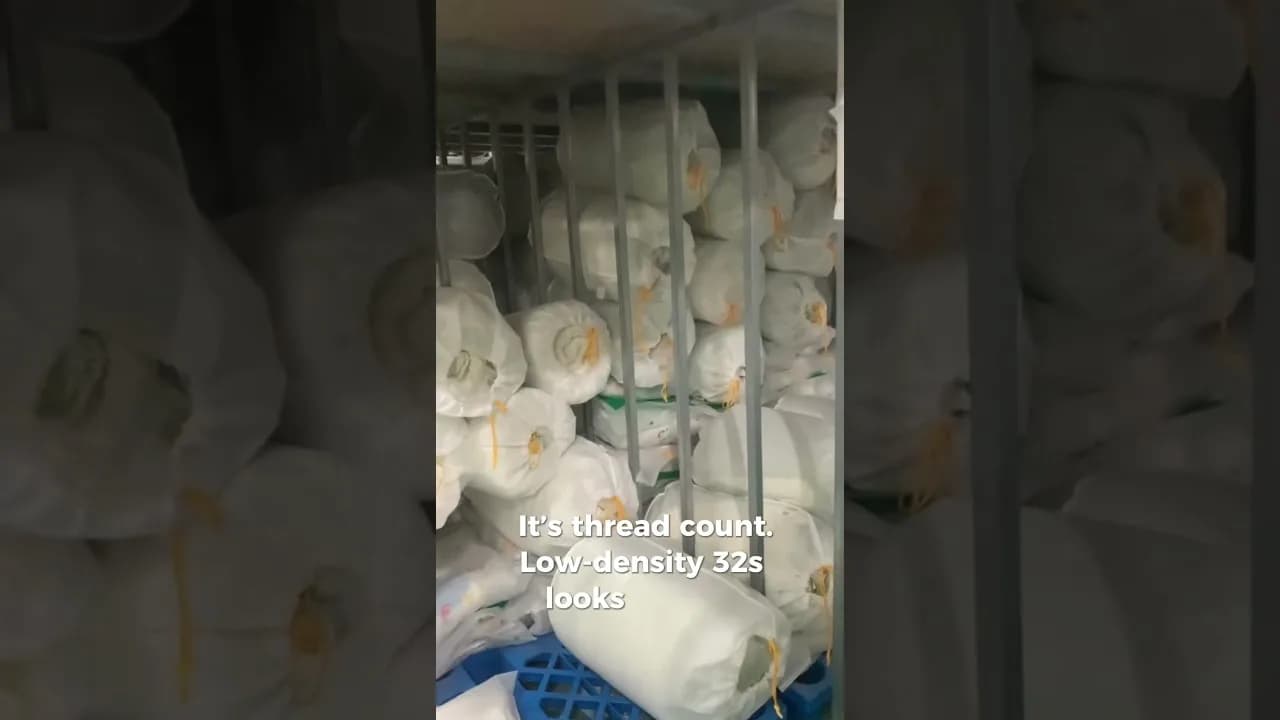
This video raises a useful buyer question: can a 21S cotton construction manage moisture? The count alone cannot answer it. Fibre, yarn twist and structure, weave, thread density, finished GSM and finish all change how a fabric wets, spreads liquid, breathes and dries, so compare the actual finished samples.
How to use this fabric guide
Treat the named yarn count or construction as one field in the RFQ. Compare fibre, yarn construction, weave, warp-and-weft density, finished GSM, finish and a physical sample. A finished-fabric claim needs evidence from that finished construction; the yarn number alone is not a performance grade.
This video asks whether a 21S cotton construction can manage moisture. The count alone cannot answer that question. Fibre + yarn + weave + density + GSM + finish determine finished-fabric performance. AATCC moisture methods evaluate finished textile fabrics, so buyers should compare the actual construction and test the finished samples.
What 21S tells a buyer
21S identifies a relatively coarse yarn in the English cotton count system. It does not state fibre composition, twist, weave openness, density, finished GSM, finish, absorbency, wicking distance or drying time. Those fields must be supplied separately or omitted when evidence is unavailable.
| Buyer question | Evidence to request | Do not assume |
|---|---|---|
| What is the fabric? | Composition, count, ply or twist if specified | That 21S proves fibre behaviour |
| How is it constructed? | Weave, ends and picks, finished GSM | That coarse yarn guarantees openness |
| How is it finished? | Softener or other finish and intended care | That the finish leaves wetting unchanged |
| Does it manage moisture? | Finished-fabric absorbency, wicking or drying evidence | That count predicts the result |
How buyers should compare moisture-management samples
Evidence-first comparison
- 01
Define the use
State climate, application and intended wash method.
- 02
Match constructions
Compare fibre, weave, density, finished GSM and finish alongside count.
- 03
Choose the method
Ask which finished-fabric absorbency, wicking or drying method supports the claim.
- 04
Approve after wash
Evaluate the samples after the intended care process and retain the approved reference.
Compare bedding options for your project
| Bedding option | Category | Material / construction | How to use it |
|---|---|---|---|
| 100% Cotton 13372 Four-Piece Bedding Set | High-Density Cotton Sets | 100% cotton, reactive-printed for high color fastness. | Similar fabric options |
| Solid 100% Cotton 13372 Four-Piece Bedding Set | Solid Cotton Sets | 100% cotton, reactive-dyed for high color fastness. | Similar fabric options |
| Check 100% Cotton 13372 Four-Piece Bedding Set | Check Cotton Sets | 100% cotton, reactive-printed for high color fastness. | Similar fabric options |
| Waffle Weave 100% Cotton Four-Piece Bedding Set | Waffle Weave Cotton Sets | 100% cotton, waffle-weave, reactive-dyed for high color fastness. | Similar fabric options |
What to include in your enquiry
Request finished-fabric evidence instead of inferring performance from count
100% Cotton 13372 Four-Piece Bedding Set · What Is GSM in Bedding? How to Spec Quilt & Duvet Weight · Request fabric specifications
Technical specifications from related products
These values come from the linked product records. They describe related options and do not claim that the video shows the exact SKU unless it is explicitly marked as an exact product.
100% Cotton 13372 Four-Piece Bedding Set
- Material
- 100% Cotton
- Yarn Count
- 40s / 200TC
- Weaving
- Twill
- Dyeing
- Reactive printing
- Fabric Density
- 13372
- Weight
- 120 GSM
- Style
- Minimalist
- Function
- Soft · warm · skin-friendly · moisture-wicking · breathable
Solid 100% Cotton 13372 Four-Piece Bedding Set
- Material
- 100% Cotton
- Yarn Count
- 40s / 250TC
- Weaving
- Twill
- Dyeing
- Reactive dyeing
- Fabric Density
- 13372
- Weight
- 130 GSM
- Style
- Minimalist solid
- Function
- Soft · warm · skin-friendly · moisture-wicking · breathable
Check 100% Cotton 13372 Four-Piece Bedding Set
- Material
- 100% Cotton
- Yarn Count
- 40s / 200TC
- Weaving
- Twill
- Dyeing
- Reactive printing
- Fabric Density
- 13372
- Weight
- 120 GSM
- Style
- Minimalist check
- Function
- Soft · warm · skin-friendly · moisture-wicking · breathable
Waffle Weave 100% Cotton Four-Piece Bedding Set
- Material
- 100% Cotton
- Yarn Count
- 40s / 250TC
- Weaving
- Waffle weave
- Dyeing
- Reactive dyeing
- Fabric Density
- 13372
- Weight
- 130–150 GSM
- Style
- Minimalist textured
- Function
- Soft · warm · skin-friendly · moisture-wicking · breathable
Frequently asked questions
- Does 21S cotton automatically wick moisture well?
- No. 21S identifies yarn fineness, while moisture behaviour depends on fibre, yarn structure, weave, density, finished GSM and finish. Ask for finished-fabric evidence and compare samples.
- What moisture evidence should a bedding buyer request?
- Ask what finished-fabric property is claimed—absorbency, vertical or horizontal wicking, drying or water-vapour transmission—and which relevant method was used on the actual construction.
- Which fields should be compared besides yarn count?
- Compare fibre, yarn construction, weave, warp-and-weft density, finished GSM, finish and the approved sample. Add a relevant finished-fabric test only when the intended claim requires it.
- Can I request a physical bedding sample?
- Yes. Send the target use and construction brief, then request a sample carrying the same specification that will govern the bulk order.
- Are the linked products the exact item in the video?
- Only links explicitly marked Exact Product are confirmed matches. Other links are related products or similar fabric options for comparison.
Technical references
Similar fabric options
Related guides
Shop by category
Explore our services
Sourcing bedding for your market?
Factory-direct quotes, 100-set minimum per color and size combination, full OEM/ODM customization. We reply within one business day.