TL:DR
Bamboo identifies a possible feedstock, not a sufficient name for regenerated-cellulose bedding. Verify whether the fiber is viscose/rayon or qualifies as lyocell, then match composition, label wording and evidence to the exact article. US rules permit lyocell for qualifying fibers; both materials do not have to be labeled simply rayon. Neither name proves a finished bedding performance or environmental advantage.
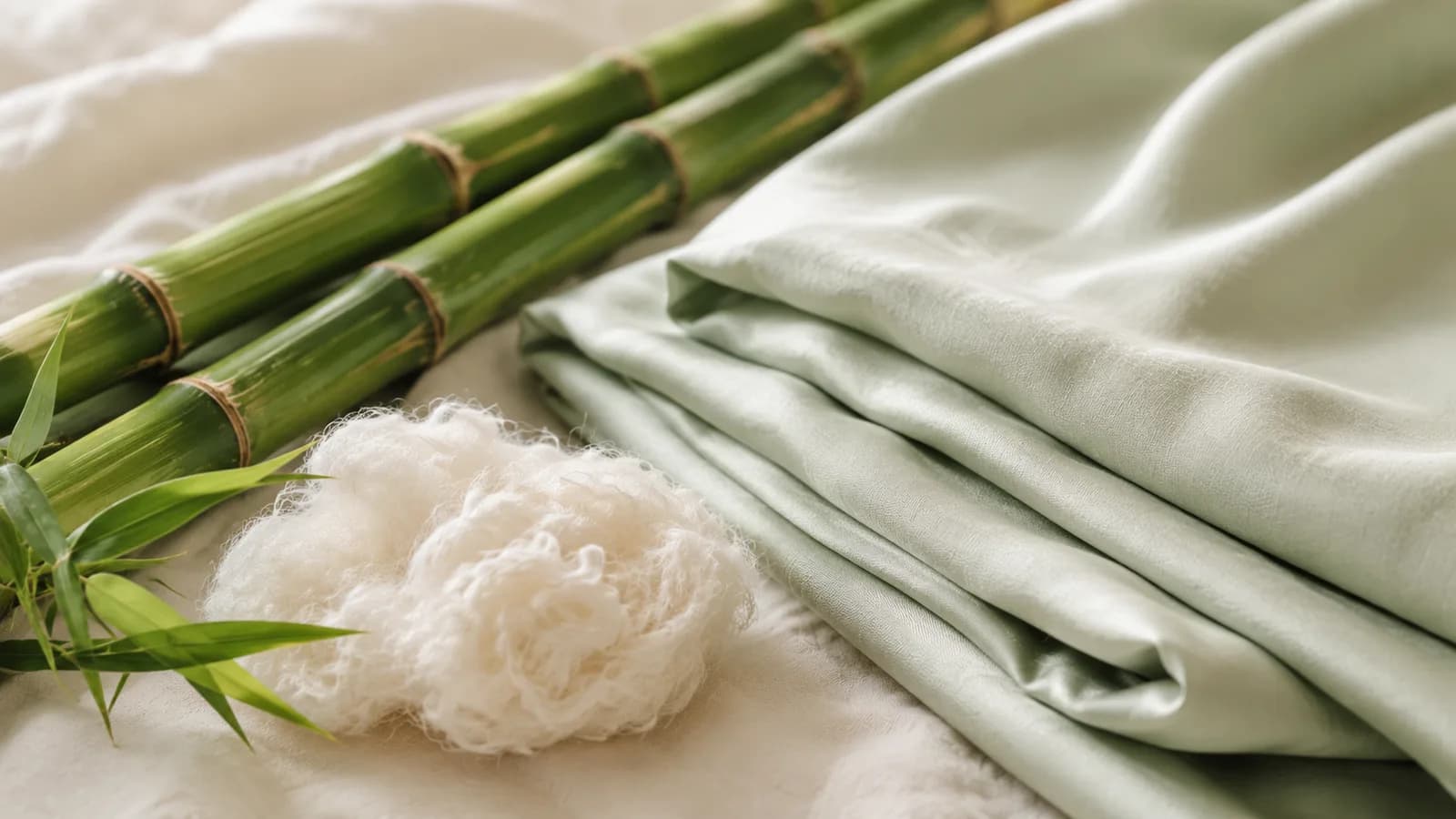
Verify bamboo lyocell and viscose fiber identity, US label wording, process claims and sample evidence before approving a bedding specification.
Start with fiber identity, not the bamboo adjective
A buyer approving a bamboo bedding label needs three distinct answers: what the finished fiber is, which plant supplied its cellulose and what evidence connects that claim to the ordered material. A soft sample or a bamboo photograph cannot answer those questions. Ask the supplier to state the generic fiber, percentages and component coverage on the quotation. Keep the shell, filling and other separately described parts distinct; a claim about one fabric must not silently become a claim about every part of the set.
Bamboo lyocell and viscose need different verification
For a proposed viscose product, request documentation identifying the regenerated fiber and any claimed bamboo origin. For a proposed lyocell product, request the fiber identity and evidence supporting that designation rather than inferring it from a silky hand. The US definition permits the name lyocell for cellulose precipitated from an organic solution without the specified chemical substitution or intermediates. The useful purchasing distinction is the documented fiber and process, not a supplier's interchangeable use of bamboo, rayon and lyocell in a catalogue.
Copyable fiber-identity and label approval sheet
| Decision | Supplier entry | Buyer approval check |
|---|---|---|
| Generic fiber | Viscose/rayon or qualifying lyocell; percentage by component | Matches the material documentation and finished article |
| Feedstock | Bamboo origin claimed? Evidence reference and scope | Plant source is not used instead of the fiber name |
| Process statement | Producer; process; claim boundary; current evidence | No universal recovery rate or borrowed factory claim |
| Performance | Construction; care method; agreed limits; sample results | Finished-product evidence, not a fiber-name assumption |
| Artwork | Destination; wording; revision; responsible reviewer | Approved statement matches the documented material |
| Order | Product; color × size quantities; pack; destination | At least 100 sets per combination, no pooling |

Use the correct US label without overstating the rule
The FTC's bamboo guidance says manufactured fiber derived from bamboo should use its proper generic name rather than simply bamboo. Read that alongside 16 CFR §303.7(d), which expressly permits lyocell when its definition is met. It is therefore inaccurate to say that every bamboo-derived lyocell product must be labeled only rayon. Before approving artwork, have the responsible labeling reviewer confirm the complete statement, percentages and applicable destination requirements. Keep the evidence with the approved artwork revision, not just in a sales conversation.
Keep process claims specific to the producer
Do not write a universal solvent-recovery percentage or call every lyocell product non-toxic, closed-loop or more sustainable on the strength of a generic fiber name. Ask who produced the fiber, which process and boundary a claim covers, and which current documents support it. Equally, do not describe every viscose producer as using an uncontrolled open process. A producer's statement can support questions about that producer; it does not establish BeddingTextilePro's facilities, environmental results or the identity of an unrelated material lot.

Approve finished-fabric performance separately
A purchasing team still needs composition, yarn, weave, density, fabric weight, finish and make-up for the proposed bedding. Compare dimensions, appearance, seams and hand before and after the agreed care process, with methods and acceptance limits decided in advance. Do not promise a universal advantage in pilling, colorfastness, wet strength or hotel wash life from the words lyocell or viscose alone. If two samples differ in finish or construction, record those differences before attributing the result to fiber type.
Turn the evidence into an approvable purchasing brief
Use the table as a copyable decision record and attach the supplier's answers, material documents and sample reference. Mark an unsupported claim as an open item, not as approved marketing copy. The linked catalogue products are lyocell sourcing references; their photographs do not prove bamboo origin or comparative test results. For a BeddingTextilePro quotation, send the selected product, finished components and sizes, destination, packaging and quantities. Each color-and-size combination needs at least 100 sets, with no pooling across colors or sizes. Ask the reply to identify every unresolved identity or labeling decision.
Frequently asked questions
- Must both bamboo lyocell and viscose be labeled rayon in the US?
- No. US rules permit lyocell for fibers meeting its definition. Use the appropriate generic name and verified composition rather than bamboo alone.
- Does bamboo origin prove a lyocell process?
- No. Feedstock and fiber identity are different facts. Obtain evidence for both when both are claimed.
- Is all bamboo lyocell TENCEL?
- No. TENCEL is Lenzing's brand. A generic lyocell claim does not establish branded-fiber identity or permission to use the name.
- Which material is always more sustainable or durable?
- Neither can be ranked universally from the name. Compare producer-specific evidence and the finished construction under agreed conditions.
- What should accompany a label approval?
- Component composition, fiber and feedstock evidence, the exact wording and market, artwork revision, sample reference and named approval owner.
Sources & references
Shop by category
Explore our services
Sourcing bedding for your market?
Factory-direct quotes, 100-set minimum per color and size combination, full OEM/ODM customization. We reply within one business day.