TL:DR
Pure linen bedding is 100 percent flax, and fiber origin drives quality and price more than any other factor. French and Belgian (Western European) flax is the premium benchmark, yielding longer, finer, stronger fibers with a softer hand than cheaper Eastern European or Asian flax. Wholesale buyers should spec GSM, weave, stonewashed finish and positioning accordingly.
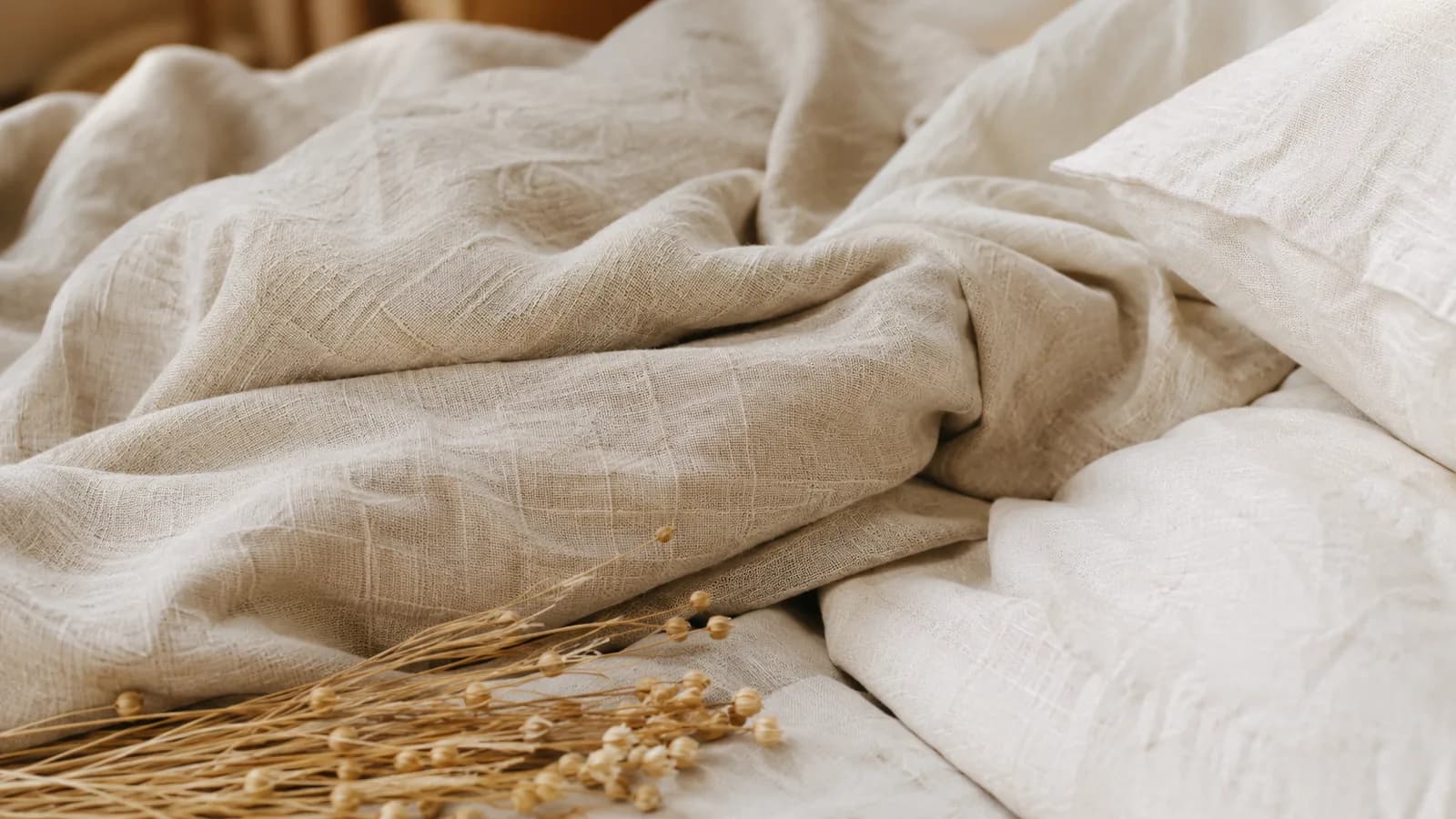
What pure flax linen is, why French and Belgian flax outperforms cheaper origins, and how a wholesale buyer specs GSM, finish, weave, and positioning for premium linen bedding.
Pure linen bedding is made from 100% flax fiber, and the origin of that flax is the single biggest driver of quality and price. French and Belgian (Western European) flax is the premium benchmark: it produces longer, finer, stronger fibers with a softer hand and better durability than cheaper Eastern European or Asian flax. For a wholesale buyer, specifying origin, GSM, weave, and finish up front is how you lock in a repeatable premium product.
What "pure linen" actually means
Linen is the fabric; flax is the plant. "Pure linen" or "100% linen" means the yarn is spun entirely from flax bast fibers with no cotton, viscose, or polyester blended in. Flax fibers are long, hollow, and cellulose-rich, which is why linen is highly absorbent, fast-drying, and breathable. It is also one of the strongest natural fibers and actually gains strength when wet, so a well-made pure linen sheet outlasts most cotton.
A key selling point for retail positioning: linen softens with every wash. New pure linen has a crisp, textured hand that relaxes into a lived-in softness over months of use, developing a patina rather than wearing out. Buyers should set that expectation with their own customers instead of treating initial crispness as a defect.
Why French and Belgian flax leads
Roughly three-quarters of the world's long flax fiber is grown in a narrow coastal band across France, Belgium, and the Netherlands. The maritime climate, rich soil, and centuries of agronomic know-how let this flax grow rain-fed (no irrigation) and be dew-retted in the field, producing long, uniform, high-tenacity fibers. Cheaper flax from other regions is often shorter-stapled and less consistent, which shows up as weaker yarn, more slubs, and a coarser hand.
Two neutral certifications signal genuine European origin and are worth requesting from any mill: European Flax / Masters of FLAX FIBRE (certifies the raw flax was grown in France, Belgium, or the Netherlands, with third-party traceability audited by Bureau Veritas) and Masters of LINEN (certifies the fabric was also spun and woven in Europe). These are traceability marks, not health marks — pair them with OEKO-TEX STANDARD 100 for tested chemical safety.
| European/French/Belgian flax linen | Generic/other linen | |
|---|---|---|
| Origin & fiber | France, Belgium, Netherlands; rain-fed, dew-retted long fiber | Mixed/undisclosed origins; often shorter, irrigated or water-retted fiber |
| Fiber quality | Long, fine, uniform, high-tenacity flax | Shorter staple, more slubs, less consistent |
| Hand-feel | Smooth, refined, softens cleanly over time | Coarser, can stay rough or feel dry |
| Durability | Very high; ideal for daily-wash bedding | Moderate; weaker yarn, more breakage over washes |
| Certification | European Flax / Masters of LINEN traceability available | Rarely traceable or certified for origin |
| Price | Higher raw-fiber cost, higher landed cost | Lower cost, thinner margins to defend |
| Best positioning | Premium / luxury linen line, story-driven retail | Entry-level or value linen; competes on price |
GSM, weave, and finish: the spec that defines your product
GSM (grams per square meter)
Linen bedding is specified by GSM, not thread count. Common ranges: roughly 120-150 GSM for lightweight summer sheeting, 160-185 GSM as the sweet spot for year-round bedding (durable yet soft), and 190-250 GSM for a heavier, more structured hand. Higher GSM generally means more durability and drape but higher cost and slower drying. Lock a target GSM with a tolerance (for example, 165 GSM +/- 5%) in your tech pack.
Weave
- Plain weave: the standard for linen bedding — breathable, textured, and airy.
- Herringbone / twill: a subtle diagonal pattern, slightly denser and more structured.
- Yarn-dyed stripes or chambray: color woven in (not printed) for durable, premium-looking designs.
Finish
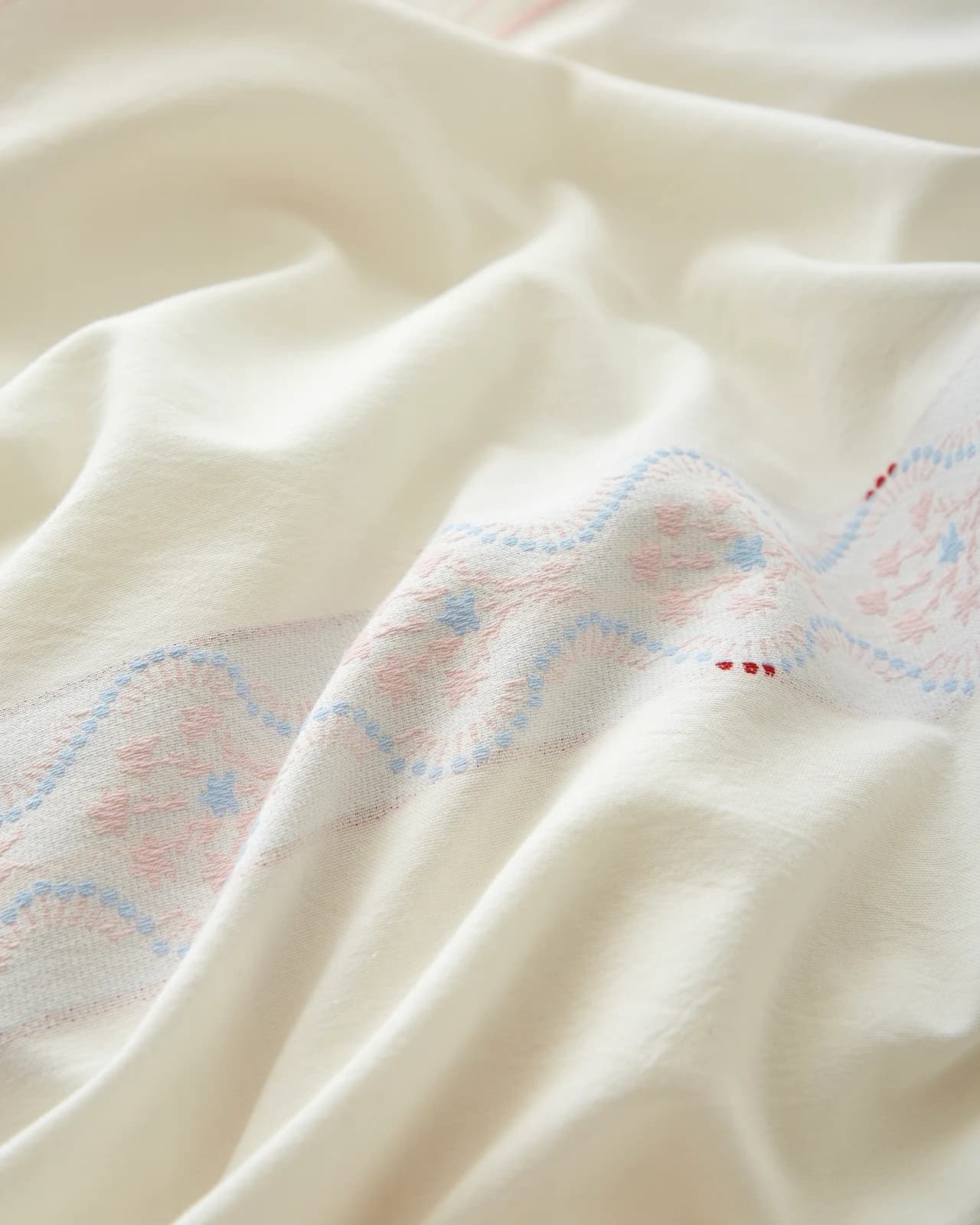
Finish is where perceived quality is won. Stonewashed and garment-washed (enzyme/mechanical) finishes pre-soften and pre-relax the fabric so it arrives with that coveted lived-in hand and reduced shrinkage. Specify the finish explicitly — "stonewashed, soft hand" — plus residual shrinkage (aim for under 5% after garment wash) and colorfastness targets.
Cost, care, and how to position it
Pure European linen carries a higher landed cost than cotton or blended linen because the raw fiber is more expensive, spinning long flax is slower, and washed finishes add processing steps. Defend that cost with a story: origin-certified flax, durability, thermoregulation, and a product that improves with age. Where a lower price point is needed, a linen-cotton blend keeps much of the look and breathability at a friendlier cost.
- 1.Spec origin first: request European Flax / Masters of LINEN documentation and OEKO-TEX STANDARD 100 test reports.
- 2.Fix GSM, weave, and finish with tolerances in a signed tech pack.
- 3.Approve a physical strike-off and a washed-and-dried lab dip for shrinkage and colorfastness.
- 4.Set clear care guidance for your customers: machine wash cool/warm, gentle cycle, tumble dry low, remove slightly damp — wrinkles are part of the linen story.
Origin is not a marketing footnote in linen — it is the fiber spec. Get the flax right and every downstream choice becomes easier to defend.
Sourcing pure linen bedding factory-direct
BeddingTextilePro supplies pure linen and linen-blend bedding factory-direct from our locked, dedicated lines at large-scale mills in Nantong, China — 100-set minimum per color and size combination, full OEM/ODM (custom GSM, weave, stonewashed finishes, yarn-dyed designs, and private-label packaging), and OEKO-TEX STANDARD 100 certified fabrics. We can source European Flax-certified fiber on request and help you spec and position a premium linen program end to end.
Frequently asked questions
- Is French or Belgian flax really better than cheaper linen?
- Yes for premium bedding. Western European flax (France, Belgium, Netherlands) grows rain-fed and dew-retted, producing longer, finer, stronger, more uniform fibers than most other origins. That means a smoother hand, better durability over repeated washing, and a cleaner softening curve — which is why it commands a premium and suits story-driven retail positioning.
- How do I spec linen bedding weight — thread count or GSM?
- Use GSM (grams per square meter), not thread count, which is a cotton metric. Roughly 120-150 GSM is lightweight summer sheeting, 160-185 GSM is the year-round sweet spot, and 190-250 GSM is heavier and more structured. Lock a target with a tolerance (e.g., 165 GSM +/- 5%) in your tech pack.
- What is stonewashed or garment-washed linen?
- It is a mechanical/enzyme finishing process that pre-softens and pre-relaxes the fabric before shipping, so the bedding arrives with a soft, lived-in hand and reduced further shrinkage. It is the finish most associated with premium linen bedding. Always specify the finish and residual shrinkage (aim under 5%) in your spec.
- Should I choose pure linen or a linen-cotton blend?
- Pure 100% linen delivers maximum breathability, durability, and the authentic softens-with-age character at a higher price. A linen-cotton blend keeps much of the look, breathability, and a smoother initial hand at a lower cost, which helps hit value price points. Many wholesale programs carry both to cover a premium tier and an accessible tier.
Sources & references
- 1.Alliance for European Flax-Linen & Hemp (CELC) — Masters of FLAX FIBRE certification
- 2.Alliance for European Flax-Linen & Hemp (CELC) — Masters of LINEN certification
- 3.Alliance for European Flax-Linen & Hemp (CELC) — Flax fibre performance and properties
- 4.Alliance for European Flax-Linen & Hemp (CELC) — About European flax
- 5.OEKO-TEX — STANDARD 100 (tested for harmful substances)
Shop by category
Explore our services
Sourcing bedding for your market?
Factory-direct quotes, 100-set minimum per color and size combination, full OEM/ODM customization. We reply within one business day.