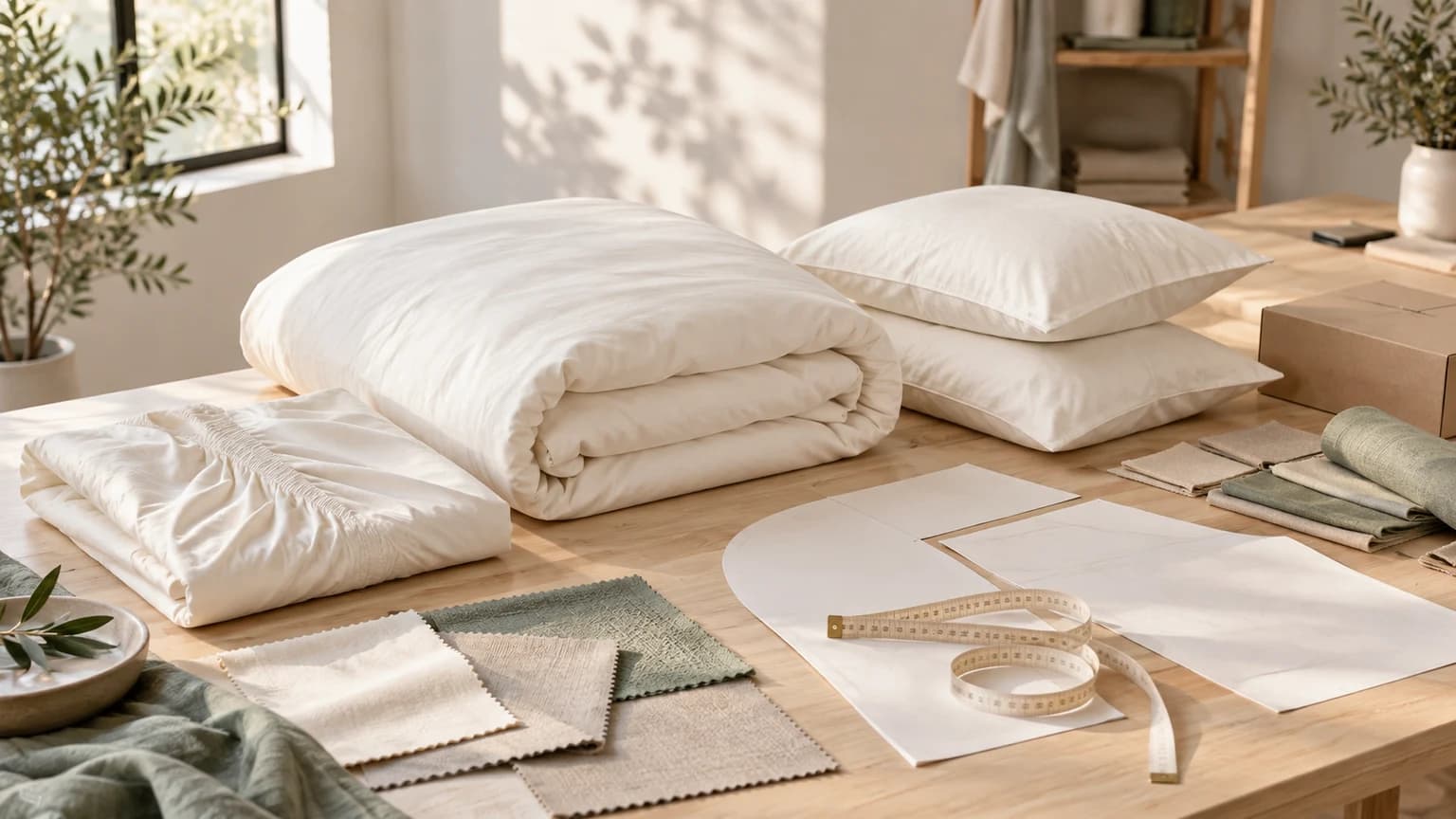
TL:DR
Do not quote export bedding from “Queen”, “King” or “Double” alone. Start with the destination market and the physical mattress or duvet insert, then record each finished sheet, cover and pillowcase dimension in one versioned size matrix. Ask suppliers to price that matrix by colour × size, and test the selected sample on the intended bed before bulk. Each colour-and-size combination starts at 100 sets and cannot be pooled.
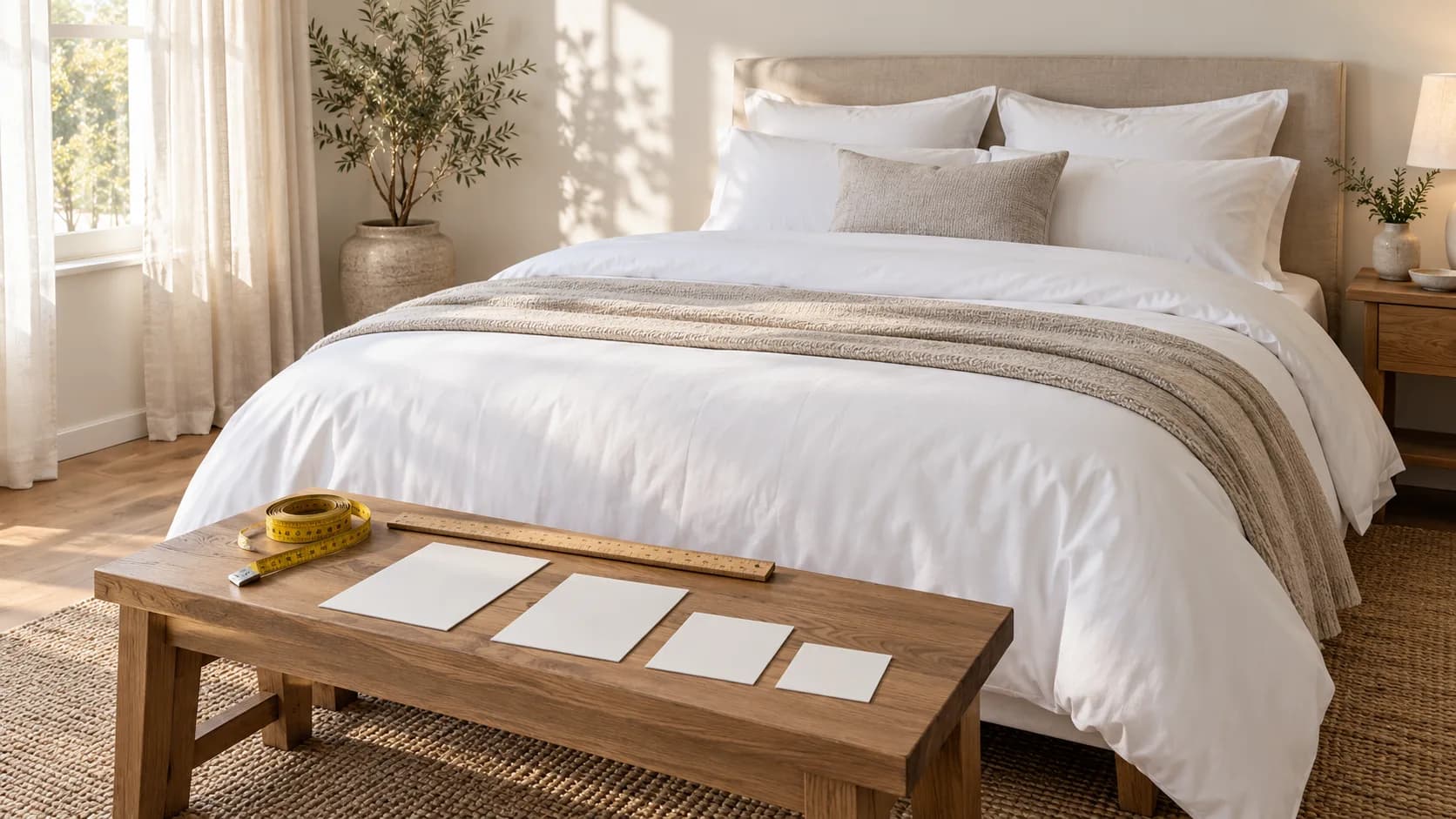
For export bedding, a size name is only a market label. A usable order brief pairs it with the mattress or insert reference, finished dimensions, component list and a colour × size quantity matrix.
For a B2B bedding order, “Queen”, “King” and “Double” are market labels—not a cutting instruction. A US Queen mattress is commonly listed around 152 × 203 cm, a UK King around 150 × 200 cm, and an Australian Queen around 153 × 203 cm; the names look familiar while the components that sit on them may not. Build the quote from the destination bed or insert, the finished dimensions of every component, and a colour × size matrix. That gives a supplier one product version to sample and price instead of several assumptions hidden behind a familiar name.
Start with the item that must fit
| Component | Reference to collect | What becomes the finished-product field | Why the market name is not enough |
|---|---|---|---|
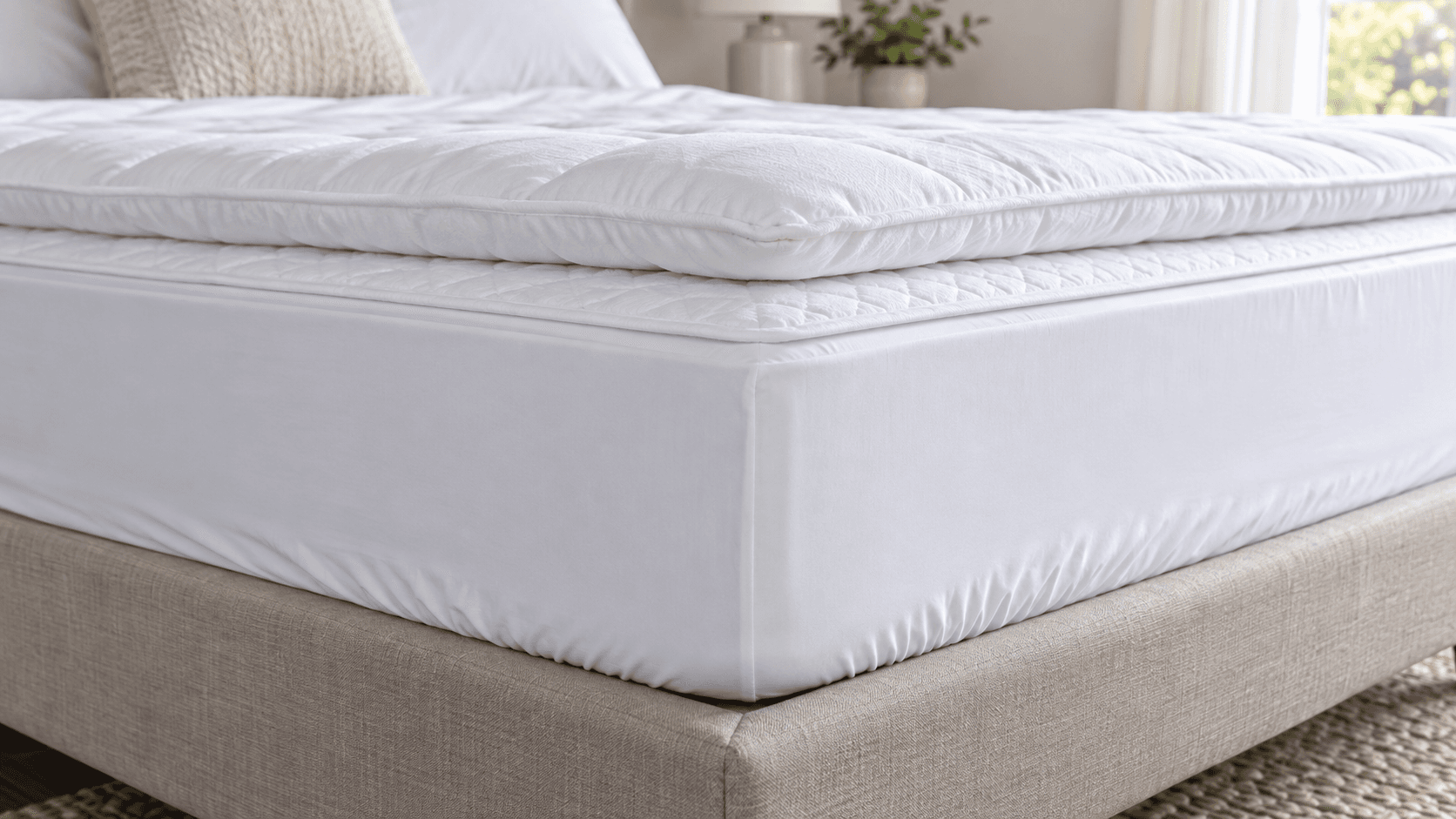
| Fitted sheet | Mattress width, length and assembled height | Finished sheet dimensions, pocket/depth question and elastic scope | Mattress depth and construction vary even within one named size |
| Flat sheet | Bed system and desired tuck/overhang | Finished length × width | A mattress label does not set the finished overhang |
| Duvet cover | Actual insert dimensions and closure preference | Finished cover length × width, closure and included pieces | Cover fit follows the insert, not simply the bed |
| Pillowcase or sham | Pillow form and style | Finished dimensions, opening style and quantity per set | Standard, Oxford and square formats are not interchangeable |
The first row is not the sheet. It is the physical reference the buyer is trying to serve: mattress width, length and assembled height for a fitted sheet; duvet or quilt insert dimensions for a duvet cover; and the intended pillow form for a pillowcase. Record the market name beside those references so merchandising, sourcing and customer service can recognise the offer, but let the buyer-owned measurements govern the product file.
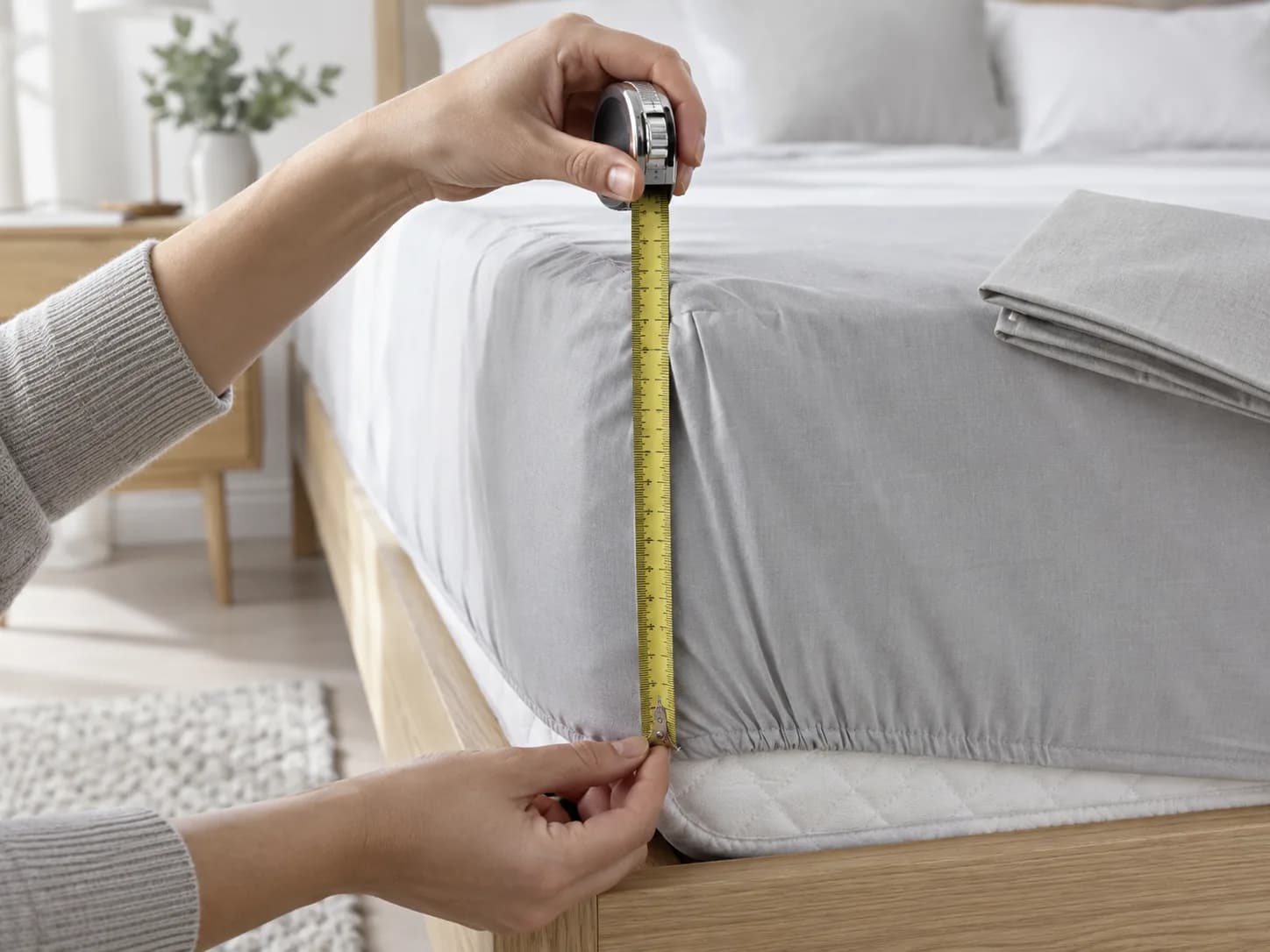
Use country names as a cross-check, not a global size chart
Country guides are useful for spotting a naming collision early. For example, US, UK and Australian “King” and “Queen” labels do not map to one shared mattress dimension, while continental European retail often works from metric dimensions and may use separate duvets for a double bed. They do not replace the destination retailer’s active assortment, a hotel’s actual room setup, or the buyer’s finished product file. Treat any published chart as a prompt to measure and confirm—not a universal export template.
| Market-language check | Common reference used in planning | Buying action before RFQ |
|---|---|---|
| US Queen | Typically 60 × 80 in / about 152 × 203 cm mattress | Confirm the mattress reference, fitted-sheet depth and every set component |
| UK King | Typically 150 × 200 cm mattress | Do not substitute a US King; specify sheet, duvet-cover and pillowcase dimensions |
| Australian Queen | Typically 153 × 203 cm mattress | Confirm the retail product dimensions and the intended fitted-sheet construction |
| Continental Europe | Metric bed and insert dimensions vary by country, retailer and programme | Write the actual mattress/insert measurement and decide one or two duvet route |
| Hotel or custom programme | Room and bed system are buyer-defined | Use a room-by-room component sheet and measured reference sample |
Write one row for each finished sellable set
A four-piece set is not a single measurement. Create a row for each sellable colour-and-size combination and list every included component. That row should remain identifiable when it reaches the sample request, packaging review and quotation. If a variant has a different pillowcase count, fitted sheet, closure or pack, give it a different row rather than burying it in an email note.
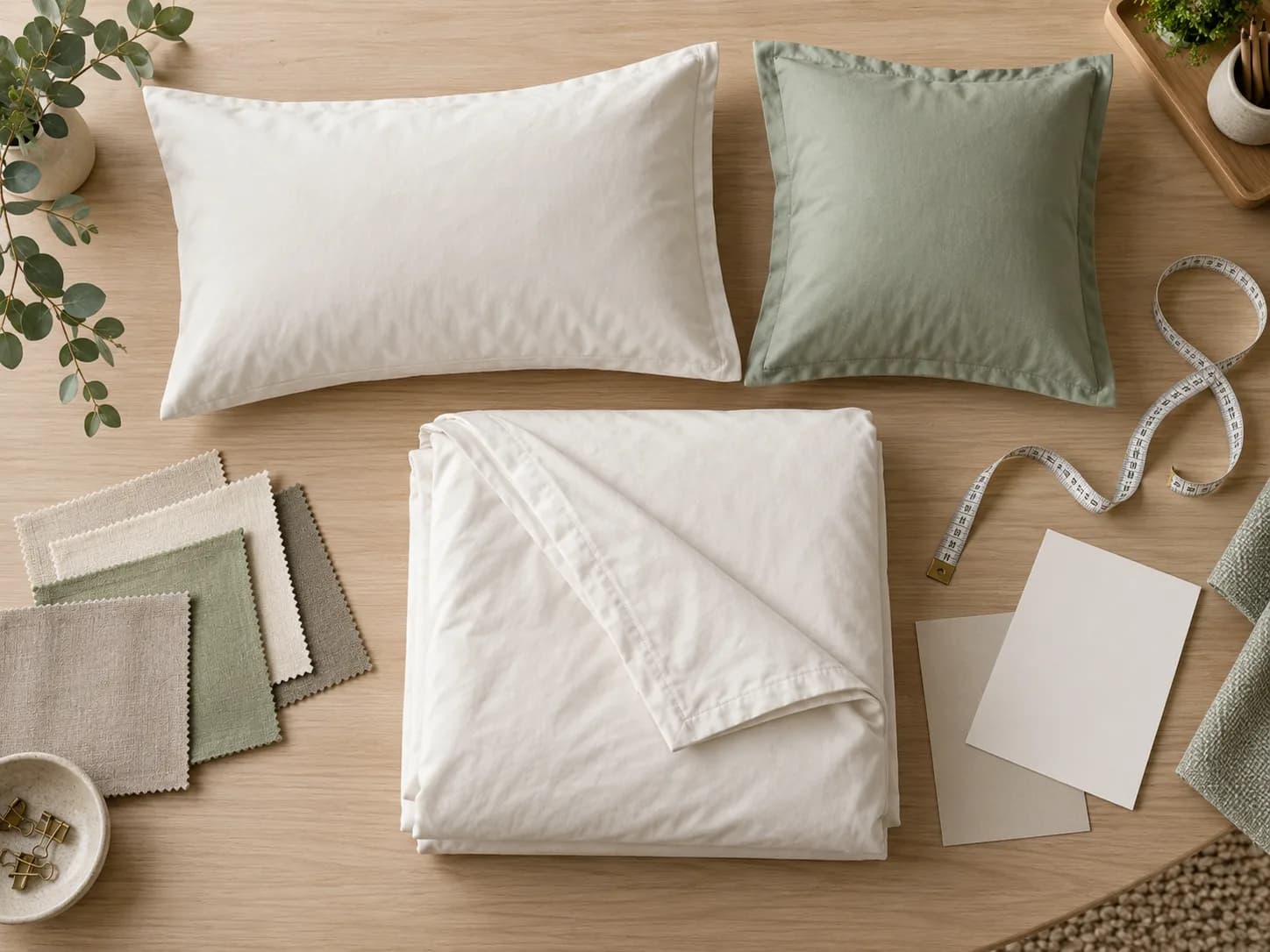
Make the sample fit test answer a specific question
A physical sample is useful when its job is defined. For a fitted sheet, place the proposed article on the intended mattress configuration and record the version, reference dimensions and what is being assessed. For a duvet cover, use the intended insert and check the selected closure and component relationship. A folded sample or a photograph can start a conversation; it cannot silently confirm fit for a different size, component count or market.
International bedding size-to-quote route
- 01
1 · Name the destination
Record the market, channel and customer-facing size language.
- 02
2 · Measure the reference
Capture the actual mattress, insert and pillow reference for the requested product.
- 03
3 · Define every component
List all pieces and buyer-owned finished dimensions in one set row.
- 04
4 · Build the variant matrix
Separate each colour × size combination and its required quantity.
- 05
5 · Ask for a versioned sample
State whether the sample is checking component scope, fit, closure or pack.
- 06
6 · Request a like-for-like quote
Ask suppliers to identify the quoted SKU and name every exception.
Send a market-ready bedding size brief
For a wholesale or private-label enquiry, send the destination, active set rows, physical bed or insert references, finished component dimensions, colour × size quantities, packaging status and the sample decision you need. Link the request to the private-label bedding team or the most relevant category only when the requested construction genuinely matches the product family. The standing minimum is 100 sets for each colour-and-size combination; quantities from different colours or sizes cannot be combined.
Frequently asked questions
- Is a Queen bedding size the same in every country?
- No. Similar market names can refer to different mattress dimensions in the US, UK and Australia, and bedding components add further variation. Use the local size name for merchandising, but quote from the buyer’s actual mattress or insert reference and finished component dimensions.
- Should a duvet cover be sized from the mattress?
- No. Start from the actual duvet or quilt insert, then state the requested finished cover dimensions, closure and included pieces. The mattress can inform the overall set, but it does not by itself define a duvet-cover size.
- What fields belong in an international bedding size specification?
- Include destination, SKU, market size label, bed or insert reference, every finished component, buyer-owned finished dimensions, colour × size quantity, packaging status and the question the sample must answer.
- How do I compare supplier quotes for different bedding sizes?
- Send every supplier the same active matrix. Ask each to repeat the quoted component list and dimensions by colour × size, and to name any alternative or assumption rather than substituting a familiar regional size label.
- What is the minimum order for a custom bedding size?
- The minimum is 100 sets for each colour-and-size combination. Different colours or sizes cannot be pooled to reach that minimum; list each active combination separately in the request.
Sources & references
Featured products
Shop by category
Explore our services
Sourcing bedding for your market?
Factory-direct quotes, 100-set minimum per color and size combination, full OEM/ODM customization. We reply within one business day.