TL:DR
Create one private label bedding matrix that assigns each finished SKU its components, market size name, finished dimensions, piece count, optional variant and pack relationship. Before quotation, reconcile that row with the active sample, tech pack, artwork and packaging versions; keep unresolved fields visible instead of guessing. The register controls requested product data, not fit, tolerance, construction, shrinkage, compliance or a production result.

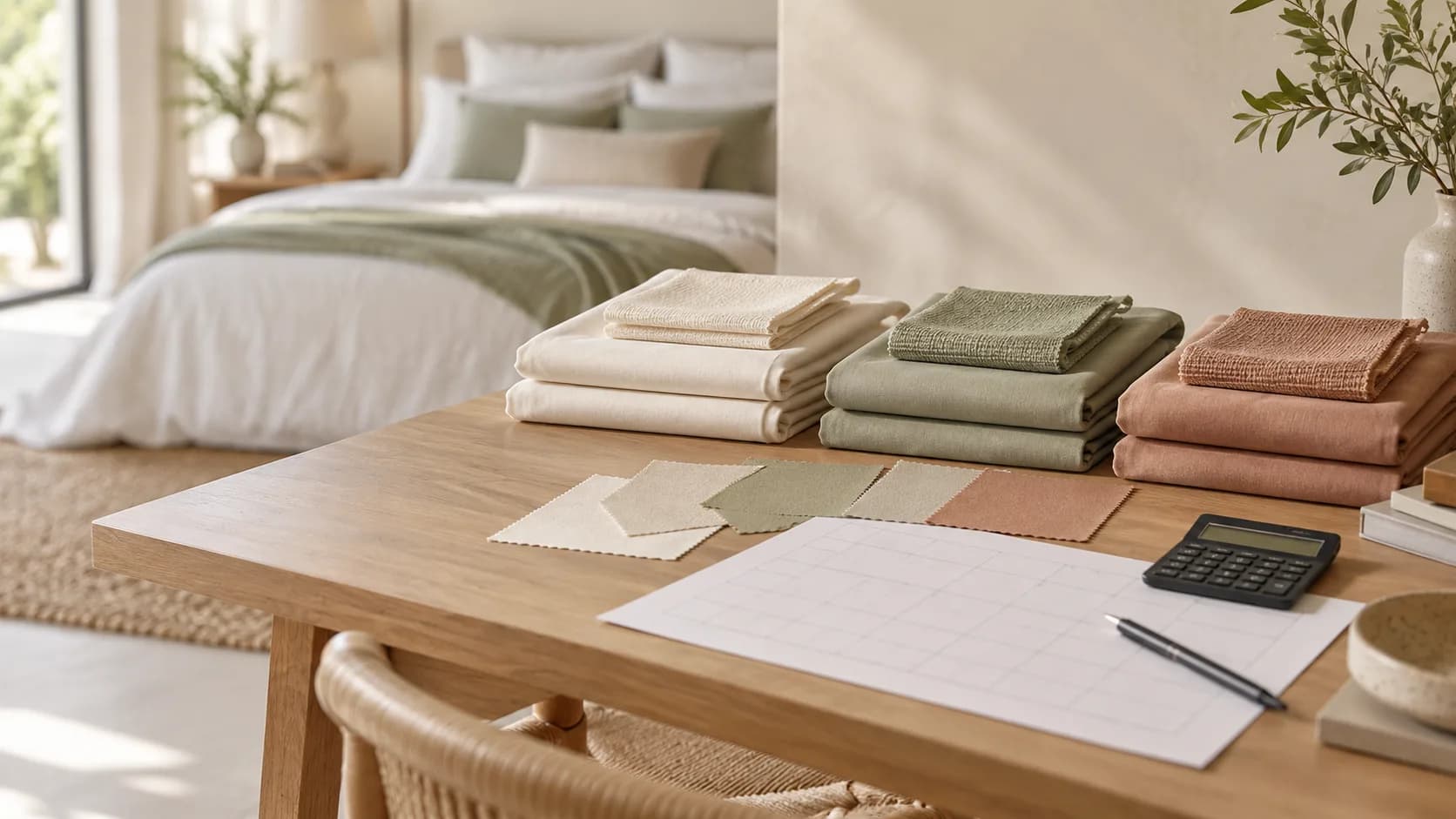
A size matrix turns a range brief into a controlled record of what is sold, sampled and quoted; a handoff register exposes which version still needs reconciliation.
Direct answer: a private label bedding size and component matrix is a buyer-owned table that names each finished sellable SKU, every included component, market size name, finished dimensions, piece count, optional variant and packaging relationship. Use it before sampling or quotation so a supplier can identify the same requested set. Leave open fields visible and link the matrix to the active tech pack and approval version; a size name, mood image or past order alone is not a complete specification.
What this matrix controls—and what it does not
The matrix sits between range planning and the product-specific tech pack. Range architecture decides which SKUs the brand will offer; this document tells the team what each SKU contains and how it is measured. A Queen, King or hotel size label is not universal across markets or channels, so record the target market and the buyer-owned finished dimensions rather than assuming a named size has one meaning. The matrix does not prove mattress fit, tolerance, fibre, finished construction, shrinkage, retail compliance or a future production result.
| Control document | Primary buyer job | Useful output | It cannot establish |
|---|---|---|---|
| Range/SKU architecture | Choose assortment width and depth | Which sellable variants exist | The component detail of every finished set |
| Size and component matrix | Define each set and size before sample/quote | Like-for-like product and pack scope | Fit, tolerance or performance |
| Tech pack | Specify one finished article in detail | Construction and make-up instructions | That a commercial range is complete |
| Sample approval record | Review the proposed article/version | A controlled release decision | Every future variant or production outcome |
Build one row for each sellable set and size
Start with the customer-facing set, then expose the components inside it. A three-piece set, four-piece set and duvet-cover set may share a fabric family but are not interchangeable. Name the duvet cover, flat sheet, fitted sheet, pillowcase or sham; record the quantity of each, the buyer’s exact finished measurements and any relevant mattress or pillow reference. Put a proposed alternative in a separate row, not in a note that can be missed during quotation.
| Matrix field | Buyer records | Question before sample or quote |
|---|---|---|
| Finished SKU | Internal code, sellable set name, target market and active revision | Can every team identify the same item? |
| Components | Duvet cover, flat/fitted sheet, pillowcase/sham and quantity per set | Is every included piece named? |
| Size data | Market name plus finished length/width and relevant depth or opening question | Are dimensions buyer-confirmed rather than assumed from the name? |
| Variant | Colour/design, closure or optional component as a separate version | Does it create a different SKU or approval route? |
| Pack relationship | Unit-pack and case-pack relationship where known | Can the quote distinguish product scope from packaging scope? |
| Control link | Tech-pack, artwork and sample/approval version IDs | Which active file governs an open question? |
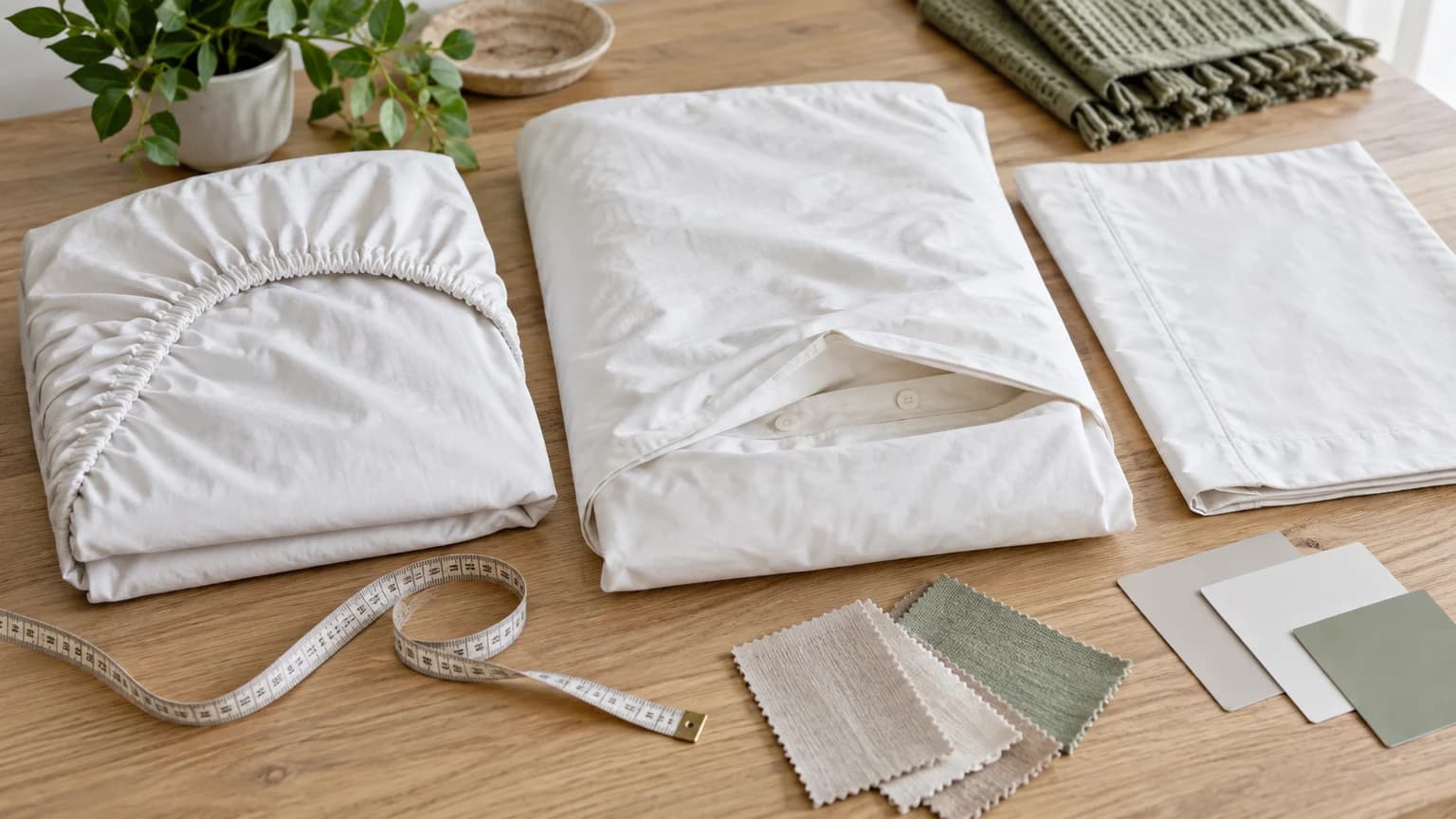
Keep the size name, measurement state and component count together
Do not separate the friendly size name from the data needed to interpret it. For a fitted sheet, the buyer may need to state the mattress reference, finished sheet dimensions, pocket-depth question and elastic scope; for a duvet cover, the opening and closure are product details that can change the finished SKU. Where a tolerance, care method, labelling or test requirement matters, put it in the appropriate controlled specification or evidence request rather than inventing a value in the matrix.
Reconcile the active sample before the quotation handoff
A sample-to-quotation handoff is a reconciliation step, not a declaration that the sample is approved for bulk. For each matrix row, point to the active sample ID, tech-pack revision, artwork or label revision, pack revision and the quote line that is being requested. If any field is open, mark it as open and ask for the supplier’s written assumption or a revised buyer file. This prevents a visually familiar sample from silently standing in for a different component count, label, pack or sellable SKU.
| Handoff field | Record beside the matrix row | Question before a comparable quote |
|---|---|---|
| Sample reference | Active sample ID, date and what it represents | Does it match this finished SKU, or only a component/colour discussion? |
| Product data | Active tech-pack or specification revision and open fields | Which requested construction or measurement fields remain unconfirmed? |
| Brand and pack | Artwork, label and unit-pack revision IDs | Are branding and pack being priced as the same active version? |
| Quote scope | Buyer quote line, quantity split and named exceptions | Can the supplier price the same finished item without filling gaps by assumption? |
| Change trigger | Any later size, component, artwork, pack or market edit | Does the change reopen the sample or quote review route? |
Private label bedding matrix flow
From range brief to quote-ready set data
- 01
1 · Fix the buyer and market
Name the channel, destination and intended product family before assigning size labels.
- 02
2 · Name the sellable set
Create one row for the finished SKU, not a vague collection name.
- 03
3 · List components
Record each included article and its quantity per set.
- 04
4 · Add buyer-owned dimensions
Pair market size names with finished measurements and relevant fit questions.
- 05
5 · Reconcile the active versions
Match the row to the current sample, tech pack, artwork and pack records; flag every open field.
- 06
6 · Request a like-for-like quote
State the quantity split and ask the supplier to identify assumptions or exceptions in writing.
- 07
7 · Reopen on a controlled change
Reconcile again when a size, component, artwork, pack or market field changes.
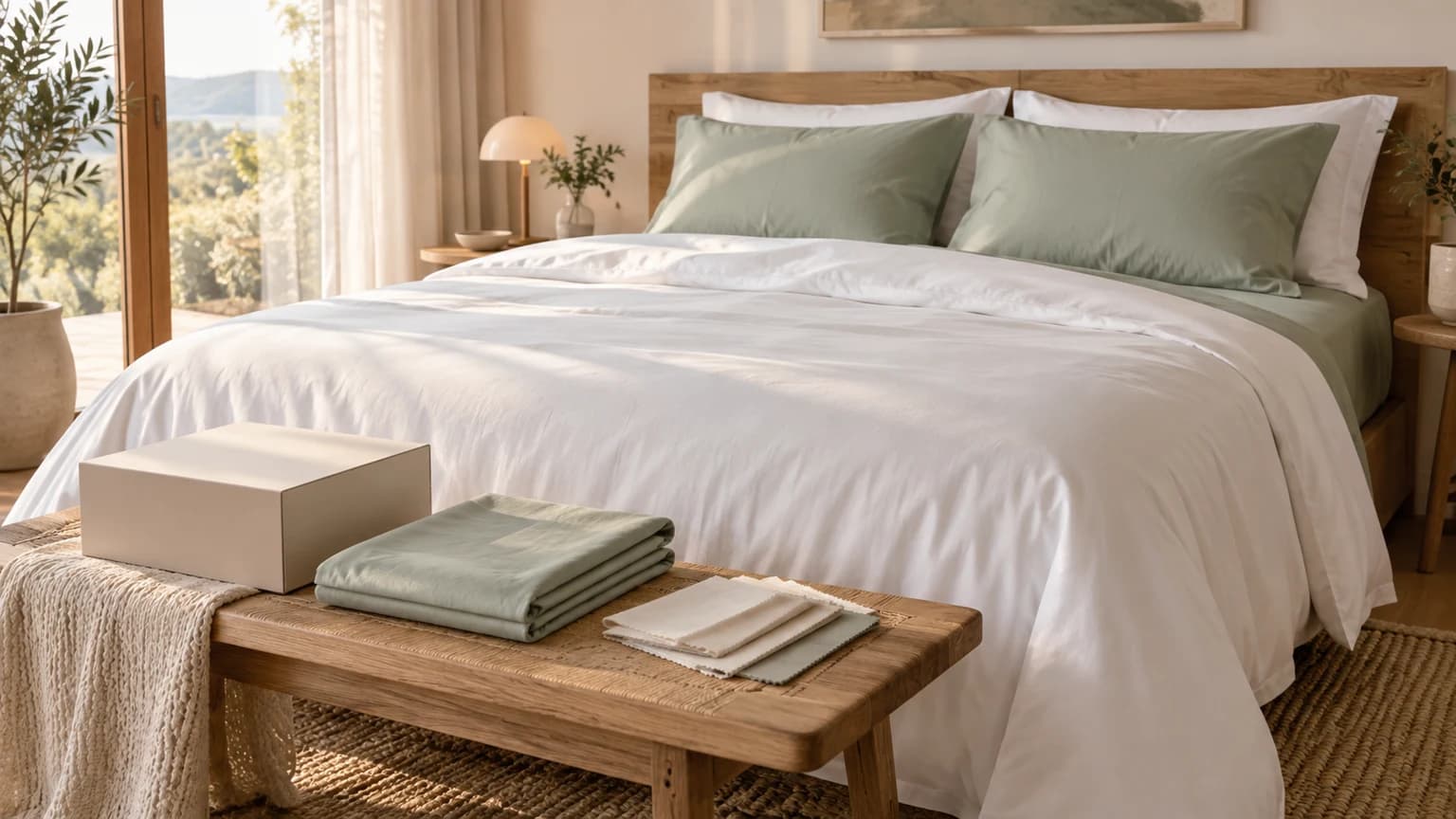
Buyer handoff: make the matrix usable
BeddingTextilePro is a Nantong trading company coordinating source-factory direct supply, dedicated mill lines and direct mill shipping. For a private-label bedding request, send the target market, set/component matrix, exact dimensions where known, color and size for each variant, active artwork or packaging version, sample status and open questions through the private-label bedding or contact page. Each color and size combination requires at least 100 sets; quantities cannot be pooled across variants.
Frequently asked questions
- What is a private label bedding size matrix?
- It is a buyer-controlled table that links each sellable bedding SKU to its components, market size name, finished dimensions, piece count, variants, pack relationship and active specification version.
- Should a bedding size name be enough for a supplier quote?
- No. Pair the market name with buyer-confirmed finished dimensions, component count and relevant product details. Named sizes vary by market, channel and programme.
- Does a size matrix replace a bedding tech pack?
- No. The matrix controls the range-level set and size relationship. The tech pack holds the detailed product specification and the approval record controls the proposed version.
- What must match between a bedding sample and a quotation?
- Match the finished SKU, component count, dimensions, active tech-pack revision, sample reference, artwork or label version, unit-pack version and quantity split. Keep any unconfirmed field visible and ask for a written quotation assumption rather than treating the sample as automatic bulk approval.
- How does the MOQ apply to the size matrix?
- Each color and size combination is a separate order line of at least 100 sets. List material, packaging and components for each line in the quotation; do not pool quantities across variants.
Sources & references
Featured products
Shop by category
Explore our services
Sourcing bedding for your market?
Factory-direct quotes, 100-set minimum per color and size combination, full OEM/ODM customization. We reply within one business day.