TL:DR
Measure the mattress width and length plus the total height of the mattress, topper and protector as used. Specify the finished fitted-sheet top panel, pocket seam depth, corner shape, elastic coverage and the amount of fabric that must return beneath the bed. Test a sewn sample on the target stack before and after the agreed wash route; choose the pocket from that fit, not a universal extra-depth rule.
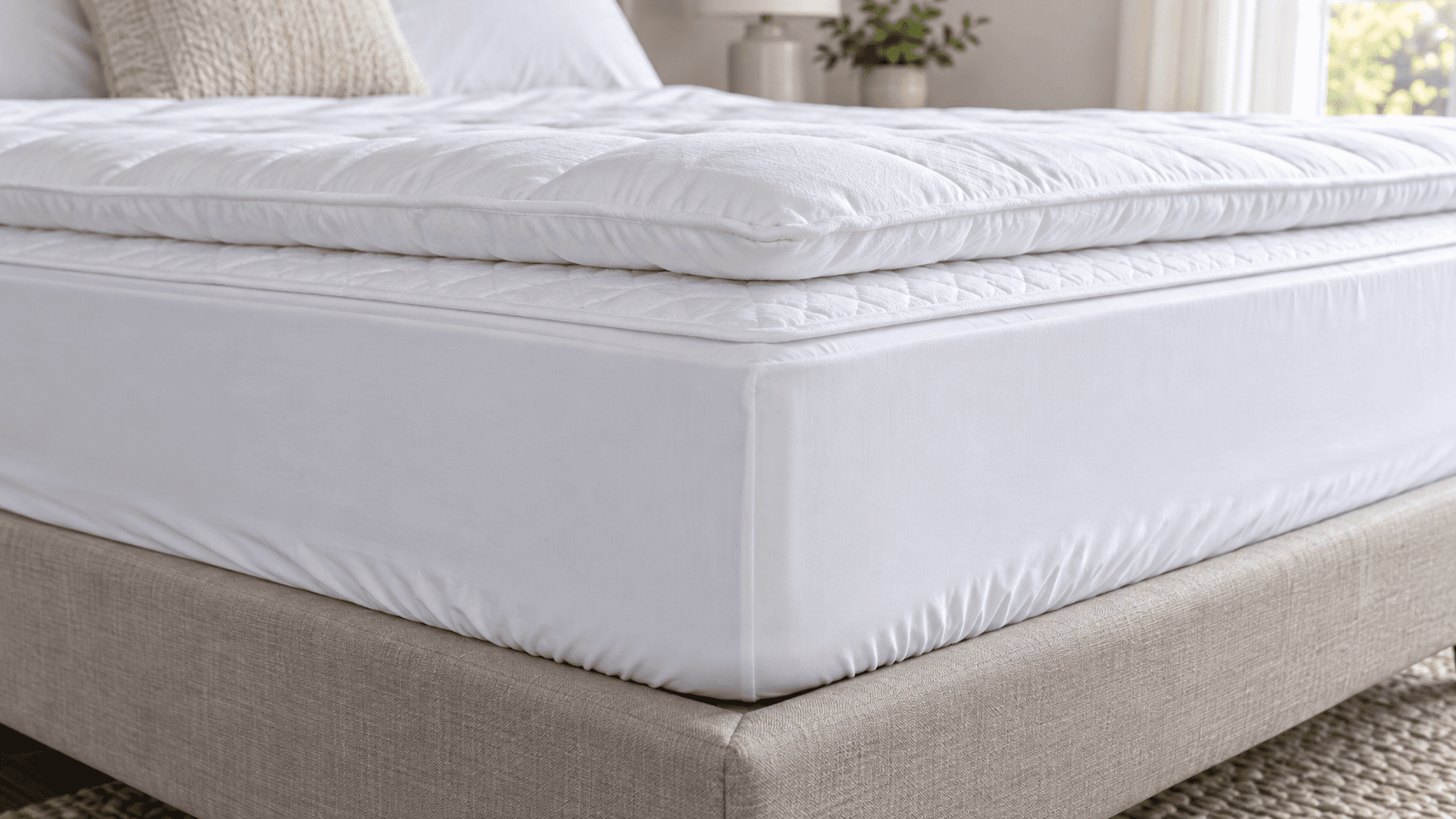
Measure the bed as used, not the label on the bare mattress. Give the supplier a finished-size record and approve an actual sewn sample on the target bed after care.
Measure the bed that the sheet will actually cover
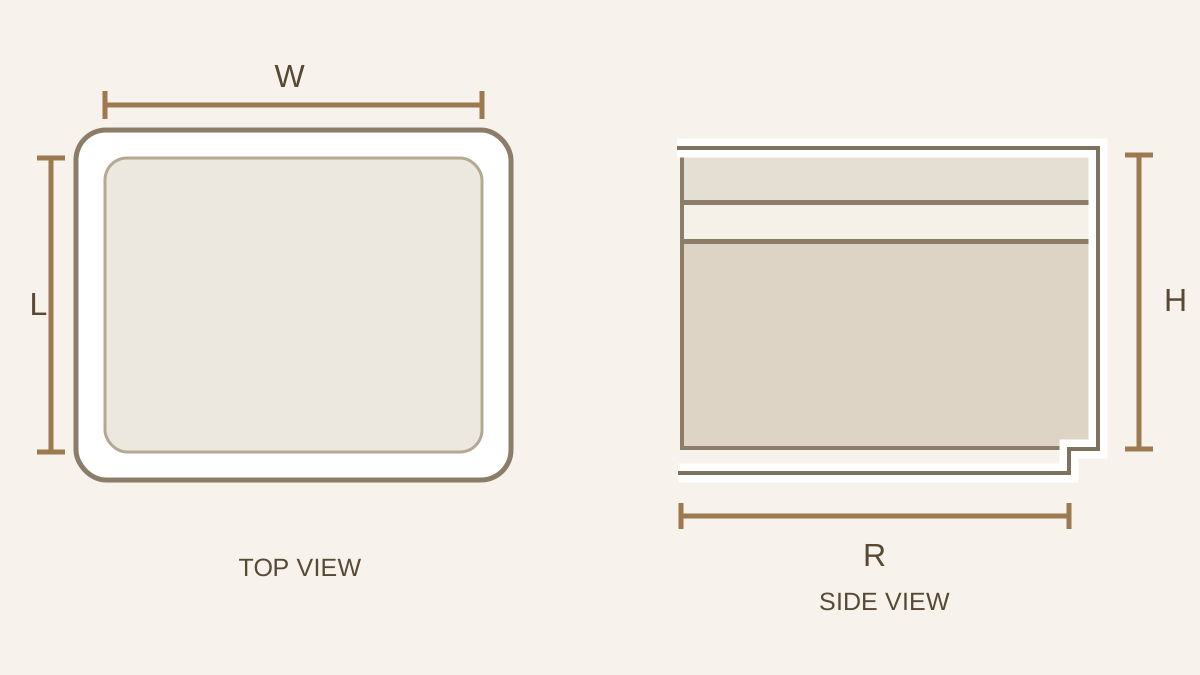
Make the bed with the topper and protector that will be used, then measure the horizontal width and length and the vertical height from the top of that stack to the mattress underside. Check more than one corner and the middle of the sides if the top is pillow-shaped or compressible. Record the tallest relevant point and the actual under-mattress return you want. A bare mattress label does not describe this assembled bed.
| Field to record | Buyer entry | Why it matters |
|---|---|---|
| Destination and bed model | Market, mattress model, room/SKU | Avoid mixing different ‘queen’ or ‘king’ footprints |
| Top footprint | Measured width × length, with unit | Sets the sheet top panel and corner position |
| Stack height | Mattress + topper + protector in use; measure corners and sides | Sets the real sidewall the pocket must cover |
| Under-bed return | Target fabric/elastic position beneath the edge | Gives the fitted sheet a defined anchor point |
| Care route | Wash, dry, temperature and sample stage | Allows fit to be checked after the intended process |
Turn measurements into a finished-sheet specification
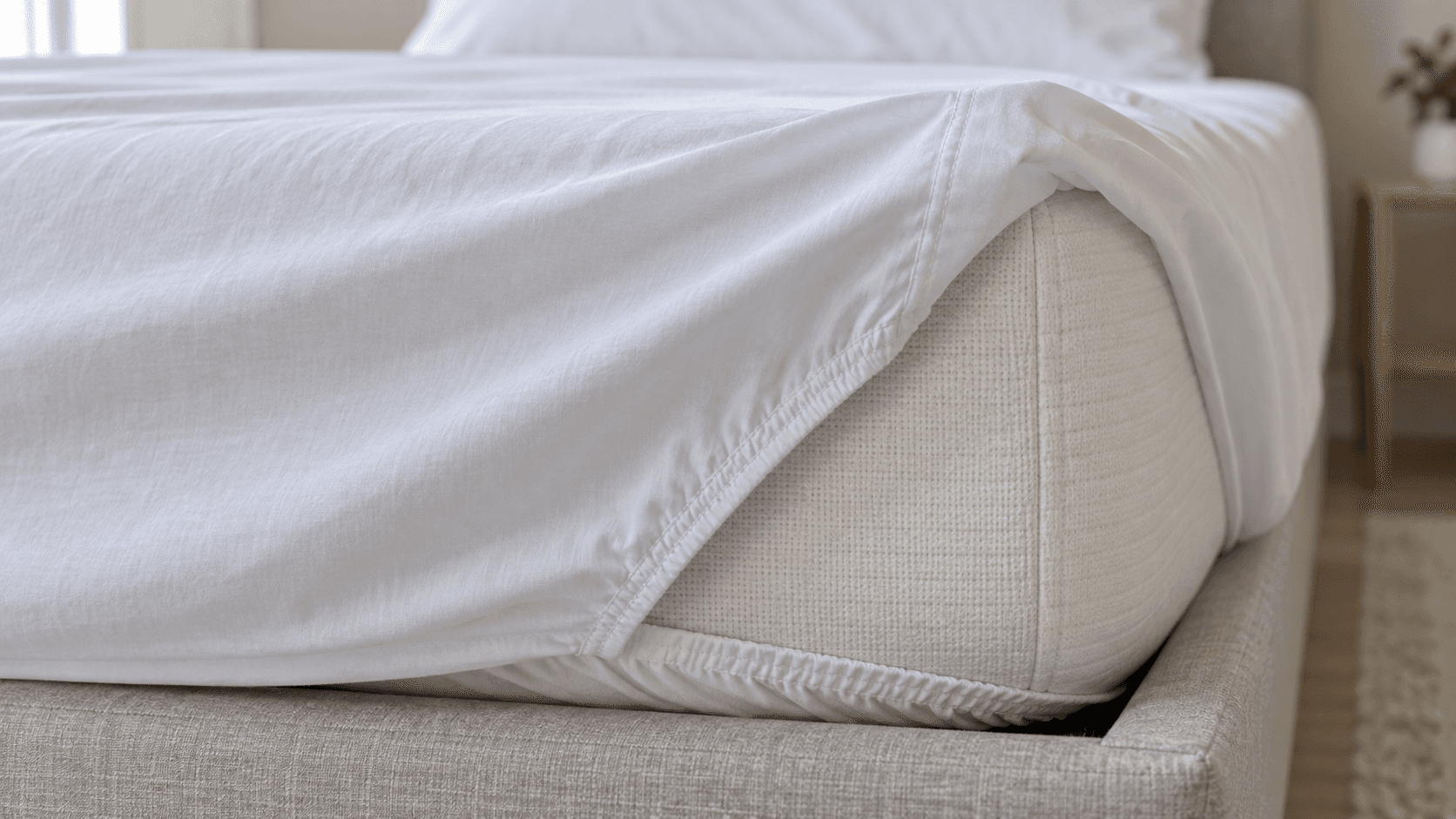
State finished top-panel width × length, finished pocket seam depth and the under-mattress return target in one unit system. Show how the corner is sewn, where the elastic begins and ends, and whether it runs around the entire base. ‘Deep pocket’ is a retail label, not a complete cutting instruction. If the supplier proposes extra fabric for seam construction or expected dimensional change, ask them to show the finished target separately from their cutting allowance.
| Elastic layout | Useful when | Watch in sample fit | Write into RFQ |
|---|---|---|---|
| Corner sections | A shallow bed and an established low-cost SKU | Corners must stay seated without dragging the sidewall upward | Elastic length and position at each corner |
| Selected edges | A design needing grip on particular sides | Check the non-elastic sides and orientation on the bed | Which edges, length and attachment method |
| Full perimeter | A deeper or variable stack where continuous grip helps | Check installation effort, edge tension and under-bed return | Continuous route, width, attachment and join |
Test the fit before locking the pocket
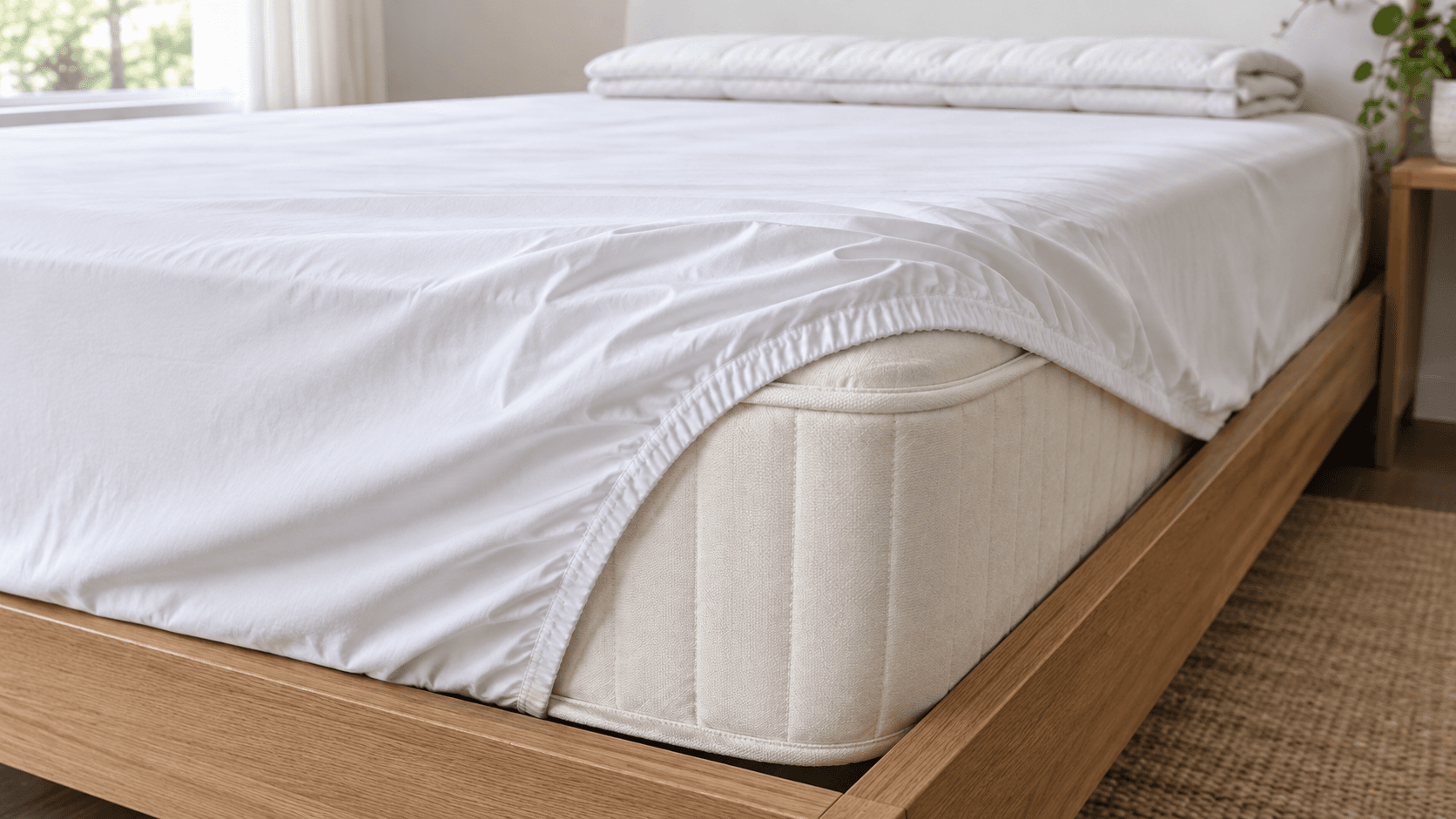
Ask for a sewn sample in the intended fabric, not just an elastic swatch. Put it on the target bed without forcing the corners; photograph the top panel, all four sidewalls and the hem beneath the mattress. Remove and remake the bed as staff normally would. Then launder the sample under the agreed route, measure the finished sheet again and repeat the fit check. If a corner climbs, locate the cause—top panel, seam depth, return or elastic—before changing the whole pattern.
| Fit checkpoint | Before care | After agreed care | Action if it misses |
|---|---|---|---|
| Top panel lies flat | Record surface tension and corner alignment | Repeat on the same bed | Review panel width/length |
| Pocket covers sidewall | Observe all sides and deepest corner | Check for newly exposed mattress | Review seam depth and corner shape |
| Hem sits beneath edge | Record return on each side | Check whether elastic stays anchored | Review return and elastic position |
| Staff can remake bed | Time and note effort qualitatively | Repeat with the washed sample | Balance grip against installation force |
A supplier-ready fitted-sheet brief
Send the destination market, bed models and measured width × length × full stack height for every room or retail size; topper/protector details; desired under-bed return; fibre and weave; finished top panel and pocket seam dimensions; elastic route, width and attachment; corner construction; colour and packaging; quantities by SKU; wash route; and sample acceptance record. Ask for a marked-up drawing and a quote that identifies any alternative construction separately. The private-label page is the commercial route for this custom spec; the catalogue currently does not show an exact fitted-sheet SKU whose pocket could be copied safely.
From bed measurements to approved fitted sheet
- 01
1 · Assemble and measure
Use the real mattress, topper and protector; record footprint and stack height at several points.
- 02
2 · Set the finished target
Write top panel, pocket seam depth, corner construction and under-bed return in the same unit.
- 03
3 · Choose elastic layout
Compare corner, selected-edge or full-perimeter coverage for the bed and staff workflow.
- 04
4 · Approve a sewn sample
Check it on the actual bed before care and again after the agreed wash and dry route.
- 05
5 · Lock the order
Attach the approved sample code, drawing, dimensions, care route and acceptance notes to the PO.
Frequently asked questions
- Do I measure the mattress without its topper?
- Measure the bed as used. Include the topper and protector in the vertical stack height and record their configuration so the sample fits the real bed.
- How much deeper should the pocket be than the mattress?
- There is no fixed allowance for every fabric and bed. Record the full stack and desired under-bed return, then approve the pocket seam depth on a sewn sample before and after the intended care route.
- Is full-perimeter elastic mandatory for hotels?
- No universal rule applies. Compare coverage layouts against the actual mattress, housekeeping effort and washed-sample fit; specify the chosen route and attachment on the drawing.
- What should the supplier quote for a fitted-sheet size?
- Give measured bed footprint and stack height, finished top-panel and pocket seam dimensions, corner shape, under-bed return, elastic route, fabric, care route and quantities by SKU.
- How do I check that the sheet still fits after washing?
- Document the agreed wash and dry process, measure the sewn sample before and after it, and repeat the fit trial on the same bed. Record top-panel tension, sidewall coverage, under-bed grip and remaking effort.
Sources & references
Shop by category
Explore our services
Sourcing bedding for your market?
Send the measured bed stack, finished-sheet target and care route to discuss a sewn sample and quotation.