TL:DR
- Video focus: Fine yarn is one input to bedding handfeel. Compare fibre, yarn, weave, density, finished GSM and finish together, then assess the fabric face and stitched edge on identified samples under the same care conditions. Record the preferred reference and any changes before asking for a quotation.
- Buyer value: Create a side-by-side handfeel record that separates surface feel, drape and stitched-edge comfort, then attach the chosen sample ID to the RFQ.
- Next step: Request fabric specifications.
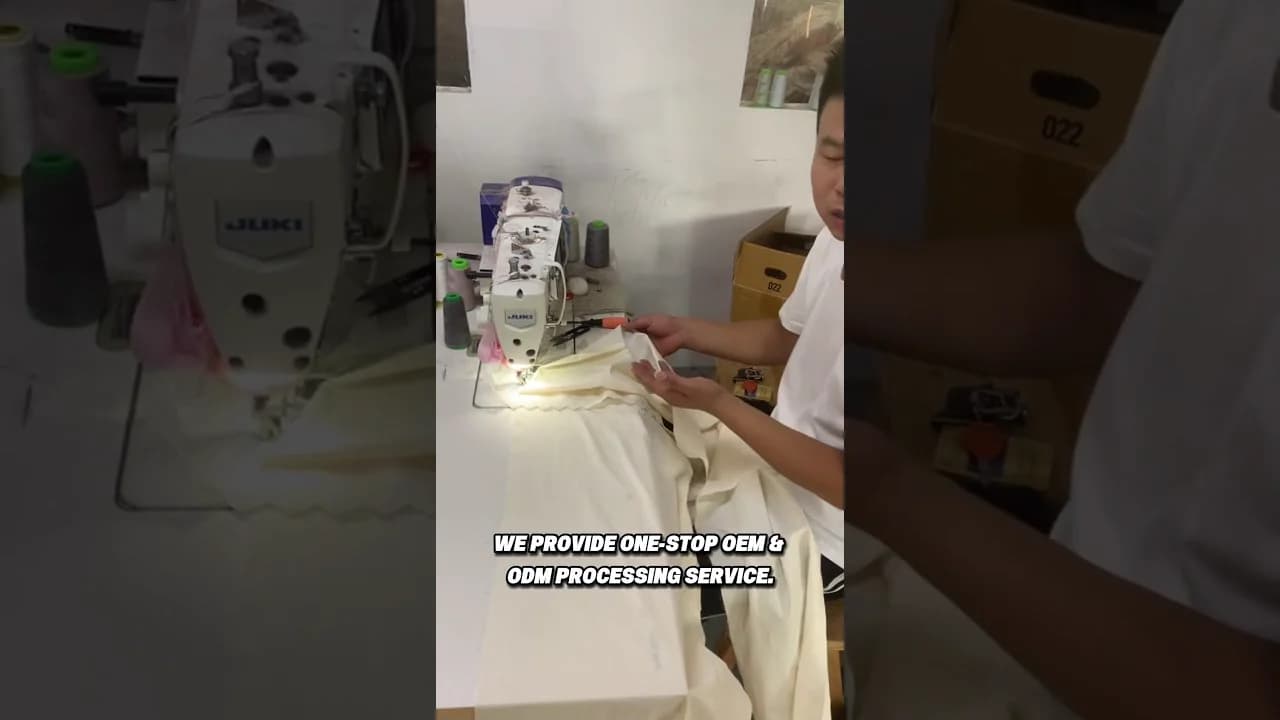
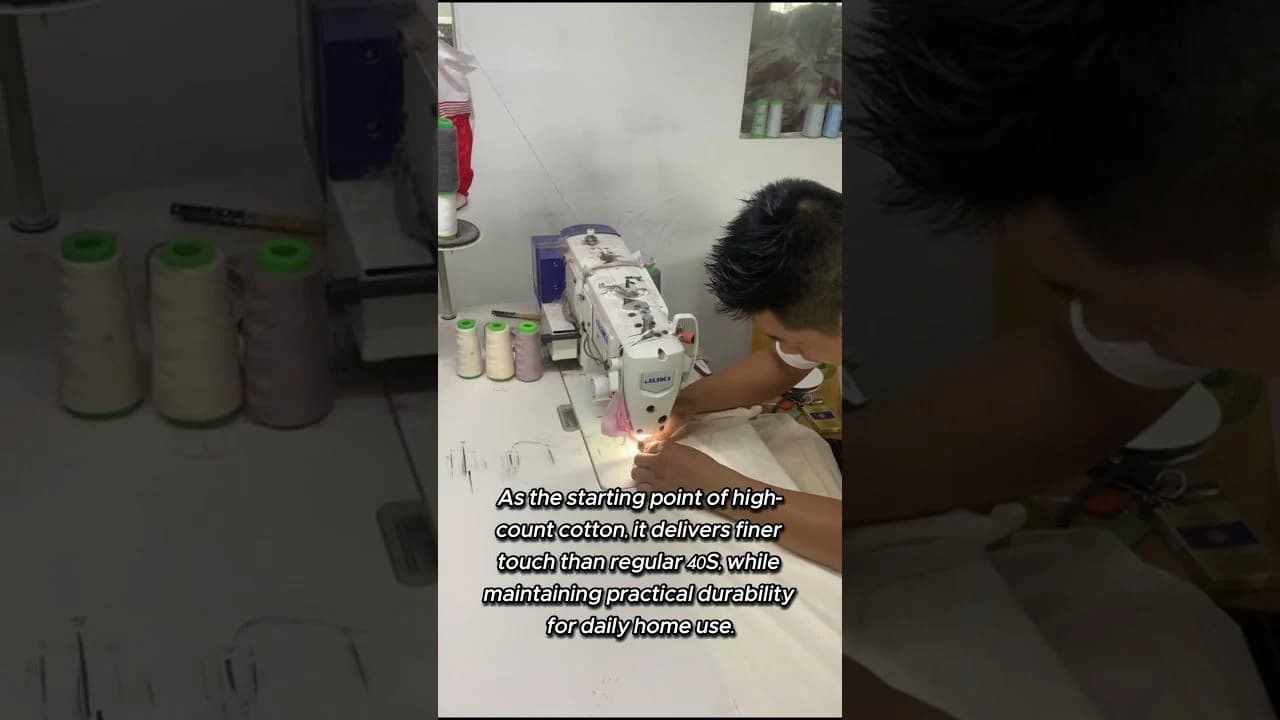
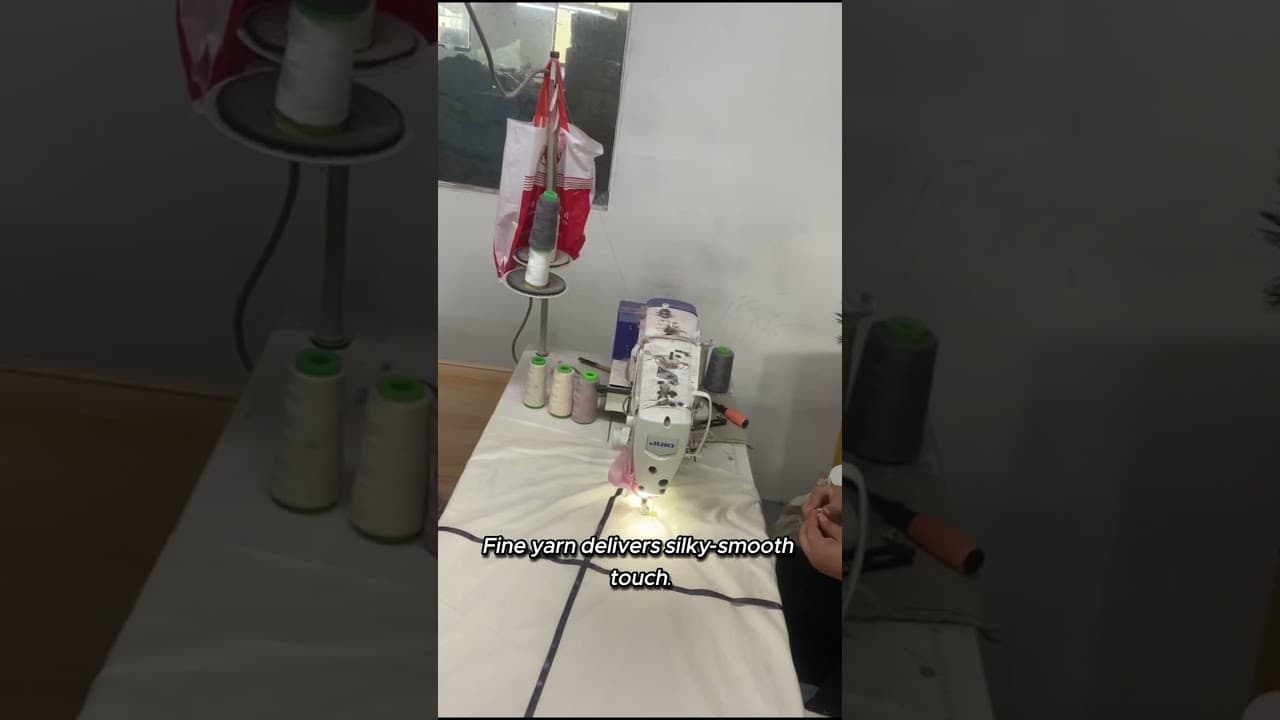
Compare the finished bedding sample before accepting a fine-yarn softness claim. This Short shows a light bedding panel with dark trim at a sewing machine and includes a message about fine yarn and surface comfort. For an importer or private-label buyer, the useful next step is a controlled handfeel comparison: identify the fabric face, record the complete construction and finish, and review labelled samples before and after the agreed care route. Fibre + yarn + weave + density + GSM + finish determine finished-fabric performance. The clip provides a visual reference; your written brief and representative samples supply the evidence for choosing a construction.
How to use this fabric guide
Treat the named yarn count or construction as one field in the RFQ. Compare fibre, yarn construction, weave, warp-and-weft density, finished GSM, finish and a physical sample. A finished-fabric claim needs evidence from that finished construction; the yarn number alone is not a performance grade.
Separate fabric feel from a yarn claim
Start with the buyer's use: a retail sheet, a duvet cover or hotel linen may need different surface feel, drape and care compatibility. A fine-yarn description does not tell you how the completed fabric will feel. The same yarn description can be combined with different weave, density, weight and finishing choices. Request the complete construction and compare the finished surface, rather than approving the yarn term in isolation. The video's comfort wording does not establish reduced irritation or suitability for a skin condition; keep the purchase decision about the sampled fabric and the claim actually supported.
Copy these fields into the sample request
| Buyer field | Fill in before sampling | Supplier return |
|---|---|---|
| Product and use | Component, destination market and intended care | Proposed product reference |
| Construction | Fibre, yarn information, weave, density, finished GSM and finish | Confirmed fields and open options |
| Feel reference | Reference sample ID; face and reverse to compare | Identified candidate samples |
| Care comparison | Agreed wash, dry and press route; evaluation condition | Before/after sample identity and observations |
| Sewing contact area | Edge, trim or seam to assess alongside the fabric face | Representative sewn component |
| Order matrix | Colour × size quantities and packaging | Separate quote line for each variant |
Compare samples in the same condition
Give every candidate an ID and retain an untouched reference. Lay out the same fabric face, use the same handling method and avoid comparing a freshly pressed swatch with a relaxed or washed one. Describe what you observe in separate columns: surface drag, drape, stiffness and the feel of the stitched edge. These are sample observations, not universal performance grades. If the brief includes a care comparison, agree the route in advance and identify which specimen went through it. A single review does not establish a wash-life figure.
| Observation | Candidate A | Candidate B | Decision |
|---|---|---|---|
| Sample ID and construction revision | Fill in | Fill in | Comparable / clarify |
| Fabric face and reverse | Record separately | Record separately | Preferred reference |
| Drape and surface feel | Describe observations | Describe observations | Accept / resample |
| Trim and sewn edge | Identify contact area | Identify contact area | Retain / change detail |
| After agreed care | Specimen ID and change | Specimen ID and change | Accept / investigate |
Choose a documented product starting point
The linked white cotton-sateen and Lyocell product records offer different material starting points. Compare their documented constructions and request the proposed sample for your project; neither link is a confirmed match to this video. For a controlled within-material comparison, ask for two candidates with the same construction except the finish under review. For an assortment comparison across materials, keep the intended application and care route constant, and record the differences instead of attributing the entire feel to yarn fineness.
From fine-yarn message to approved feel reference
- 01
Define the contact
Name the component, fabric face, edge and intended use.
- 02
Label the candidates
Attach construction and revision to each sample ID.
- 03
Compare consistently
Use the same handling and agreed care conditions; record separate observations.
- 04
Release a clear brief
Retain the chosen reference, list changes and request a variant-by-variant quote.
Connect fabric approval with the sewn edge
Once the surface reference is chosen, review the completed component rather than only a flat swatch. Our linked folded-edge sewing video addresses the next question: how to specify and review the visible fold, stitching and reverse side. A fabric preference and an edge approval are separate decisions. Put both reference IDs in the active brief so a fabric substitution or seam change cannot silently carry forward. Send the chosen product route, dimensions, packaging and a separate quantity for each colour and size. The minimum is 100 sets for each colour-and-size combination, without pooling across variants.
Compare bedding options for your project
| Bedding option | Category | Material / construction | How to use it |
|---|---|---|---|
| White 300TC Cotton Sateen Bedding Set | Cotton Sateen Sets | 100% combed cotton, woven as a lustrous twill-sateen; supplied at 300TC and customizable to 200/300/400TC. | Similar fabric options |
| Lyocell Tencel Four-Piece Bedding Set | Lyocell / Tencel Series | 100% Lyocell (Tencel-type) plant-based fiber. | Similar fabric options |
What to include in your enquiry
Create a side-by-side handfeel record that separates surface feel, drape and stitched-edge comfort, then attach the chosen sample ID to the RFQ.
White 300TC Cotton Sateen Bedding Set · Yarn Count Explained (40s / 60s / 80s / 100s): What It Means for Bedding Quality · Request fabric specifications
Technical specifications from related products
These values come from the linked product records. They describe related options and do not claim that the video shows the exact SKU unless it is explicitly marked as an exact product.
White 300TC Cotton Sateen Bedding Set
- Material
- 100% Cotton (combed)
- Weave
- Twill-sateen · silky lustrous face
- Thread count
- 300TC standard — 200 / 300 / 400 TC customizable
- Color
- Hotel white (custom colors available)
- Hand
- Silky · smooth · lustrous drape
- Function
- Breathable · durable for commercial laundering
- Season
- All-season
Lyocell Tencel Four-Piece Bedding Set
- Material
- 100% Lyocell (Tencel-type)
- Yarn Count
- 60s / 300TC
- Weaving
- Dry-jet spun
- Dyeing
- Reactive printing
- Fabric Density
- 200 × 100
- Weight
- 120–140 GSM
- Style
- Minimalist
- Function
- Soft · warm · skin-friendly · moisture-wicking · breathable
Frequently asked questions
- Does fine yarn guarantee a softer bedding surface?
- No. Fibre, yarn construction, weave, density, finished GSM and finish work together. Compare the completed fabric and representative sewn sample before choosing the reference.
- Does this Short establish a skin-comfort or irritation result?
- No. It includes a fine-yarn comfort message, but provides no product-specific study or test for irritation. Use it to start a surface-feel sample comparison, not a medical or skin-safety claim.
- How should I compare bedding handfeel before and after care?
- Label each specimen, agree one care and evaluation route, retain an untouched reference and record the fabric face, reverse, drape and sewn-edge observations separately.
- Are the linked cotton and Lyocell sets the exact video product?
- They are similar fabric options with their own product records. The video does not positively identify an exact SKU, fibre composition, yarn count or finished construction.
- What should I send for a sample quote?
- Send product and use, construction or reference sample, dimensions, care route, feel and edge requirements, packaging and colour × size quantities. Each combination requires at least 100 sets; quantities cannot be pooled.
Technical references
Similar fabric options
Related guides
Shop by category
Explore our services
Sourcing bedding for your market?
Factory-direct quotes, 100-set minimum per color and size combination, full OEM/ODM customization. We reply within one business day.