TL:DR
Yarn count (Ne, written 40s/60s/80s/100s) measures how fine a single cotton strand is, not how many threads fill the fabric; it counts 840-yard hanks per pound, so higher means finer. For wholesale bedding, spec 40s for durable everyday sets, 60s for soft mid-tier, and 80s or 100s for fine premium ranges. Finer yarn raises feel, thread count and price.

Yarn count (Ne) tells you how fine the individual cotton strand is, not how many threads are packed into the fabric. Here is how 40s, 60s, 80s and 100s shape hand-feel, weight, achievable thread count and price, and how to spec them for wholesale bedding.
Yarn count (written as Ne, or 40s / 60s / 80s / 100s) measures how fine the individual cotton strand is: it is the number of 840-yard hanks in one pound of yarn, so a higher number means a finer, lighter strand. For most wholesale bedding, spec 40s for durable everyday sets, 60s for a soft mid-tier, and 80s or 100s for premium sateen. Pair the count with a realistic thread count and confirm single-ply, combed, ring-spun cotton.
What yarn count (Ne) actually measures
Yarn count is a measure of yarn fineness expressed as a length-per-weight ratio. Cotton bedding uses the English cotton count system, abbreviated Ne. One 'count' equals one hank of 840 yards weighing one pound, so 40s (Ne 40) means forty 840-yard hanks are needed to reach one pound of yarn. Because you need more length of a thinner strand to make up the same weight, a higher Ne number always signals a finer, thinner yarn.
This is called an indirect system: count rises as the yarn gets finer. It is the opposite of direct systems such as tex (grams per 1,000 metres) and denier (grams per 9,000 metres), where a higher number means a heavier, coarser yarn. When you cross-check specs with an international mill, the two worlds meet through a simple conversion: Ne is roughly 590.5 divided by tex.
- Ne (English cotton count): indirect, higher = finer. The standard label on 40s/60s/80s/100s bedding.
- Tex: direct, grams per 1,000 m, higher = coarser. Common in metric-system mills and lab reports.
- Denier: direct, grams per 9,000 m, mostly used for filament fibers.
- Rule of thumb: Ne 40 is a medium-fine yarn; Ne 100 is very fine and typically needs long-staple cotton to spin.
Yarn count vs thread count: the difference buyers must get right
These two numbers are constantly confused, and mixing them up leads to mis-specced orders. Yarn count describes the strand; thread count describes the cloth. Thread count (TC) is the number of threads per square inch, counting warp and weft together, so a 300TC percale has roughly 150 threads each way. Yarn count tells you how thin each of those threads is.
The link between them is physical: finer yarn is thinner, so more strands fit into a square inch. That is why higher yarn counts unlock higher achievable thread counts. You cannot weave a genuine single-ply 600TC from coarse 40s yarn; it takes 80s or 100s. So when a supplier quotes a very high TC on a low yarn count, be skeptical, it usually means multi-ply yarns (two or three thin plies twisted and counted as one), which inflates the TC without improving quality.
| Aspect | Yarn count (Ne) | Thread count (TC) |
|---|---|---|
| What it measures | Fineness of the single strand | Threads per square inch of fabric |
| Direction | Higher = finer / thinner yarn | Higher = denser weave (up to a limit) |
| Set by | Spinning mill | Weaving / loom setup |
| Typical bedding values | 40s, 60s, 80s, 100s | 200TC, 300TC, 400TC, 600TC |
| Buyer red flag | 100s claimed on short-staple cotton | 800TC+ achieved with multi-ply yarns |
How yarn count changes hand-feel, weight and price
Finer yarn changes almost everything a customer notices. A higher Ne produces a smoother, silkier surface and a lighter, more drapey fabric, because each strand is thinner. It also allows a tighter, denser weave, which raises the achievable thread count. The trade-offs: very fine, densely woven cloth can feel less breathable and is more delicate, while coarser 40s cloth is more robust and better for high-turnover hospitality use.
- Hand-feel: higher count = smoother, silkier, more luxurious surface.
- Weight and drape: higher count = lighter GSM and better drape; lower count = heavier, sturdier hand.
- Durability: 40s wears harder and survives industrial laundering better; 80s and 100s feel finer but are more delicate.
- Price: finer yarn needs longer-staple cotton and more careful spinning, so cost rises steeply from 40s to 100s.
Yarn count is the honest number. Thread count can be inflated with multi-ply yarn, but the fineness of the strand cannot be faked, so smart buyers spec the yarn count first.
40s vs 60s vs 80s vs 100s at a glance
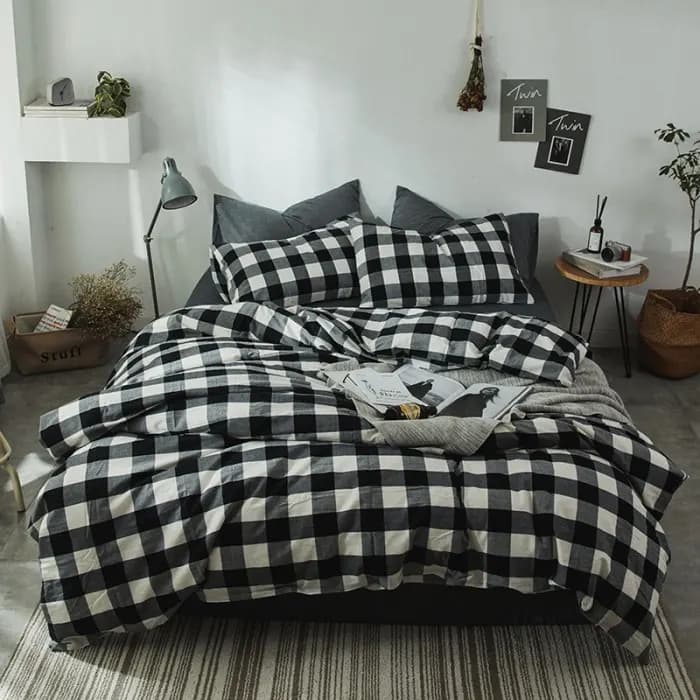
| Yarn count | Fineness / feel | Typical use | Position |
|---|---|---|---|
| 40s | Medium-fine; crisp, sturdy, breathable hand | 200-250TC percale, everyday and hospitality sets | Value / high-durability |
| 60s | Finer; soft with a light body, good drape | 250-400TC percale and sateen, retail mid-tier | Balanced best-seller |
| 80s | Very fine; smooth, silky, lightweight | 400-600TC sateen, premium retail bedding | Premium / luxury |
| 100s | Ultra-fine; silky, delicate, light drape | 600TC+ sateen, luxury and gifting lines | Top-tier / long-staple only |
How B2B buyers should spec yarn count
A clean specification pins down the yarn count, the ply, the thread count and the fiber, so nothing is left to interpretation on the production floor. Do not order 'high thread count' alone; that is exactly the gap suppliers exploit with multi-ply yarns.
- 1.State the yarn count explicitly: for example '60s single-ply combed ring-spun cotton'.
- 2.State the target thread count and confirm it is single-ply (1-ply), not 2-ply or 3-ply counted twice.
- 3.Match count to channel: 40s for hospitality and value retail, 60s for mainstream retail, 80s/100s for premium and luxury.
- 4.Ask for staple length: genuine 80s and 100s need long-staple cotton to spin cleanly.
- 5.Require the yarn count and composition on the lab dip and pre-production sample, then verify against the bulk.
Common mistakes and how to avoid them
- Treating thread count as the only quality metric, when yarn count and fiber matter more.
- Accepting inflated 800TC+ claims that rely on multi-ply yarns rather than finer single-ply yarn.
- Assuming 100s is 'always better'; it can be too delicate and less breathable for heavy-use channels.
- Not converting units when a metric mill quotes tex; remember Ne is about 590.5 divided by tex.
- Skipping OEKO-TEX and composition checks, so a fine-count sample is not matched in bulk production.
BeddingTextilePro runs source-factory direct supply from Nantong, offering 40s, 60s and 80s cotton in 200TC, 300TC and 400TC constructions, all single-ply and OEKO-TEX certified, with OEM and ODM customization from a 100-set minimum per color and size combination. Send us your target yarn count and thread count and we will match the right long-staple cotton and weave for your channel.
Frequently asked questions
- Is yarn count the same as thread count?
- No. Yarn count (Ne) measures how fine the individual strand is; a higher number means a thinner, finer yarn. Thread count (TC) measures how many threads are packed into a square inch of the finished fabric. Finer yarn lets more threads fit per inch, so the two are related, but they are different specs and you should list both.
- Does a higher yarn count always mean better bedding?
- Not automatically. Higher counts like 80s and 100s feel smoother, lighter and more luxurious, but they are more delicate and can be less breathable, and they cost more. For hospitality or high-turnover retail, durable 40s or 60s is often the smarter choice. Match the count to the channel rather than always chasing the highest number.
- What yarn count should I choose for wholesale bedding?
- As a starting point: 40s for value and hospitality sets that need durability, 60s for mainstream retail that balances softness and strength, and 80s or 100s for premium and luxury lines. Always confirm single-ply, combed, ring-spun cotton and, for 80s and 100s, long-staple fiber so the fine yarn spins cleanly.
- How do I convert yarn count (Ne) to tex?
- Ne is an indirect count (higher = finer) and tex is a direct count in grams per 1,000 metres (higher = coarser). Convert with the approximation Ne is about 590.5 divided by tex. So Ne 40 is roughly 15 tex and Ne 80 is roughly 7.4 tex. Metric mills and lab reports often quote tex, so keep the conversion handy.
Sources & references
- 1.Units of textile measurement (English cotton count, tex, denier) - Wikipedia
- 2.Yarn Count Numbering System and Conversions - Textile Learner
- 3.ASTM D861: Standard Practice for Use of the Tex System to Designate Linear Density of Yarns
- 4.Thread Count Guide - Peacock Alley
- 5.Understanding Yarn Count in Bedsheets - KarinKissen
Shop by category
Explore our services
Sourcing bedding for your market?
Factory-direct quotes, 100-set minimum per color and size combination, full OEM/ODM customization. We reply within one business day.