100 Sets / Style · Minimum OrderNo Retail · B2B Wholesale OnlyNantong Factory-Direct · No MiddlemanOEM / ODM · Full CustomizationEXW / FCA / CIP / DDP · FCL & LCL Shipping100 Sets / Style · Minimum OrderNo Retail · B2B Wholesale OnlyNantong Factory-Direct · No MiddlemanOEM / ODM · Full CustomizationEXW / FCA / CIP / DDP · FCL & LCL Shipping
BeddingTextilePro

Fabric Guide

50S Cotton Yarn: The Mid-Range Step Between 40S and 60S, and When It Is Worth Paying For

Ms. Sophia Liu·

In short

50S cotton yarn is the step between 40S and 60S: at 50 hanks of 840 yards per pound it is finer than 40S, giving a lighter, silkier hand and a smoother surface that holds printed colour better after repeated washing, at moderate cost.

50S is the transitional cotton count between volume 40S and premium 60S, delivering a lighter and silkier hand for a smaller price step than a full move to 60S. It earns its cost in printed retail programmes judged on appearance after repeated washing, and rarely earns it in heavy-rotation contract linen.

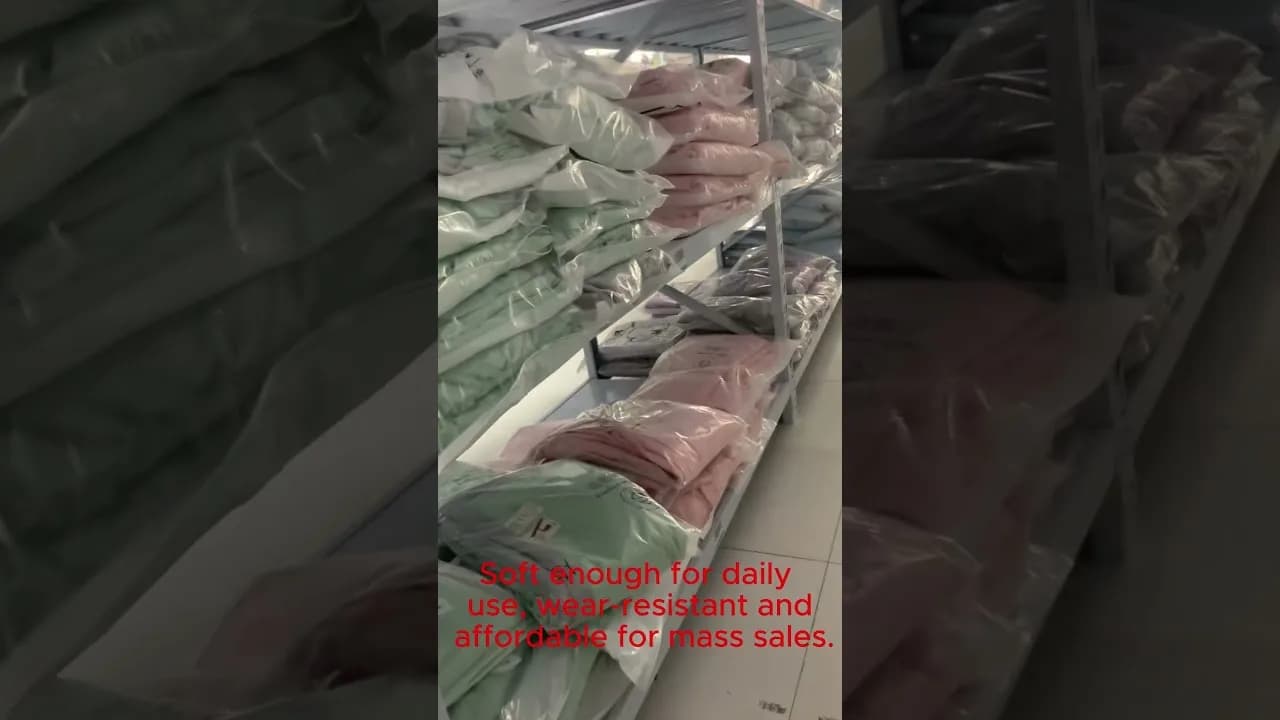
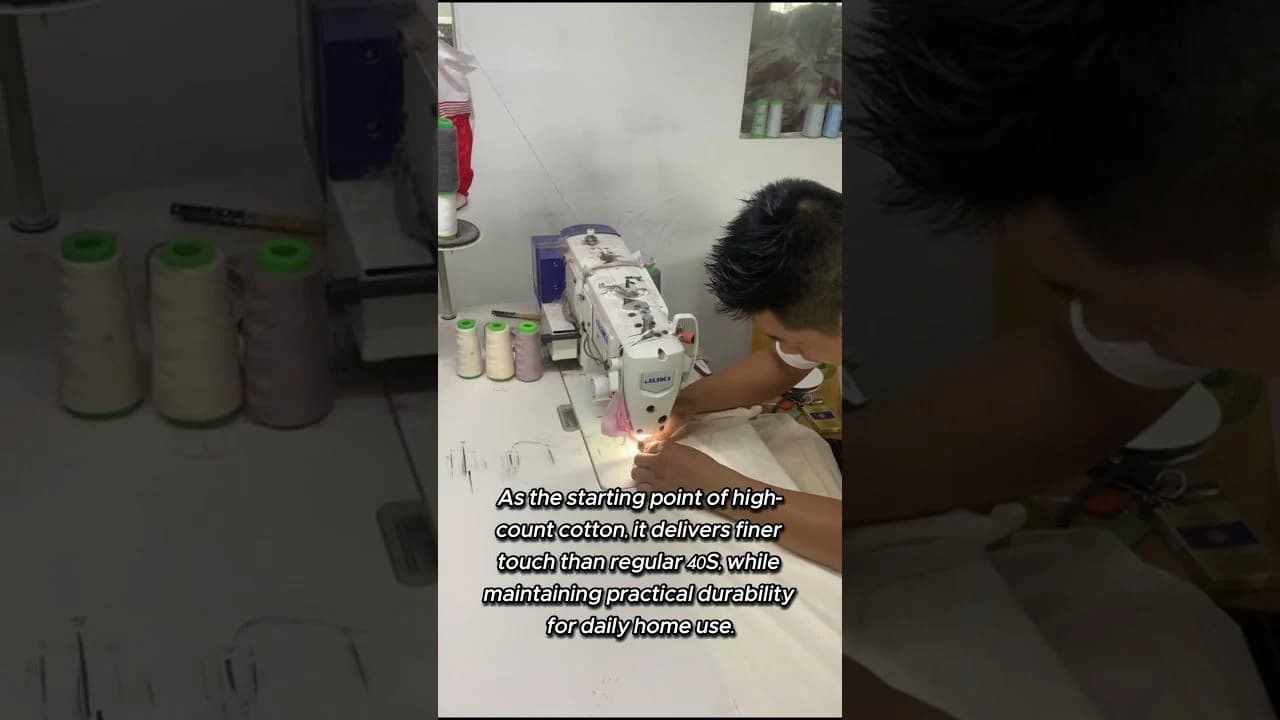
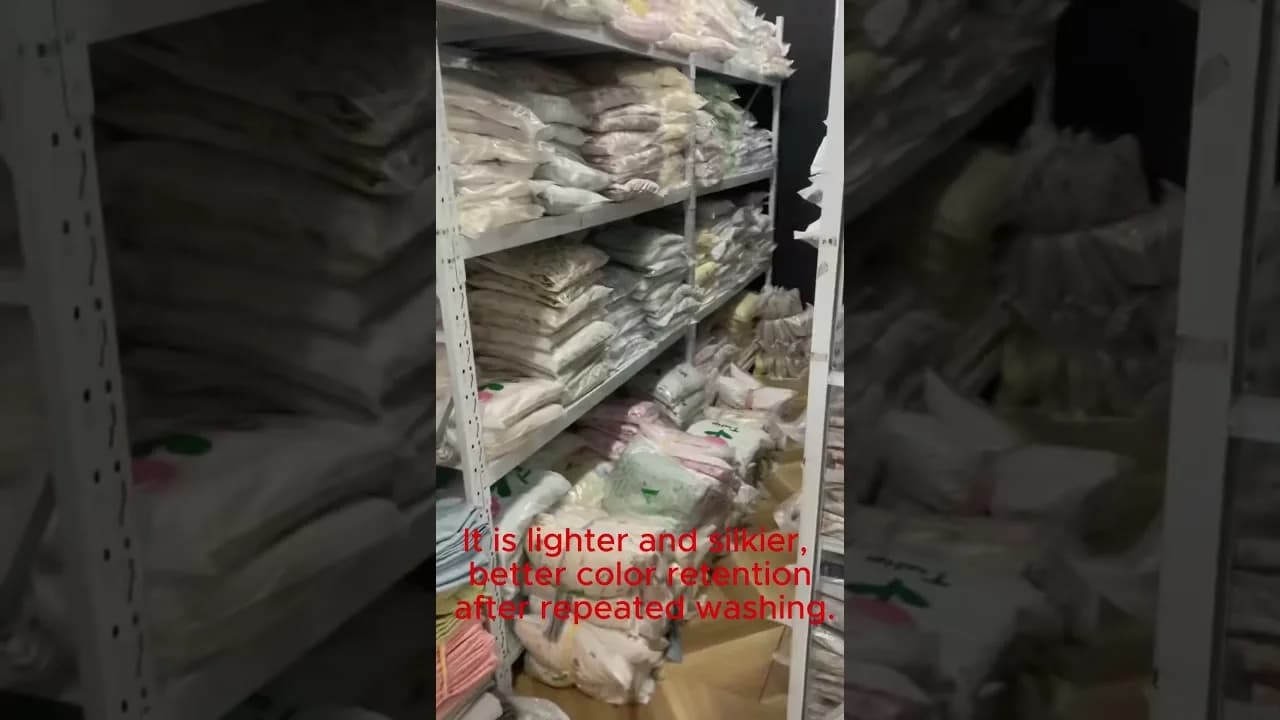
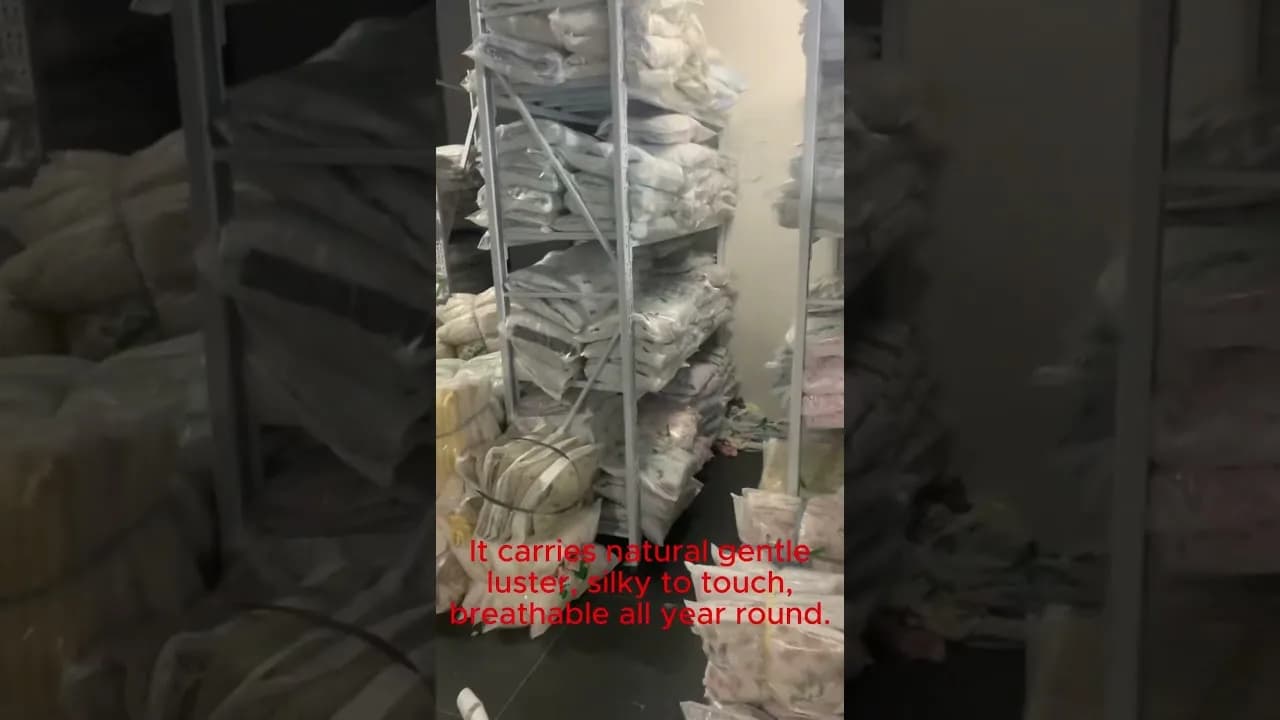
50S is the transition count: finer than the 40S that carries most volume bedding, coarser than the 60S that defines the premium tier, and priced roughly in between. The video's caption states the practical case exactly — lighter, silkier, better colour retention after repeated washing — and all three of those follow from one fact, that a finer combed yarn produces a smoother, more uniform fabric surface. Whether that is worth the step up depends entirely on what your programme is judged on.

What 50S Yarn Means Numerically

50S yarn is cotton yarn measured at 50 on the English cotton count scale, also written Ne 50, meaning one pound of that yarn contains fifty hanks of 840 yards each. The system is indirect: the weight is fixed at one pound and the length varies, so a higher number means more length per pound, less mass per unit length, and therefore a finer yarn. Tex and denier invert this. Tex is grams per 1,000 metres and denier is grams per 9,000 metres, both fixing length and measuring weight, so in those systems a higher number means a coarser yarn.

In practical terms 50S carries about a quarter more length per pound than 40S and about a sixth less than 60S. It is a genuine step, not a marketing decimal, but it is a smaller step than the jump from 40S straight to 60S — which is precisely its commercial purpose. The full ladder from 21S to 100S is laid out in what-is-yarn-count-s, and bedding-yarn-count-explained-40s-60s-80s covers the upper end in more depth than this page needs to.

40S vs 50S vs 60S: The Decision in One Table

Attribute40S50S60S
Hand-feelSoft, substantial, clearly cottonLighter and noticeably silkier than 40SFine, fluid, distinctly premium to the touch
Indicative finished weightHeaviest of the three at equal densityModerately lighter than 40SLightest; can read thin in plain weave
Colour after repeated washingGood; surface fuzz dulls print soonestCleaner and sharper for longer, given equal dye and processCleanest surface appearance, given equal dye and process
Achievable thread countComfortable to roughly 300TC single-plyComfortable in the 300 to 400TC band single-plySupports 400TC and above in sateen
Indicative cost tierVolume baselineModest premium over 40SClear premium; a larger step than 40S to 50S
Best-fit programmeMass-market retail, promotional sets, high-rotation contractPrinted retail and private label upgrading a mid tierPremium retail, luxury hospitality, sateen flagship lines
50S buys most of the hand-feel and surface improvement of 60S for a smaller price step than a full move to 60S, which makes it the efficient upgrade for a mid-tier programme rather than a premium one.

All figures above are indicative planning ranges rather than guaranteed specifications, because achievable weight, density and cost all move with fibre origin, twist, weave, finishing route and shrinkage control. The volume baseline is covered in 40s-mainstream-bedding-yarn, and the coarse end of the range in 21s-coarse-yarn-explained, which between them bracket where 50S sits.

Why Finer Yarn Reads Silkier

Finer counts require better fibre and more preparation. Carding separates the fibres and forms a sliver; combing is the additional step that removes the shorter fibres carried over from carding, producing a stronger, smoother, more even strand. A 50S yarn is normally combed as a matter of necessity rather than choice, because the short-fibre content that a carded 40S tolerates would break repeatedly at 50S. The buyer receives that combing as a side benefit: fewer protruding fibre ends, a smoother surface and less pilling.

The second effect is geometric. A finer yarn is a thinner cylinder, so at the same ends and picks per inch it packs a flatter, more regular surface and allows more threads per inch before the cloth stiffens. Lighter weight and a silkier surface are therefore the same phenomenon described two ways. What they are not is more durable — thinner yarn has less material per thread, which is the standing trade-off of the whole count ladder.

The Colour Retention Claim, Honestly Explained

Colour fastness is a material's resistance to fading or running, and it is determined mainly by dye class and dyeing process, not by yarn count. Reactive dyes form covalent bonds with cotton and deliver markedly better wash fastness than direct dyes, which rely on weaker forces. Wash fastness is rated on a 1 to 5 scale and light fastness on a 1 to 8 scale, both under established ISO and AATCC test protocols. No yarn count moves those ratings on its own.

So what does a finer count actually contribute? Appearance retention rather than fastness. A smoother, better-combed surface develops less fuzz and fewer pills under repeated laundering, and surface fuzz is what scatters light and makes a print look chalky and faded even when the dye itself has not shifted. Finer, more uniform yarn also takes dye more evenly, so the starting colour is cleaner. The honest formulation is that 50S keeps printed colour looking sharper for longer than 40S under the same dye and the same process — not that it is more colourfast.

Driver of colour performanceHow much it mattersWhat to specify or request
Dye classDecisive for wash fastnessSpecify reactive dyeing or printing explicitly on the PO
Dyeing and washing-off processDecisive; unfixed dye bleeds regardless of yarnAsk how unfixed dye is washed off and confirm the routine
Yarn fineness and combingSecondary; drives appearance retention, not fastness ratingSpecify 50S combed, single-ply, in warp and weft
Weave and surface smoothnessSecondary; flatter surfaces stay sharper visuallyChoose the weave deliberately, sateen or percale
Finishing and end-use launderingSignificant; industrial wash regimes are far harsherState the intended laundering regime when requesting test data
Yarn count improves how printed colour looks after repeated washing but does not by itself improve colour fastness, which is set mainly by dye class and dyeing process.

The practical consequence for a buyer is to stop treating yarn count as a fastness lever. If a programme has a fading complaint, the fix is in the dye and the wash-off, not in moving from 40S to 50S. If a programme has a looks-tired-after-a-season complaint, the count and the combing are exactly where to look.

Where 50S Is Worth the Money, and Where It Is Not

  • Worth it: printed retail and private label sets where the customer judges the product visually after several home washes, and where a modest cost step can be recovered at shelf price.
  • Worth it: a mid-tier line that needs visible separation from an entry 40S product without the cost and lead-time exposure of a 60S sateen.
  • Worth it: sateen in the 300 to 400TC band, where 50S carries the density comfortably while 40S starts to feel stiff and heavy.
  • Not worth it: high-rotation contract and hospitality linen washed industrially, where mass per thread and tear strength matter more than surface refinement.
  • Not worth it: promotional and price-led programmes, where the cost step cannot be recovered and 40S is the correct answer.
  • Not worth it: any programme where the fabric is quilted, heavily brushed or otherwise finished so that the yarn surface is no longer what the customer touches.

Weave choice interacts with all of this. In warp-faced sateen the warp yarn dominates the surface, so a finer warp buys more visible benefit than a finer weft; in balanced percale the two systems share the face. percale-vs-sateen-wholesale-weave-guide works through that trade-off, and thread-count-truth-bedding-quality-guide explains why the thread count a finer yarn unlocks is only meaningful when plies are counted honestly.

Deciding On 50S and Verifying You Received It

From decision to incoming check

  1. 01

    1 · Establish what the programme is judged on

    If the complaint you are protecting against is appearance after a season of home washing, a finer count is on the critical path. If it is tearing, seam slippage or industrial wash life, it is not, and the budget belongs elsewhere.

  2. 02

    2 · Price all three counts on the same construction

    Ask for 40S, 50S and 60S quoted at an identical weave, density, width and finish. Only then is the cost step visible as a number rather than a tier label, and the 40S-to-50S step is usually far smaller than the 50S-to-60S step.

  3. 03

    3 · Compare washed swatches, not new ones

    Request swatches of each count and have them laundered five to ten times under your intended regime. A finer count shows almost no advantage new; the entire case for 50S appears only after repeated washing.

  4. 04

    4 · Write the full string on the purchase order

    Specify 100% cotton, 50S single-ply combed in warp and weft, the weave, ends and picks per inch, reactive printing or dyeing, finished width and target gsm with a tolerance. A PO saying only 50S is not enforceable.

  5. 05

    5 · Verify by weight, not by feel

    At the same density, a genuine 50S fabric weighs measurably less than the 40S equivalent. Weigh a cut swatch for gsm and count ends and picks under a pick glass. If the density matches but the weight matches the 40S benchmark, the count was not delivered.

  6. 06

    6 · Request fastness data separately

    Ask for wash and rubbing fastness results on the actual dye and shade, on the standard grey scale ratings, rather than accepting the yarn count as evidence of colour performance. They are different questions.

New swatches of 40S and 50S sell themselves equally well. Washed ten times, only one of them still argues for its price.

How We Source and Quote 50S Programmes

BeddingTextilePro runs a source-factory-direct supply model: locked, dedicated production lines at large-scale Nantong mills, with finished goods shipping direct from the mill, so buyers receive mill pricing with no middleman markup on a count where the margin between tiers is genuinely tight. Our own in-line QC verifies count, density and finished gsm against the approved swatch before packing, which is what makes a 50S specification enforceable rather than aspirational. MOQ is 100 sets, OEM and ODM development is standard, OEKO-TEX support is available on request, and quotations are returned within one business day. Retail and brand programmes run through /private-label-bedding; contract and hospitality specifications through /hotel-linen.

The Short Answer for a Buyer

Treat 50S as an upgrade path rather than a category. It is the right move when an existing 40S programme needs a visibly better product at a controlled cost step and will be judged on how it looks after washing; it is the wrong move when durability, industrial laundering or price leadership define the brief. Specify it in full, price it against both neighbours on the same construction, and verify it by weight on arrival.

Frequently asked questions

Is 50S cotton yarn finer or coarser than 40S?
50S is finer than 40S. English cotton count is indirect: one hank is 840 yards, and the count equals the number of hanks weighing one pound, so a higher number always means a finer, lighter yarn. A 50S yarn carries about a quarter more length per pound than 40S. Tex and denier work in the opposite direction, fixing length and measuring weight, so a higher number there means a coarser yarn.
Does 50S really hold colour better than 40S?
It holds the appearance of colour better, which is not the same as being more colourfast. Colour fastness is determined mainly by dye class and dyeing process, with reactive dyes forming covalent bonds and outperforming direct dyes on wash fastness. What a finer combed yarn contributes is a smoother surface that develops less fuzz and fewer pills, so a print keeps looking sharp for longer under the same dye and process.
When should I choose 50S instead of 60S?
Choose 50S when a mid-tier programme needs visible separation from an entry 40S product at a controlled cost step. The price gap from 40S to 50S is typically smaller than the gap from 50S to 60S, so 50S captures much of the hand-feel and surface gain for less money. Move to 60S when the programme is genuinely premium, targets 400TC or above in sateen, or competes on luxury positioning.
What thread count can 50S support?
Single-ply 50S sits comfortably in roughly the 300 to 400TC band, above the practical ceiling of single-ply 40S and below the 400TC-plus range where 60S becomes the sensible choice. These are indicative planning ranges, not guaranteed specifications. Any 50S fabric advertised far above that band is usually counting the individual plies inside plied yarn as separate threads, which doubles the headline number without making the cloth finer.
How do I verify that I actually received 50S?
Verify by weight rather than by hand. At the same ends and picks per inch, a genuine 50S fabric weighs measurably less than its 40S equivalent, because finer yarn carries less mass per unit length. Weigh a cut swatch for grams per square metre and count the density under a pick glass. If the density is correct but the weight matches your 40S benchmark, a coarser yarn was substituted.
#50S cotton yarn#40S vs 50S vs 60S#mid-range bedding fabric#colour retention after washing#combed cotton yarn#private label bedding spec

Sourcing bedding for your market?

Factory-direct quotes, 100-set MOQ, full OEM/ODM customization. We reply within one business day.
More videos

All videos