100 Sets / Style · Minimum OrderNo Retail · B2B Wholesale OnlyNantong Factory-Direct · No MiddlemanOEM / ODM · Full CustomizationEXW / FCA / CIP / DDP · FCL & LCL Shipping100 Sets / Style · Minimum OrderNo Retail · B2B Wholesale OnlyNantong Factory-Direct · No MiddlemanOEM / ODM · Full CustomizationEXW / FCA / CIP / DDP · FCL & LCL Shipping
BeddingTextilePro

Fabric Guide

40S Cotton Yarn: Why It Is the Volume Default for Wholesale Bedding Programmes

Ms. Sophia Liu·

In short

40S cotton yarn is the mainstream count for wholesale bedding: at 40 hanks of 840 yards per pound it is finer than 32S but far cheaper than 60S. Single-ply 40S supports 133x72 percale and roughly 200-300TC sateen, giving soft hand-feel, good wear resistance and volume-friendly pricing.

40S is the default cotton yarn count for volume bedding programmes because it balances softness, wear resistance and cost better than any other count. It is the yarn behind most 133x72 percale and 200-300TC sateen sold at mass-market price points.

40S is the mainstream cotton yarn count for wholesale bedding because it is the cheapest count that still feels good against skin for daily use. Coarser 32S and 21S are more durable per gram but read as rough and heavy at retail; finer 60S and 80S feel better but cost materially more and wear thinner. 40S sits on the commercial sweet spot, which is why the vast majority of 133x72 percale and 200-300TC sateen programmes shipping out of Nantong are built on it.

What 40S Yarn Actually Means

40S yarn is cotton yarn measured at 40 on the English cotton count scale (Ne), meaning one pound of that yarn contains forty hanks of 840 yards each. English cotton count is an indirect system: the weight is fixed and the length varies, so a higher number means a finer, lighter yarn. This is the opposite of tex and denier, which are direct systems fixing length and measuring weight, so in those systems a higher number means a coarser yarn. If the Ne/S ladder as a whole is new to you, the overview video what-is-yarn-count-s walks the full 21S to 100S range before this one narrows in.

Single-ply means the yarn is one spun strand, written simply as 40S. Plied yarn twists two or more strands together and is written as a ratio such as 32S/2 or 2/40. That distinction matters commercially, not just technically, and it is the single most common source of misread quotations in this category.

Why 40S Became the Market Default

Three forces converged. First, fibre economics: spinning finer yarn requires combing, which removes the shorter fibres left after carding to create a stronger, smoother strand, and every gram of short fibre removed is a gram paid for but not sold. Above roughly 40S that comb waste climbs steeply, so cost per metre of finished fabric rises faster than perceived quality. Second, loom productivity: 40S runs stable at high speed on standard weaving equipment, so mills quote it without a setup premium. Third, retail expectation: 40S delivers the hand-feel a consumer expects from a mid-priced cotton set, which is exactly the segment most private label and e-commerce programmes are fighting over.

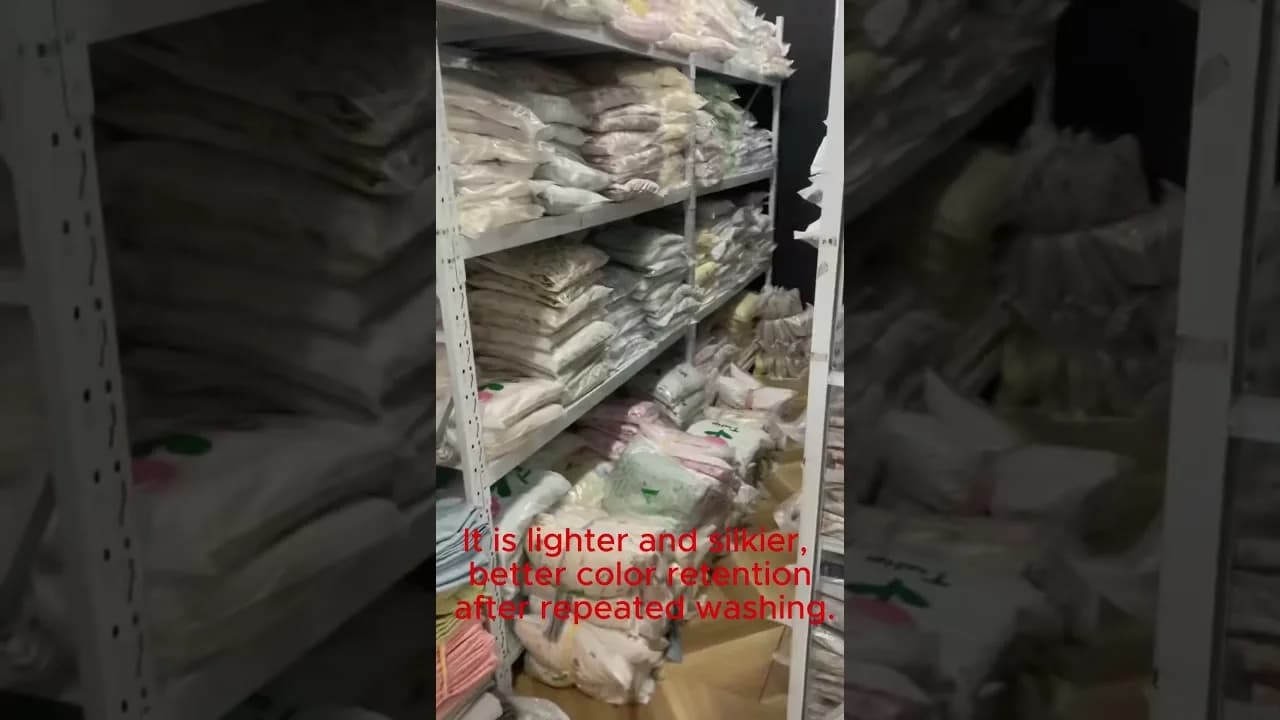
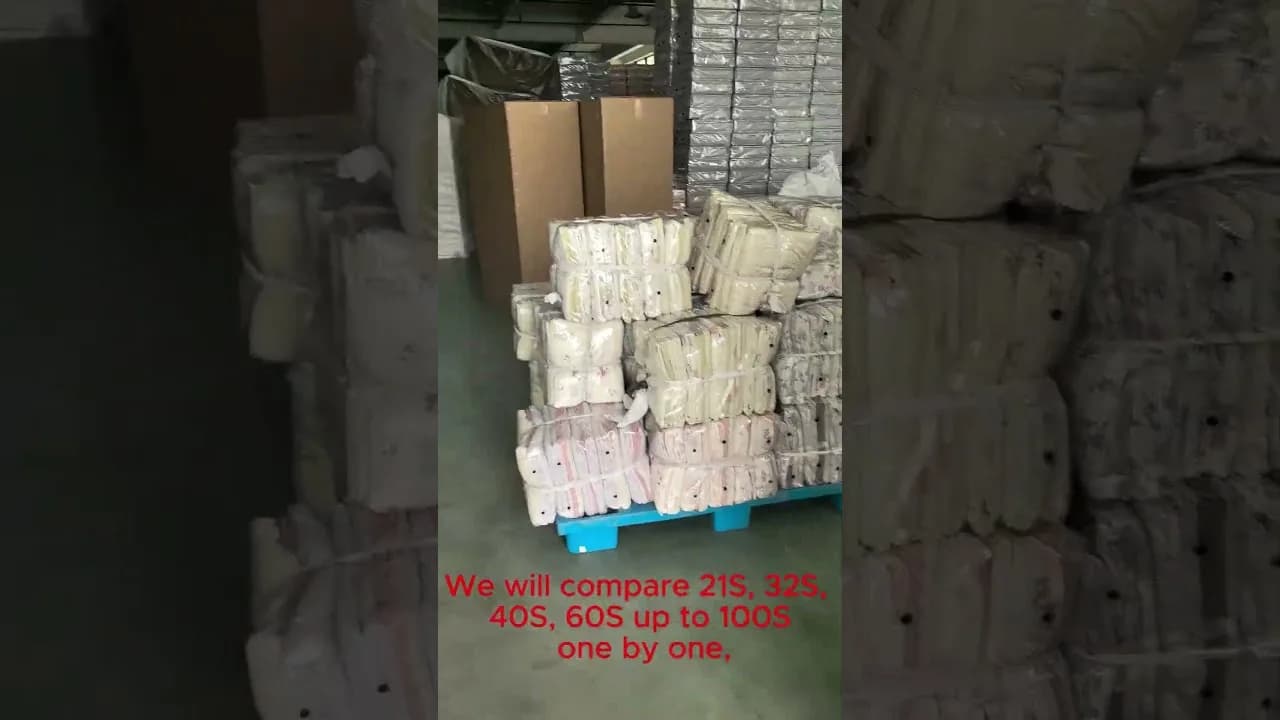
The video footage shows the practical end of that logic: finished sets individually poly-bagged and racked in layers, which is what a 40S programme looks like at volume. It is a fabric built to be produced in quantity, packed the same way every time, and sold on repeat.

What 40S Yields in Finished Bedding

In plain weave, single-ply 40S is the standard yarn behind 133x72 construction, the density that dominates printed cotton bedding worldwide. All figures below are indicative ranges for planning, not guaranteed specifications, since actual results move with fibre origin, twist, finishing and shrinkage control.

Construction on 40STypical weaveIndicative fabric weightTypical positioning
133x72Plain / percale~110-125 gsmPrinted mass-market sets, promotional programmes
128x68Plain~100-115 gsmEntry price points, high print coverage
200TCPlain / percale~110-125 gsmCrisp cool hand, everyday retail
300TCSateen~130-150 gsmSoft lustrous hand, mid-tier hotel and retail
Single-ply 40S cotton realistically supports 133x72 percale through roughly 300TC sateen, which is the density band where most volume bedding programmes are priced. Indicative figures only.

Above roughly 300TC in single-ply, mills reach for 60S or finer because packing more 40S ends into the same width forces the fabric stiff and heavy. That ceiling is the honest limit of the count. The post bedding-yarn-count-explained-40s-60s-80s covers where the finer tiers earn their premium, and 13372-high-density-cotton-explained explains the 133x72 construction in full.

32S vs 40S vs 60S: The Buying Decision

Criterion32S40S60S
Hand-feelFuller, slightly coarse, substantialSoft, smooth, neutral crispnessFine, silky, noticeably lighter
Indicative fabric weightHeavier at equal densityMid-range, ~110-150 gsm typicalLighter at equal density
Durability / wearHighest abrasion tolerance per gramStrong for daily domestic useLower abrasion tolerance, needs care
Achievable thread countUp to roughly 200TC comfortably133x72 through roughly 300TC400TC and above achievable
Indicative cost tierLowest of the threeModerate, volume-friendlyHighest, combing and waste driven
Best-fit programmeBudget lines, heavy-wash institutionalMass retail, private label, mid-tier hotelPremium retail, luxury sateen
Choose 40S when a programme must feel soft, survive domestic laundering and hold a volume price; choose 32S only when cost or abrasion resistance outranks hand-feel, and 60S only when the retail price supports a premium finer-yarn story.

For the coarse end of that table, the deep dive 21s-coarse-yarn-explained explains where genuinely heavy yarn still earns its place, which is a narrower set of cases than most buyers assume.

The Ply Trap: How 32S/2 Gets Sold as Something Finer

Thread count is inflated most often by counting the individual strands inside plied yarn rather than the finished threads in the fabric. A fabric woven from two-ply yarn can be described with double the honest count, so a genuine 150-thread construction is quoted as 300TC. The fabric is not finer; it is simply counted twice.

  • 40S written alone means single-ply, one spun strand per thread.
  • 32S/2 or 2/40 means plied yarn, two strands twisted into one thread.
  • Two-ply yarn is thicker than its component count, so 2/40 is roughly comparable in diameter to a coarser single yarn, not a finer one.
  • A 300TC single-ply 40S sateen and a 300TC claim built on plied yarn are not the same fabric, and rarely the same price.
  • Always require the quotation to state count, ply and thread count together; any one of the three alone is unverifiable.

The post thread-count-truth-bedding-quality-guide sets out the full arithmetic of this, and what-is-gsm-in-bedding explains why fabric weight in grams per square metre is the harder number to fake and therefore the better cross-check.

Combed vs Carded 40S

Combed 40S and carded 40S are the same nominal count and very different products. Carding separates the fibres and assembles them into a sliver; combing is the optional additional step that removes the shorter fibres carried over from carding, producing a stronger, smoother, less pill-prone yarn at higher cost. Two mills can both honestly quote 40S while one delivers a fabric that pills within a season and the other does not.

AttributeCarded 40SCombed 40S
Short fibre contentRetainedLargely removed
Surface after washingMore prone to pilling and fuzzStays smoother longer
Yarn strengthAdequateHigher and more even
Indicative costLowerHigher, reflects comb waste
Typical usePromotional and price-led setsRepeat retail and hotel programmes
Combed 40S and carded 40S share a count but not a quality tier, so any bedding specification quoting 40S without stating combed or carded is incomplete.

How to Specify 40S and Verify You Received It

Specifying 40S on a purchase order

  1. 01

    1 · Write the full string, not the count

    Specify count, ply, preparation, weave and density together, for example: 100% cotton, 40S single-ply combed, plain weave, 133x72, reactive printed. A PO that says only 40S is not enforceable.

  2. 02

    2 · Request the mill spec sheet

    Ask for the mill's own greige and finished specification showing yarn count, ends and picks per inch, finished width and finished weight in gsm. This is the document your later checks are measured against.

  3. 03

    3 · Check the hanger sample against the sheet

    Weigh a cut swatch to confirm gsm sits in the stated range and count threads under a pick glass to confirm the density. Discrepancies here are cheap to fix; discrepancies after cutting are not.

  4. 04

    4 · Fix ply in writing

    State explicitly that thread count is counted as finished threads, single-ply, and that plied-yarn arithmetic is not accepted. This removes the most common post-shipment dispute in the category.

  5. 05

    5 · Approve on the pre-production sample

    Sign off the PP sample against the same spec sheet after wash, checking shrinkage, hand-feel and surface. The approved PP sample, not the quotation, is the reference for the bulk.

  6. 06

    6 · Hold the spec across repeats

    Carry the identical spec string onto every reorder. Silent substitution from combed to carded 40S is the usual way a repeat programme drifts.

A yarn count on its own is a claim. Count plus ply plus preparation plus density, verified against the mill sheet, is a specification.

Where 40S Is the Wrong Answer

  • High-turnover institutional laundry with harsh chemistry and industrial pressing, where coarser yarn and higher-tenacity construction survive longer.
  • Premium sateen positioned above roughly 300TC, where 60S and finer are needed to keep the fabric supple rather than board-like.
  • Products sold explicitly on weight and substance, such as heavy flannel or brushed winter ranges.
  • Programmes whose retail story is fibre-led, for example extra-long staple cotton, where the count is expected to match the narrative.

Sourcing 40S Bedding Through BeddingTextilePro

BeddingTextilePro operates a source-factory-direct supply model from Nantong: locked, dedicated production lines at large-scale Nantong mills, with goods shipping direct from the mill. That means mill pricing with no middleman markup, and our own in-line QC checking count, density and finished weight against the approved specification rather than relying solely on the mill's internal reporting. MOQ is 100 sets, OEM and ODM programmes are supported across print development, packaging and labelling, and OEKO-TEX STANDARD 100 support is available for buyers who require textiles tested for harmful substances, with bed linen falling under the direct-skin-contact product class. Quotations are returned within one business day. For retail and marketplace programmes, see /private-label-bedding; for contract and hospitality volumes, see /hotel-linen.

Frequently asked questions

Is 40S yarn finer or coarser than 32S?
40S is finer than 32S. English cotton count is an indirect system in which one hank measures 840 yards and the count equals the number of hanks in one pound, so a higher number always means a finer, lighter yarn. 40S therefore produces a lighter, smoother fabric than 32S at the same weave density, while 60S is finer still. Tex and denier work the opposite way, because they fix length and measure weight.
What thread count can 40S cotton realistically reach?
Single-ply 40S comfortably supports 133x72 percale, 200TC plain weave and roughly 300TC sateen, which covers most volume bedding price points. These are indicative planning figures rather than guaranteed specifications. Beyond about 300TC in single-ply, packing more 40S ends into the same width makes the fabric stiff and heavy, so mills normally move to 60S or finer. Any 40S fabric advertised well above that band is usually counting plied yarn strands.
What is the difference between 40S and 32S/2?
40S written alone is single-ply, meaning one spun strand forms each thread. 32S/2 is plied yarn, two 32S strands twisted together into a single thicker thread. Plied yarn is coarser than its component count suggests, not finer. The commercial risk is that thread count claims sometimes count the individual strands inside plied yarn, doubling the stated number without making the fabric finer. Require count, ply and thread count on every quotation.
Should I order combed or carded 40S?
Order combed 40S for any programme that will be reordered or judged on appearance after washing. Combing is the optional step that removes the shorter fibres left after carding, producing a stronger, smoother yarn that resists pilling, at a higher cost reflecting the removed waste. Carded 40S is acceptable for price-led promotional sets with short expected life. Both are honestly described as 40S, so the specification must state which one.
Why does finer yarn such as 60S cost more than 40S?
Finer yarn demands longer, more uniform fibre and heavier combing, and combing removes the short fibres carried over from carding. Those removed fibres are purchased but never sold as finished fabric, so cost per usable kilogram rises. Finer yarn also runs slower and breaks more often in spinning and weaving, reducing machine output. Above roughly 40S these effects compound, which is a core reason 40S remains the volume default for wholesale bedding.
#40S cotton yarn#yarn count bedding#wholesale bedding fabric#133x72 percale#combed vs carded cotton#single ply yarn

Sourcing bedding for your market?

Factory-direct quotes, 100-set MOQ, full OEM/ODM customization. We reply within one business day.

More videos

All videos