TL:DR
For a comparable wholesale bedding quotation, identify every finished article and component, then specify fibre and construction, exact dimensions, colour or artwork, make-up, quantity by SKU, branding, unit and export packaging, sample status, evidence requests, destination and delivery basis. Ask suppliers to state every exception. Compare total scope and assumptions before comparing unit price; do not infer performance from yarn count, thread count or a styled image alone.

A useful wholesale bedding RFQ makes suppliers price the same finished article, commercial scope and approval route—not different assumptions hidden behind similar unit prices.
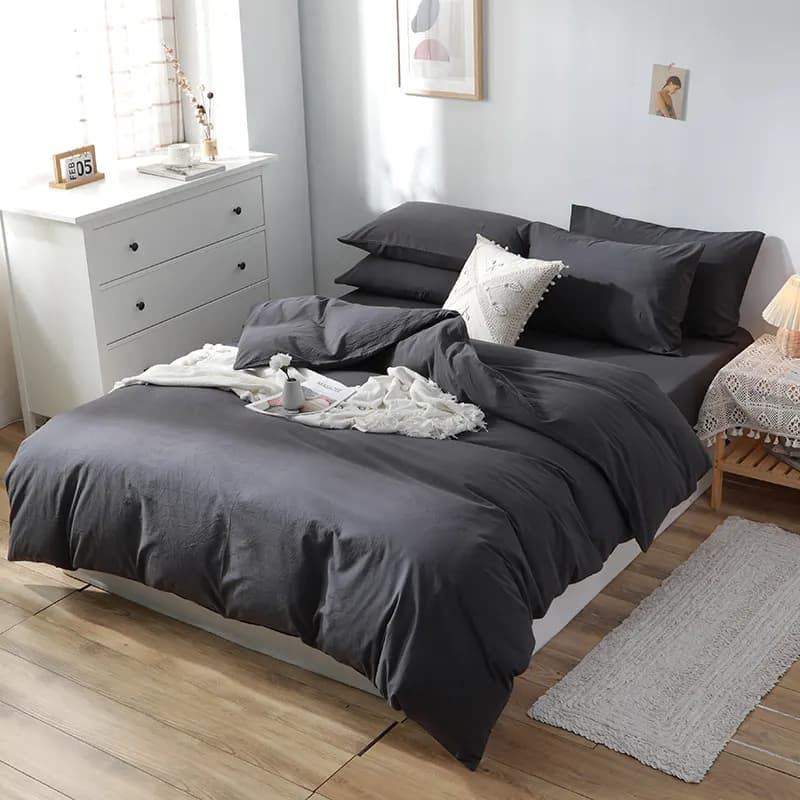
Direct answer: a wholesale bedding RFQ is ready for quotation when every supplier can identify the same finished SKU, construction, quantity split, branding and packaging scope, approval reference and delivery basis. Write the requirement at finished-product level, invite stated alternatives as separate options, and require assumptions and exclusions to be visible. A low unit price is not comparable if it omits components, packaging, development work, evidence or delivery responsibility.
What should a wholesale bedding RFQ include?
Start with the buying job and market, then define each sellable or room-ready item. A four-piece set is not a universal specification: name the duvet cover, flat or fitted sheet and pillowcase quantity, their exact dimensions, construction details and pack configuration. The U.S. International Trade Administration says an export quotation normally describes the products, price, shipment timing, terms of sale and payment; its pro forma invoice guidance also includes item prices, packed dimensions and weights, Incoterm with delivery point, payment terms, estimated shipping date and quotation validity. Use these as commercial fields, not as proof of product quality or import compliance.
| RFQ layer | Buyer must define | Supplier should return | Hidden mismatch to prevent |
|---|---|---|---|
| Finished SKU | Article, component list, size system and dimensions | Exact quoted item and any alternative | Different piece counts or nominal sizes |
| Material and construction | Verified fibre, weave/construction, density or GSM where relevant, finish and make-up | Proposed specification plus exceptions | Performance inferred from one yarn or thread-count number |
| Brand and pack | Colour/artwork, labels, logo, unit pack, insert and case-pack rule | Included development and packing scope | Plain bulk pack priced against retail-ready pack |
| Quantity | Units by design/style, colour and size | MOQ logic, split feasibility and price tiers | One total hiding per-SKU minimums |
| Approval and evidence | Sample status, acceptance fields and requested document/test scope | Deliverable, specimen/scope and cost | A generic certificate or promise treated as finished-SKU evidence |
| Delivery and payment | Destination, named delivery point, requested Incoterm, currency and timing need | Quotation basis, validity, milestones and exclusions | Unlike freight, duty or risk responsibilities |
Freeze the finished product before asking for price
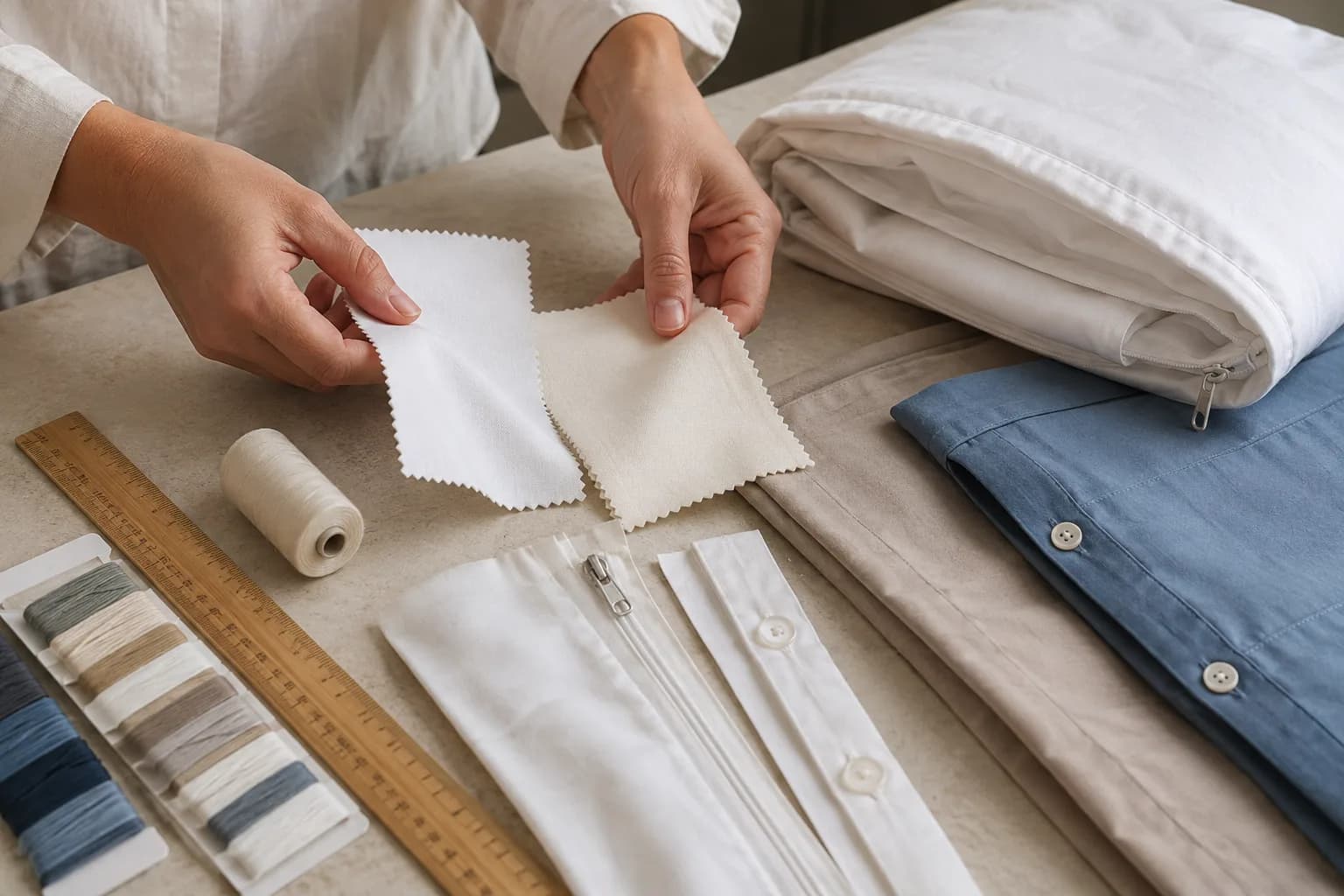
Describe what the buyer will receive, not only the fabric. For each duvet cover, sheet, pillowcase, quilt or protector, record the component, finished dimensions and tolerance question, closure or hem, stitch and trim details, colour or print version, label position and care route. Fibre, yarn, weave, thread density, GSM, finish and finished structure work together; none of those inputs alone guarantees softness, breathability, durability, shrinkage or colourfastness. If a performance requirement matters, name the intended use and ask what product-specific evidence can be offered.
Separate base quote, options and exclusions
Give the RFQ one base specification so supplier responses can be aligned. Put optional fabric upgrades, alternative closures, additional sizes, custom packaging and requested testing on separate lines. Ask for the price basis and quantity tier for each confirmed design/style, rather than treating a total programme quantity as one automatic MOQ. BeddingTextilePro can review a 100-set trial starting point for each confirmed design/style where applicable, but size, colour, construction, pack and material splits still require feasibility confirmation in the actual quotation.
| RFQ section | Minimum buyer input | Comparison output |
|---|---|---|
| Buyer and market | Company, sales channel, destination market and intended application | Correct size, labelling and document questions |
| SKU matrix | Article, components, dimensions, colour/design and quantity by size | Like-for-like item and quantity table |
| Construction | Fibre, weave/structure, density/GSM where relevant, finish and make-up | Written proposal and deviations |
| Customization | Artwork version, Pantone reference, logo, labels and packaging | Included work, one-time development and approval needs |
| Samples and evidence | Required sample type, review fields and document/test question | Scope, timing to confirm and separate cost |
| Commercial and delivery | Currency, destination, Incoterm request, payment question and required date | Price validity, delivery basis, milestones and exclusions |
How to compare bedding supplier quotations
Normalize the responses before ranking them. First compare compliance to the base SKU and list every exception. Then reconcile unit, set and carton quantities; included components; sample and artwork work; unit and export pack; inspection or evidence scope; currency; named Incoterms place; payment milestones; quotation validity and delivery assumptions. Incoterms rules allocate specific seller and buyer obligations, costs and risk points, but they do not define product quality, payment method or transfer of ownership. Those items need their own written terms.
Build a quote-exception comparison record
Do not overwrite the buyer brief with a supplier assumption just to make a spreadsheet look aligned. Give every departure its own exception ID, preserve the requested field beside the quoted response, and record whether the difference changes the finished SKU, sample route, evidence scope, packaging, quantity basis or delivery responsibility. The buyer can accept an option, request a corrected quote or leave it open, but the shortlist should show which baseline each price actually covers.
| Exception field | Record side by side | Buyer decision | Release rule |
|---|---|---|---|
| Product or component | Requested SKU/component versus quoted substitute | Accept as a named alternative, reject or request revision | Never compare it as the unchanged base item |
| Construction or finish | Requested field, supplier response and unconfirmed value | Clarify, resample or separate the option | Do not infer finished performance |
| Branding or pack | Active artwork/pack revision versus included scope | Requote or reopen the affected approval | No silent plain-pack substitution |
| Quantity and price basis | Requested split, quoted MOQ/tier and unit basis | Normalize the same design/style and pack basis | Keep programme total separate from per-SKU feasibility |
| Evidence or delivery | Requested scope, offered document/service, named place and exclusions | Accept the stated scope or request correction | A price line does not prove evidence or transfer responsibility |

Wholesale bedding RFQ workflow
From buyer brief to quotation shortlist
- 01
1 · Define the buyer job
Name the market, application, assortment goal and decision deadline.
- 02
2 · Build the SKU matrix
List finished articles, components, dimensions, designs and quantity by size.
- 03
3 · Lock product and pack scope
Write construction, make-up, branding, labels and packaging requirements.
- 04
4 · State approval and evidence questions
Identify sample status, review criteria and the exact scope of any requested evidence.
- 05
5 · Set commercial comparison fields
Request currency, tiers, named delivery point, Incoterm, payment terms, validity and exclusions.
- 06
6 · Normalize and clarify
Separate compliant bids, alternatives and missing assumptions before selecting a sample or supplier path.
Common RFQ mistakes that block an accurate quote
- Sending only a styled product photo without a component, size and construction record.
- Writing cotton, hotel quality or high thread count as if it defines the finished fabric and make-up.
- Giving one total quantity while omitting the split by design/style, colour and size.
- Requesting custom logo and packaging without artwork status, label content, pack type or case-pack rule.
- Comparing FOB, CIF, DDP or other delivery bases without a named place and clearly stated exclusions.
- Treating a sample, certificate icon or supplier statement as evidence for every future finished SKU.
Send a quote-ready bedding brief
BeddingTextilePro is a Nantong trading company coordinating source-factory direct supply, dedicated partner-mill lines, in-line QC and direct mill shipping. Use the wholesale bedding collection to select real product references, then send the product type, material/construction, exact sizes, quantity by confirmed design/style, branding, packaging, target market and delivery basis through the quote path. Unknown fields can be marked for recommendation; they should not be silently guessed.
Frequently asked questions
- What information is needed for a wholesale bedding quote?
- Provide the finished article and components, construction, exact dimensions, colour/design, quantity by size and design/style, branding, packaging, sample status, target market, destination and requested delivery basis.
- How do I make bedding supplier quotations comparable?
- Send one base SKU matrix, assign each departure an exception ID, preserve the requested and quoted values side by side, then normalize components, quantities, packaging, samples, evidence, currency, delivery term, payment scope and exclusions.
- Should I specify both thread count and GSM?
- Use only parameters relevant to the construction and verify how they are measured. Neither thread count nor GSM alone predicts finished performance; fibre, yarn, weave, density, finish and make-up must be considered together.
- How does the 100-set minimum apply to a wholesale bedding range?
- Each color and size combination requires at least 100 sets. Quantities from different colors or sizes cannot be pooled. List each variant separately in the RFQ, along with its fabric, print and packaging specification.
- Does an RFQ become a purchase order or contract?
- Not by itself. An RFQ requests comparable information and pricing. Accepted specifications, quotation terms, samples, purchase order and contract controls still need to be aligned before bulk release.
Sources & references
Shop by category
Explore our services
Sourcing bedding for your market?
Factory-direct quotes, 100-set minimum per color and size combination, full OEM/ODM customization. We reply within one business day.