In short
Anti-mite bedding should use a complete, breathable allergen-barrier encasing with verified construction and wash durability; antimicrobial bedding needs organism-specific efficacy data after the claimed number of washes. The two claims are not interchangeable. OEKO-TEX STANDARD 100 supports harmful-substance safety, not anti-mite or antimicrobial performance, so buyers must request separate evidence for each claim.
Anti-mite and antimicrobial bedding solve different problems. A mite-barrier encasing blocks allergen movement; an antimicrobial treatment limits specified microbes on the textile. This buyer guide separates the claims, evidence and wash-durability checks needed for hotel, healthcare and senior-care programs.
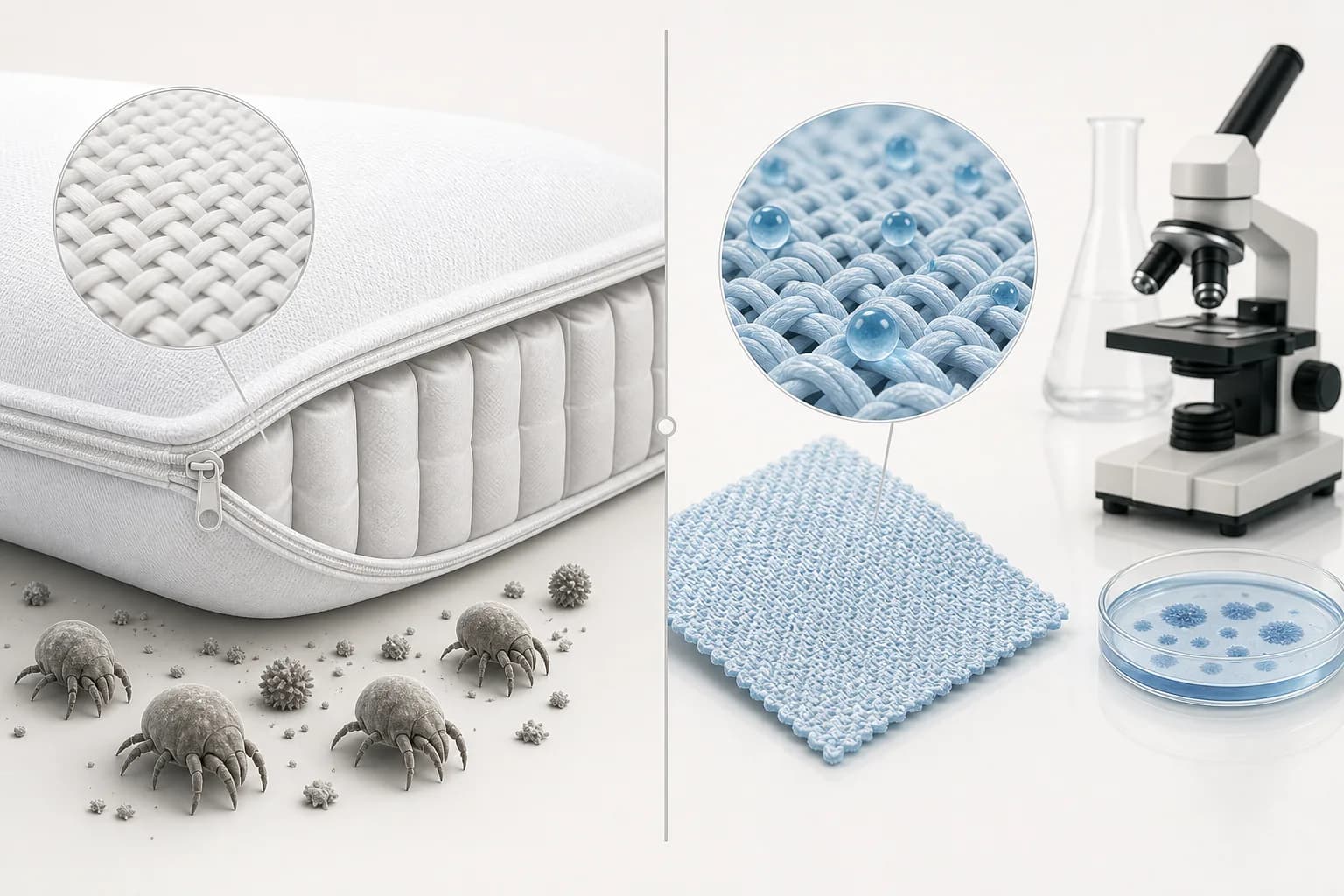
Anti-mite and antimicrobial bedding are not two names for the same product. Anti-mite bedding is primarily a barrier system: a tightly constructed, fully enclosed cover limits movement of dust-mite bodies and allergen-bearing particles between a mattress, pillow or duvet and the sleeper. Antimicrobial bedding uses an active treatment or inherently functional material to reduce specified bacteria or other microorganisms on the textile under stated test conditions. For a hotel, clinic, senior-care residence or student-housing program, the buying decision is therefore not 'which hygiene label sounds strongest?' It is which exposure route you need to control, what evidence supports the exact claim, and whether the performance remains after the laundering cycle in your tender.
What is anti-mite bedding?
Anti-mite bedding usually means an allergen-impermeable encasing fitted around the mattress, pillow or duvet underneath the normal bed linen. Its job is physical separation, not poisoning mites. The ECARF Foundation describes encasings as covers whose material and weave largely prevent contact between mites and the sleeper. A clinical practice parameter published in the Journal of Allergy and Clinical Immunology identifies vinyl, laminate, woven-microfiber and nonwoven-microfiber encasings, and reports that fabrics with pores below 10 micrometres reduced the measured Der f 1 and Der p 1 allergens below detection in the cited material tests. Pore size alone is not a complete specification, however: seams, zip closure, breathability, fit and the finished cover's leakage performance matter as much as the base cloth.
Anti-mite versus antimicrobial: what is the difference?
| Physical anti-mite barrier | Antimicrobial-treated textile | |
|---|---|---|
| Primary target | Mite bodies and allergen-bearing particles | Named bacteria, fungi or other microorganisms in the test claim |
| How it works | Dense fabric plus sealed seams and closure restrict passage | An active substance or functional finish inhibits or reduces specified organisms |
| Best placement | Mattress, pillow and duvet encasings under regular linen | Top fabric, protector or selected institutional textile |
| Evidence to request | Finished-cover barrier result, construction and fit | Test method, organisms, log reduction, contact time and control |
| Main durability risk | Zip, seam or membrane failure after laundering | Loss of active effect after washing or chemical exposure |
| Claim boundary | Reduces allergen exposure; does not sterilize the bed | Does not automatically protect users from infection or replace cleaning |
What proof should a wholesale buyer request?
A defensible specification names the function, test unit and end-of-life condition. For a barrier product, ask for evidence on the finished encasing, not only a supplier statement about yarn fineness. For an antimicrobial product, ask which organism was tested, by which method, on which fabric and after how many washes. In the United States, the Environmental Protection Agency's treated-articles policy draws a hard line between protection of the article itself and public-health claims: an exempt treated article may claim that a preservative protects the product, but implied or explicit claims against human pathogens require the appropriate registration and evidence. EPA's current soft-surface guidance likewise uses specified organisms, controls, textile carriers and log-reduction thresholds. Marketing language is not a substitute for that test design.
| RFQ field | What to require | Why it protects the program |
|---|---|---|
| Barrier construction | Fabric type, finished pore/barrier evidence, seam design, covered zip and full dimensions | A dense panel can still leak at the closure or fit poorly |
| Antimicrobial scope | Active treatment, target organism, test method, contact time and result versus control | Prevents a vague 'antibacterial' claim from standing in for measured efficacy |
| Wash durability | Claimed wash count plus post-wash barrier or antimicrobial result | Initial performance says nothing about commercial service life |
| Chemical safety | Destination-market restricted-substance report and valid product-specific documentation | Confirms skin-contact safety separately from functional efficacy |
| Claim wording | Approved label copy defining whether the treatment protects the textile or supports a registered public-health claim | Reduces regulatory and marketplace enforcement risk |
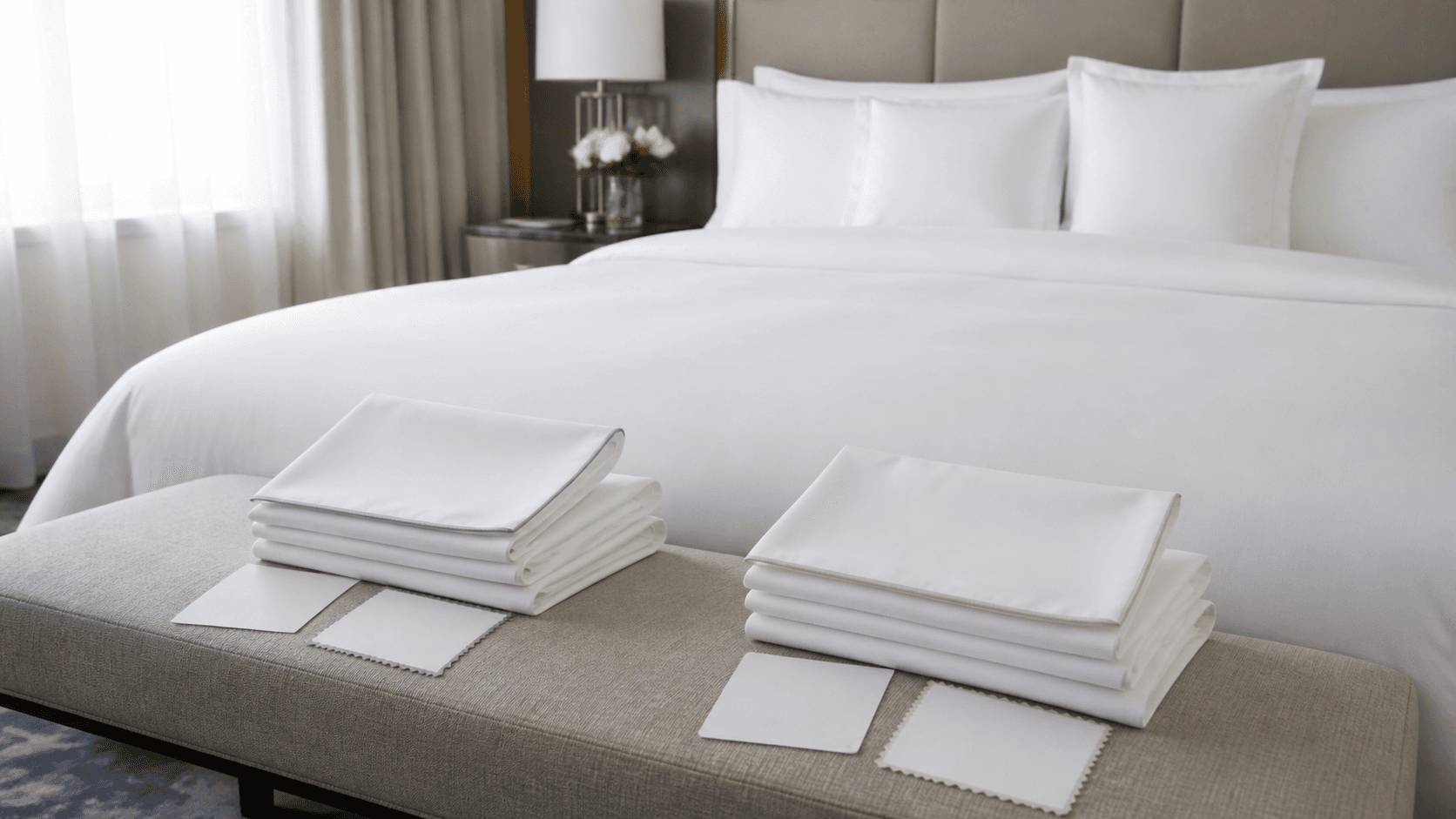
| Quality control | Pre-production sample, sealed reference, incoming inspection and lot-level traceability | Keeps the tested construction aligned with the delivered construction |
How do ECARF and OEKO-TEX fit the specification?
Use each credential only for what it actually covers. An ECARF Allergy Seal for an encasing is relevant to allergy-friendly barrier performance and product criteria. OEKO-TEX STANDARD 100 is a harmful-substance safety label: OEKO-TEX states that certified articles are tested against more than 1,000 harmful substances, with stricter requirements for closer skin contact, and identifies bed linen as Product Class 2. It does not by itself certify dust-mite exclusion, antimicrobial efficacy, medical benefit or a specific wash-life claim. For the same reason, a general textile test report cannot be stretched to every SKU: match the report, certified article and production lot to the product you are buying. Keep the site's existing OEKO-TEX documentation request in the file, but request separate functional evidence for the anti-mite or antimicrobial claim.
A six-step approval flow for hotel and care bedding
From hygiene requirement to approved bulk lot
- 01
1 · Define the exposure problem
Choose allergen containment, textile preservation, a regulated antimicrobial claim, or a combination. Do not begin with a marketing label.
- 02
2 · Select the product layer
Place mite control in complete mattress, pillow or duvet encasings; place any antimicrobial function only where its use and laundering conditions match the evidence.
- 03
3 · Lock the test protocol
State the barrier test or named organism, method, contact time, control and pass threshold before sampling.
- 04
4 · Simulate laundering
Test after the wash count, temperature, bleach chemistry and drying conditions expected in the property.
- 05
5 · Approve construction and claims
Seal a sample with the exact fabric, seam, zip, treatment and label wording that passed review.
- 06
6 · Control the production lot
Check dimensions, closure, workmanship and treatment traceability against the sealed sample before shipment.
Where anti-mite and antimicrobial bedding fits a hotel program
For most hotels, the practical foundation remains washable bed linen, mattress and pillow protectors, controlled laundry chemistry, dry storage and a documented replacement cycle. Add full encasings where the property serves allergy-sensitive guests, long-stay residents, healthcare or senior-care populations, or where the tender explicitly requires allergen control. Add an antimicrobial treatment only when the use case, destination-market claim and post-laundering evidence justify it. This avoids paying a premium for an unverified finish while giving procurement a measurable acceptance standard. Our hotel-linen program can align sizes, white or custom colour, protectors and top linen on locked production lines at large-scale Nantong mills; functional encasings or finishes should be quoted against the evidence checklist above rather than treated as a default feature.
The bottom line for buyers
Buy anti-mite bedding as a complete barrier system and antimicrobial bedding as a separately tested functional textile. Specify the finished construction, test method, target organism or allergen, pass threshold and performance after your real laundry cycle. Treat ECARF as relevant allergy evidence where the exact product is certified, and OEKO-TEX STANDARD 100 as harmful-substance safety evidence—not as proof of mite exclusion or antimicrobial efficacy. That separation gives hotel and care buyers a cleaner RFQ, safer claims and a product that can be accepted on evidence rather than adjectives.
BeddingTextilePro is a Nantong B2B supplier of bedding sets, summer quilts and hotel linen on source-factory direct supply — locked, dedicated production lines at large-scale Nantong mills, goods shipping direct from the mill — with a 100-set MOQ, full OEM/ODM customization and OEKO-TEX support. Request a wholesale quotation and our export team will reply within one business day.
Frequently asked questions
- Is anti-mite bedding the same as antimicrobial bedding?
- No. Anti-mite bedding usually uses a complete physical encasing to restrict mite bodies and allergen-bearing particles. Antimicrobial bedding uses an active treatment or functional material against specified microorganisms. A product may combine both, but each function needs its own test evidence and wash-durability claim.
- What pore size should a dust-mite barrier use?
- Clinical literature reports that tightly woven barrier fabrics with pores below 10 micrometres can block measured dust-mite allergens, but pore size is not enough on its own. Request finished-cover evidence and inspect seams, the covered zip, membrane integrity, breathability and fit because leakage at construction points can defeat the base fabric.
- Does OEKO-TEX STANDARD 100 prove anti-mite or antibacterial performance?
- No. OEKO-TEX STANDARD 100 verifies testing for harmful substances within the certified article's scope. It does not by itself establish dust-mite exclusion, antimicrobial log reduction, infection prevention or wash durability. Keep it as chemical-safety evidence and request separate functional reports for every anti-mite or antimicrobial claim.
- What antimicrobial test information belongs in a hotel-linen RFQ?
- Name the active treatment, target organisms, test method, contact time, untreated control, required log reduction and the number and conditions of washes before retesting. Also require destination-market claim wording and lot traceability. A report that omits the tested fabric or post-wash condition should not support a durable claim.
- Should every hotel room use allergen-proof encasings?
- Not necessarily. They are most relevant for allergy-focused rooms, healthcare and senior-care settings, long-stay accommodation or tenders that require allergen control. A hotel still needs washable top linen, protectors, sound laundry procedures and dry storage; an encasing complements those controls rather than replacing routine hygiene.
Sources & references
- 1.ECARF — Allergy-friendly mattress, pillow and duvet encasings
- 2.Journal of Allergy and Clinical Immunology practice parameter — environmental assessment and dust-mite exposure control (PMC)
- 3.US EPA — Applicability of the Treated Articles Exemption to Antimicrobial Pesticides
- 4.OEKO-TEX — STANDARD 100 official scope and product classes
- 5.US EPA — Efficacy claims and testing for soft-surface textiles in non-residential settings
Featured products
Shop by category
Explore our services
Sourcing bedding for your market?
Factory-direct quotes, 100-set MOQ, full OEM/ODM customization. We reply within one business day.