TL:DR
Mulberry silk is the smooth, uniform, naturally white filament reeled from domesticated Bombyx mori cocoons. For B2B bedding, three specs decide quality and price: fiber type (mulberry versus wild tussah), momme weight, and grade, with 6A the top. Spec silk-filled duvets or silk sheets to match the market, plan for careful care, and verify authenticity.
How wholesale buyers spec and position luxury silk bedding: mulberry vs tussah, momme weight, 6A grade, silk-filled duvets vs silk sheets, care, cost, and authenticity checks.
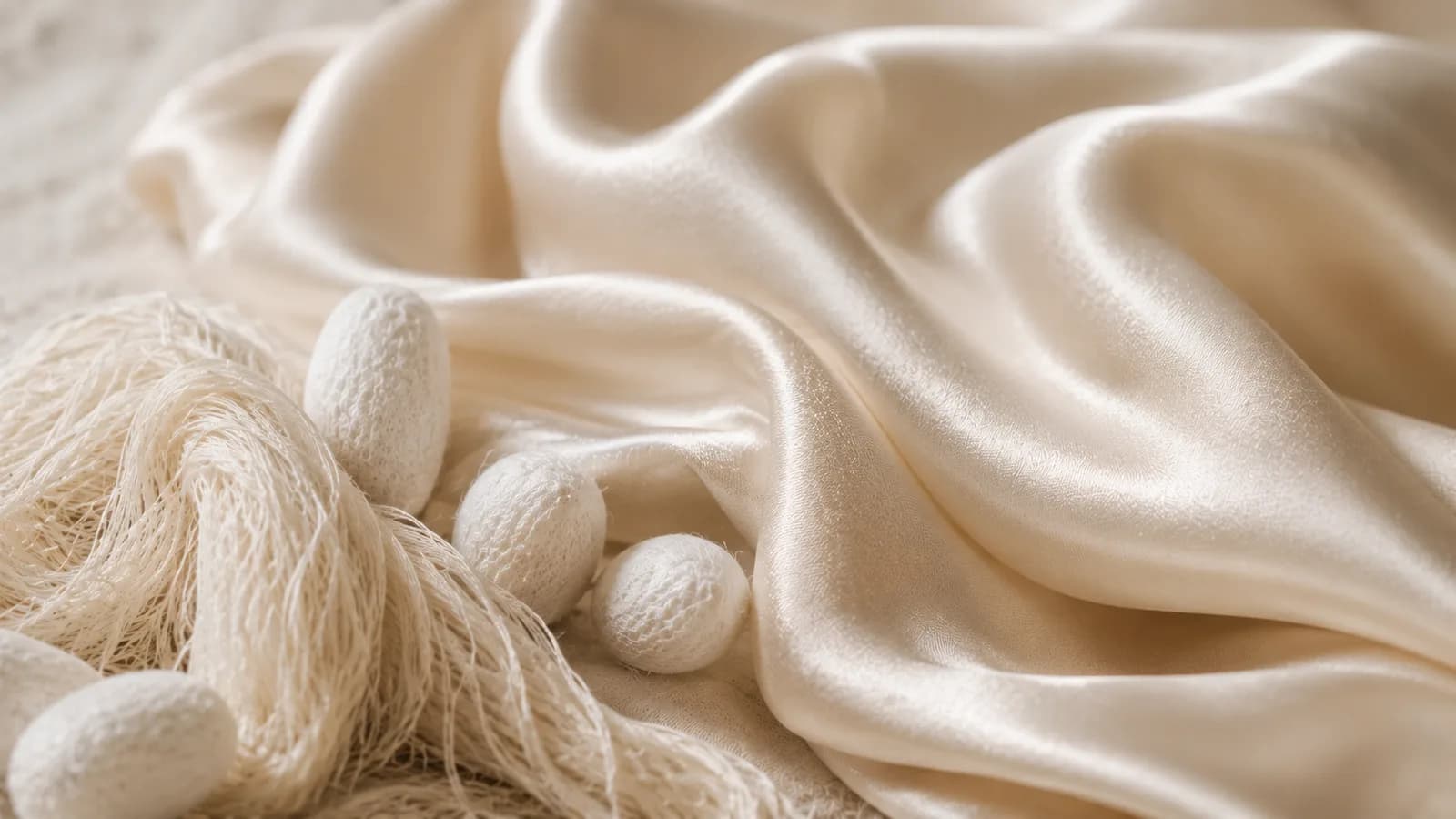
Mulberry silk is the smooth, uniform, naturally white filament reeled from the cocoons of the domesticated silkworm (Bombyx mori), which feeds only on mulberry leaves. For B2B bedding, three specs decide quality and price: fiber type (mulberry vs wild tussah), momme weight, and grade (6A being the top). Get those right and you can spec, cost, and position a defensible luxury line.
What mulberry silk is (and why it beats tussah)
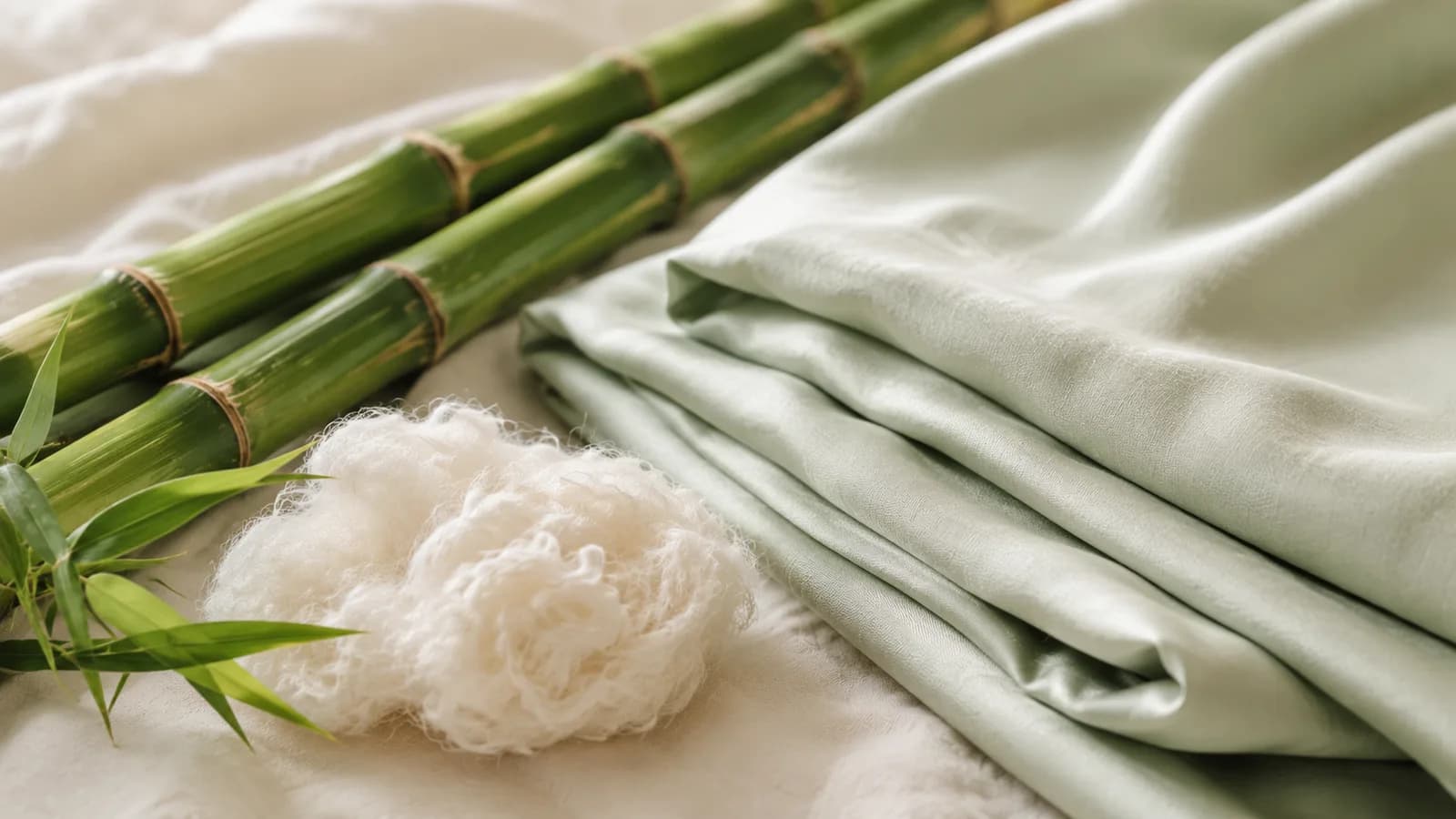
Silk is a natural protein fiber. The filament is mostly fibroin (roughly 75-80%) coated in a gummy sericin (about 20-25%) that is washed off during processing to leave a soft, lustrous strand. Mulberry silk comes from Bombyx mori raised on a controlled mulberry-leaf diet, producing a long, fine, consistent, and naturally near-white filament that reels into continuous thread.
Tussah (wild) silk comes from moths such as Antheraea that feed on oak and other leaves. Its filaments are shorter, coarser, and a natural tan-to-brown color that resists even dyeing. Tussah and other wild silks make up under 10% of world supply and suit a rustic, textured hand — not the smooth, pale, drape-forward luxury look most silk-bedding programs want.
- Mulberry: long continuous filament, smooth hand, uniform white, dyes evenly, over ~90% of global silk.
- Tussah: short/coarse fiber, textured feel, natural brown cast, harder to dye light, niche/rustic positioning.
- For premium bedding, spec 100% mulberry silk and put it in writing on the PO.
Momme weight: the single most useful spec
Momme (mm) is the traditional unit of silk fabric weight — the weight in pounds of a 45-inch-wide, 100-yard piece. Higher momme means more silk per unit area: heavier, more opaque, more durable, and more expensive. It is the density spec, not thread count, and it is what you should call out on a bedding tech pack.
For sheets, duvet covers, and pillowcases, 19-25 momme is the workable window. 22 momme is the popular sweet spot balancing softness, opacity, and durability; 25 momme reads as heavier premium; below 19 momme is too thin for bedding that gets laundered often.
Grade (6A and below): what it does and doesn't guarantee
Silk grading (commonly labeled 6A down to lower letters) rates raw-silk quality on factors like filament length, evenness, cleanliness, and defects. 6A is the top tier and is the grade buyers expect on luxury lines. Treat it as a fiber-quality signal, not a legal certification: pair the grade claim with 100%-mulberry content, a stated momme, and independent testing so it is verifiable rather than just a label.
| Momme / grade | Spec | Best use |
|---|---|---|
| 16-19 momme | Lightweight; thin, more sheer, lower durability | Entry sleepwear, linings; marginal for laundered bedding |
| 19-22 momme | Mid-light; good drape, everyday softness | Value silk pillowcases and sheet programs |
| 22 momme, 6A | Balanced softness, opacity, durability — the sweet spot | Core luxury sheets, duvet covers, pillowcases |
| 25 momme, 6A | Heavier, more opaque, more durable, higher cost | Premium hotel/retail sheeting and shams |
| Silk-filled duvet | Long-strand mulberry floss fill (measured by fill weight/GSM, not momme) | Lightweight temperature-regulating all-season duvets |
| Tussah / wild | Coarser short fiber, textured hand, natural brown cast | Rustic/artisanal niche, not smooth-luxury lines |
Why buyers pay for silk: the performance story
Silk's selling points are real and physically grounded. It is thermoregulating — breathable and comfortable across seasons. It manages moisture well, with a moisture regain around 11% and the ability to absorb roughly a third of its weight before feeling damp. And the smooth fibroin filament is naturally hypoallergenic-leaning: it resists dust mites and is gentle on skin and hair, which is why silk pillowcases sell on beauty-sleep and sensitive-skin claims.
- Temperature-regulating: cool-feeling in warmth, insulating when cool.
- Moisture-managing: ~11% moisture regain buffers humidity next to skin.
- Gentle on skin/hair: low-friction surface, marketed for reduced creasing and frizz.
- Allergy-friendly positioning: naturally resistant to dust mites.
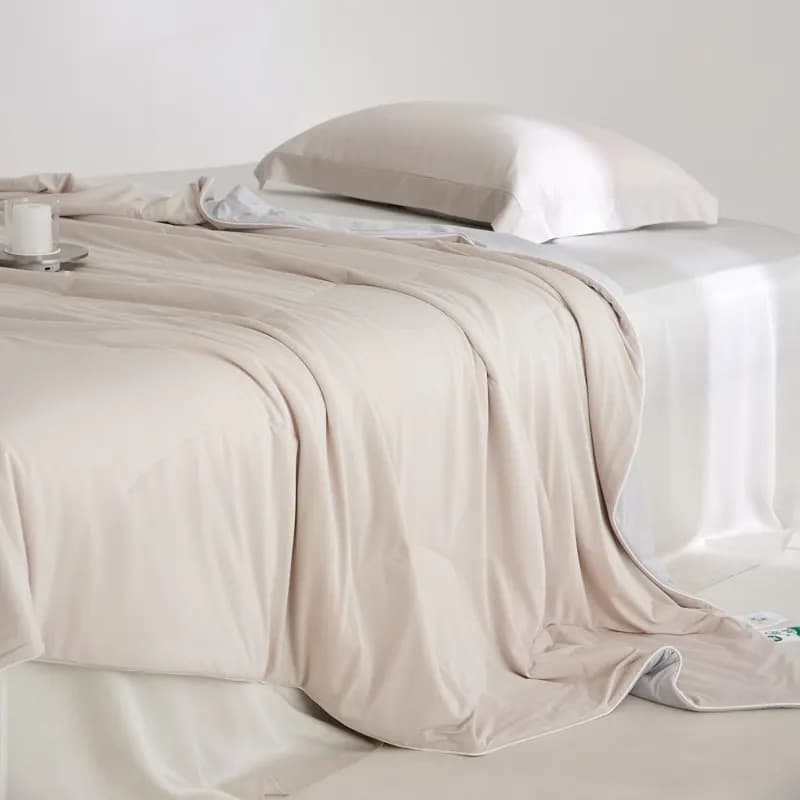
Silk-filled duvets vs silk sheets
These are two different products with different specs. Silk sheets and pillowcases are woven silk fabric, specced by momme. Silk-filled duvets use loose layers of long-strand mulberry silk floss as the fill, usually inside a cotton casing, and are specced by fill weight (grams or GSM) and the fill's mulberry content and strand length — not by momme.
- 1.Silk sheets/pillowcases: 100% mulberry, 6A, 22-25 momme; sell on smoothness and skin/hair benefits.
- 2.Silk-filled duvets: long-strand mulberry floss fill, cotton shell; sell on light weight and temperature regulation.
- 3.Silk-blend options let you hit a price point — but disclose the blend ratio honestly.
Care, cost, and authenticity checks
Care matters for returns and reviews. Silk is heat- and sunlight-sensitive: gentle cold hand-wash or delicate cycle with a pH-neutral silk detergent, no bleach, no wringing, dry away from direct sun. Provide clear care labeling and retail-facing care cards to protect the product's lifespan and your brand.
On cost, price scales with momme, grade, and mulberry content — heavier 25-momme 6A costs more than 19-momme, and real mulberry silk always costs more than synthetic look-alikes. Quote by exact spec, not by the word "silk."
- Burn test: real silk smells like burnt hair, self-extinguishes, leaves crushable ash; synthetics melt into a hard bead and smell of plastic.
- Ring/feel test: fine silk pulls smoothly through a ring and warms to the touch quickly.
- Paperwork: require fiber-content and momme on the PO, plus third-party test reports.
- Safety: require OEKO-TEX STANDARD 100 certification to prove the finished goods are tested against 1,000+ harmful substances.
In sourcing, "silk" is not a spec. 100% mulberry, 6A, 22 momme, OEKO-TEX STANDARD 100 — that is a spec.
How to spec and position a silk line
Write the tech pack tightly: fiber (100% mulberry), grade (6A), momme (e.g., 22 or 25), weave (charmeuse/sateen), color and colorfastness, size tolerances, packaging, and required certifications. Positioning follows the spec: lead with mulberry origin, the momme number, and 6A grade; support with the performance story (temperature regulation, moisture management, skin/hair gentleness); and back claims with test reports so retail and hotel buyers can trust the price.
BeddingTextilePro supplies silk and silk-blend bedding factory-direct from Nantong, China, with a 100-set minimum per color and size combination, full OEM/ODM (spec your momme, grade, weave, size, and packaging), and OEKO-TEX-certified options. One clarification: our cooling "ice silk" quilts are a knitted synthetic (a smooth, cool-touch man-made yarn) and are not real mulberry silk — we keep the two lines clearly separated so your labeling and claims stay accurate.
Frequently asked questions
- What momme should I order for silk bedding?
- For sheets, duvet covers, and pillowcases, 19-25 momme is the usable range. 22 momme is the popular balance of softness, opacity, and durability; 25 momme reads as heavier premium. Below 19 momme is generally too thin for bedding that is laundered often.
- Does 6A grade mean the silk is certified?
- No. 6A is the top raw-silk quality grade (based on filament length, evenness, cleanliness, and defects), but it is a quality signal, not a legal or safety certification. Pair a 6A claim with 100%-mulberry content, a stated momme, third-party test reports, and OEKO-TEX STANDARD 100 for verifiable proof.
- Is mulberry silk better than tussah for bedding?
- For smooth luxury bedding, yes. Mulberry silk (Bombyx mori) has long, fine, uniform, naturally white filaments that reel into continuous thread and dye evenly. Tussah (wild) silk is shorter, coarser, and naturally brown, giving a rustic textured hand better suited to niche products than to smooth-drape luxury lines.
- Are BeddingTextilePro 'ice silk' quilts real mulberry silk?
- No. Our cooling 'ice silk' quilts are made from a knitted synthetic cool-touch yarn, not natural mulberry silk from silkworms. They are a separate cooling line. When you want genuine silk, order our mulberry silk or silk-blend bedding and we will spec fiber content, momme, and grade explicitly.
Sources & references
Shop by category
Explore our services
Sourcing bedding for your market?
Factory-direct quotes, 100-set minimum per color and size combination, full OEM/ODM customization. We reply within one business day.