TL:DR
Brief a private-label bedding manufacturer with one finished set, target market, size matrix, fabric and weave direction, artwork status, packaging, quantity by SKU and destination. Ask whether each option adapts an existing construction or needs new development; compare samples and quotations on the same scope. Agree design rights, labels and changes in writing before bulk approval.
The fastest useful first inquiry is not “Can you make my brand?” It is one sellable bedding set, a chosen development route and a short list of decisions the supplier must price.
For a first private-label bedding inquiry, begin with the product a customer will actually buy: its pieces, finished dimensions, feel, look and package. Then decide whether you are adapting an existing construction or asking a supplier to develop your own. A supplier can quote both routes, but only if the same SKU scope and open questions are visible. That makes the conversation about a feasible range rather than a vague promise to “make your brand.”
Choose a starting route for the first sellable set
OEM and ODM are working labels, not guarantees about speed, ownership or exclusivity. If you already control a tech pack and artwork, ask a partner to quote production to those files. If you have a target feel and retail proposition but no final construction, ask to adapt a documented base option and list every change. Many first collections mix the two. State who may reuse the artwork or construction in the agreement; the acronym alone does not settle rights.
| Buyer starting point | Useful route | What you must supply | Question for the supplier |
|---|---|---|---|
| Approved design and tech pack | Build to the controlled specification | Files, size matrix, artwork and acceptance criteria | Which fields need resampling or clarification? |
| Reference set and brand direction | Adapt a named existing construction | Target market, components, look, label and packaging brief | Which elements are standard, changed or exclusive? |
| Undecided range | Price two clearly labelled options | Target customer, price position and priority SKU | What changes between the options besides unit price? |
Put one SKU on the first RFQ line
Write the set as a line item: duvet cover or sheet set, pieces included, finished dimensions by destination market, fitted-sheet pocket if applicable, closure, fibre and weave direction, colour or artwork reference, label position and unit/carton packing. Separate decided values from supplier proposals. An image can communicate mood; it cannot replace measured finished sizes or a component list.
| RFQ field | Buyer entry | Supplier response to compare |
|---|---|---|
| Finished article | Pieces, size matrix and target market | Quote for the exact set and note any substitutions |
| Fabric | Fibre, weave, hand and known construction | Identify proposed construction and sample basis |
| Branding | Artwork status, sewn/printed label, placement | State tooling, artwork checks and approval stage |
| Packaging | Unit pack, inserts and carton needs | List what is included and separately priced |
| Commercial scope | Quantity by size/colour, destination, requested delivery basis | State price basis, minimums, timing assumptions and exclusions |
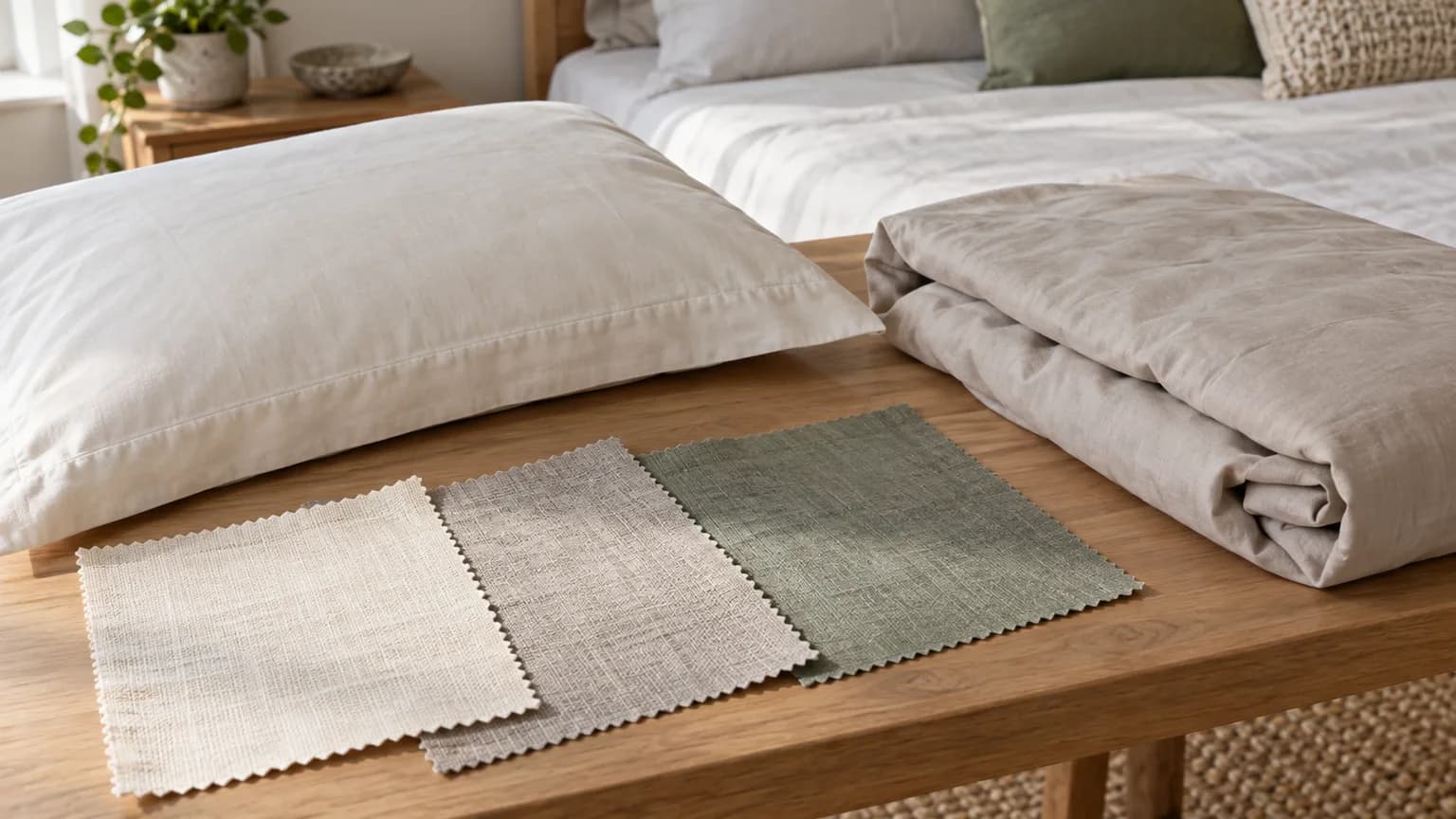
Ask for the sample that answers the open decision
If the weave is undecided, request construction swatches first. If the range shape is decided, a finished-set sample should show component proportions, closures, label placement and packing. Before bulk release, compare the approved version with written dimensions, fabric, artwork and packaging. Keep the reference sample linked to its version; a pretty photograph does not establish bulk conformity.
Compare quotations on the same commercial scope
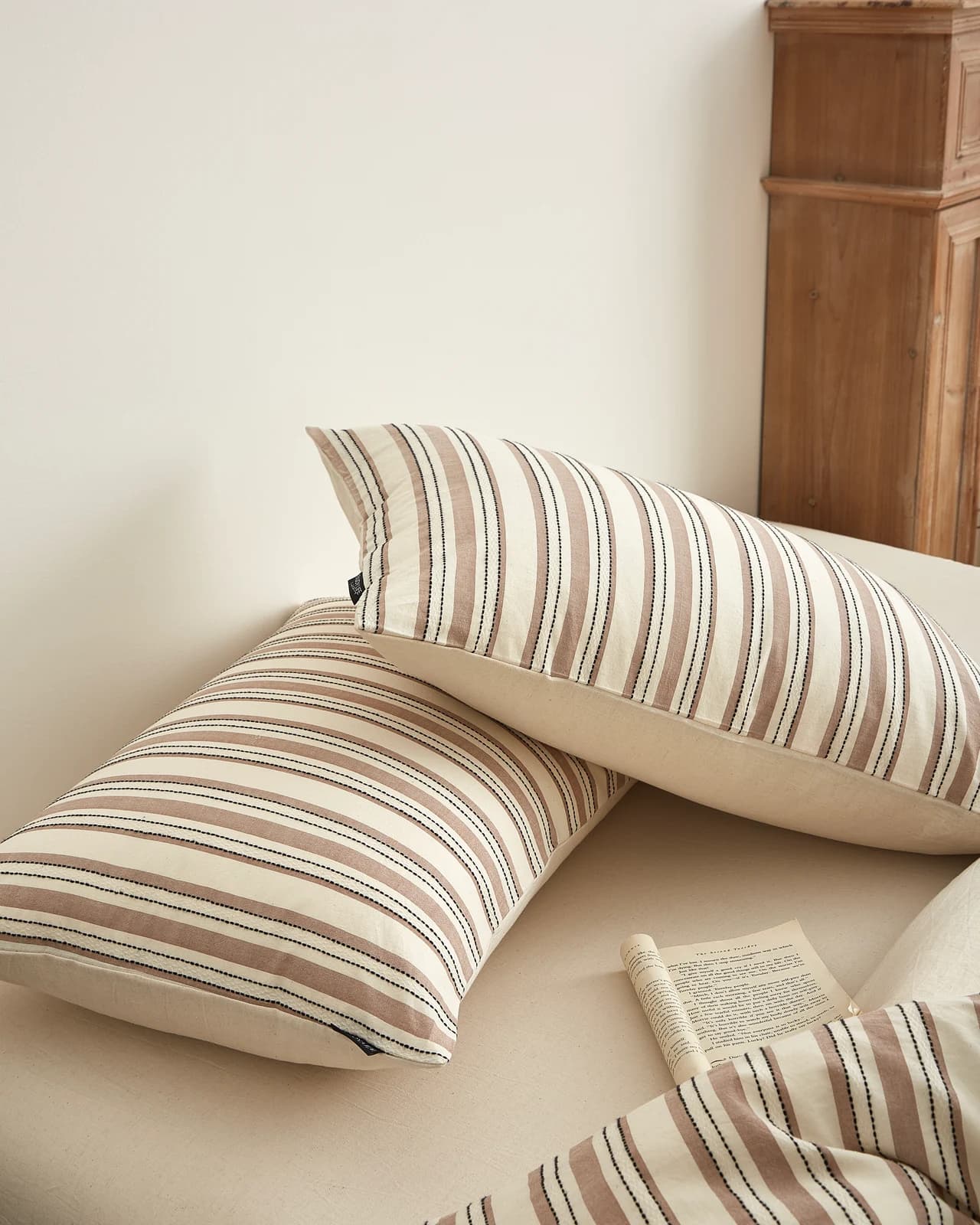
Ask each supplier to separate base product, development or artwork charges, branded packaging, sample charges, inspection arrangements and delivery basis. A lower unit price can be a different fabric, smaller set, simpler pack or different shipping term. Request the exact assumptions beside the price. For a US or EU launch, have market-specific fibre, origin and care wording checked against the finished article before artwork is released; the FTC and European Commission publish the applicable labelling frameworks.
From first brief to a decision-ready proposal
- 01
1 · Define the buyer
Choose the customer, market and one hero SKU.
- 02
2 · Declare the route
Send controlled files or identify a base option to adapt.
- 03
3 · Request matched options
Keep set, sizes, quantity and delivery basis the same.
- 04
4 · Sample the uncertainty
Test the material, fit or presentation question that affects the choice.
- 05
5 · Approve a version
Link the specification, sample, labels and pack before bulk release.
What to send BeddingTextilePro
Send one SKU matrix, target market, material/feel direction, brand artwork status, planned quantity by variant, pack needs and destination. BeddingTextilePro can discuss related on-site cotton, sateen and jacquard options through its private-label programme and prepare a proposal for the exact version you want to sample. If a field is unknown, mark it “option requested” so the reply can identify the decision rather than silently choosing for you.
Start with the private-label programme or send this brief through the quote form. Ask for one construction-led option and one alternative only where they answer a real product or price decision.
Frequently asked questions
- Do I need a finished tech pack before contacting a private-label bedding supplier?
- No. A clear hero SKU, market, component/size list and material direction are enough for an initial discussion. Mark open fields so a supplier can price a documented base option separately from a custom development route.
- Does OEM automatically give my brand exclusive design rights?
- No. OEM and ODM describe ways of developing or producing an item; ownership, permitted reuse and exclusivity depend on the written agreement and the files involved.
- What should two suppliers quote on the same basis?
- The same finished set, sizes, fabric/construction target, colour and packaging, quantity by variant, sample scope, delivery basis and explicit exclusions.
- Which sample should I request first?
- Request swatches if material or hand is open; request a finished-set sample when fit, components, labels or presentation need approval. Before bulk, align a representative sample to the final written version.
- What belongs in the first inquiry to BeddingTextilePro?
- Send the target market, sellable set, finished size matrix, material/feel direction, artwork status, variant quantities, packaging and destination. Indicate which choices you want the team to propose.
Sources & references
Featured products
Shop by category
Explore our services
Sourcing bedding for your market?
Factory-direct quotes, 100-set minimum per color and size combination, full OEM/ODM customization. We reply within one business day.