TL:DR
Percale is the useful starting point when a range calls for a crisp, matte cotton sheet; sateen suits a smoother hand and softer drape. Neither weave alone guarantees cooling, wash life or price. Ask for matched finished samples, compare them after your intended wash process, then quote the same SKU, dimensions, fabric details and packaging in both constructions.
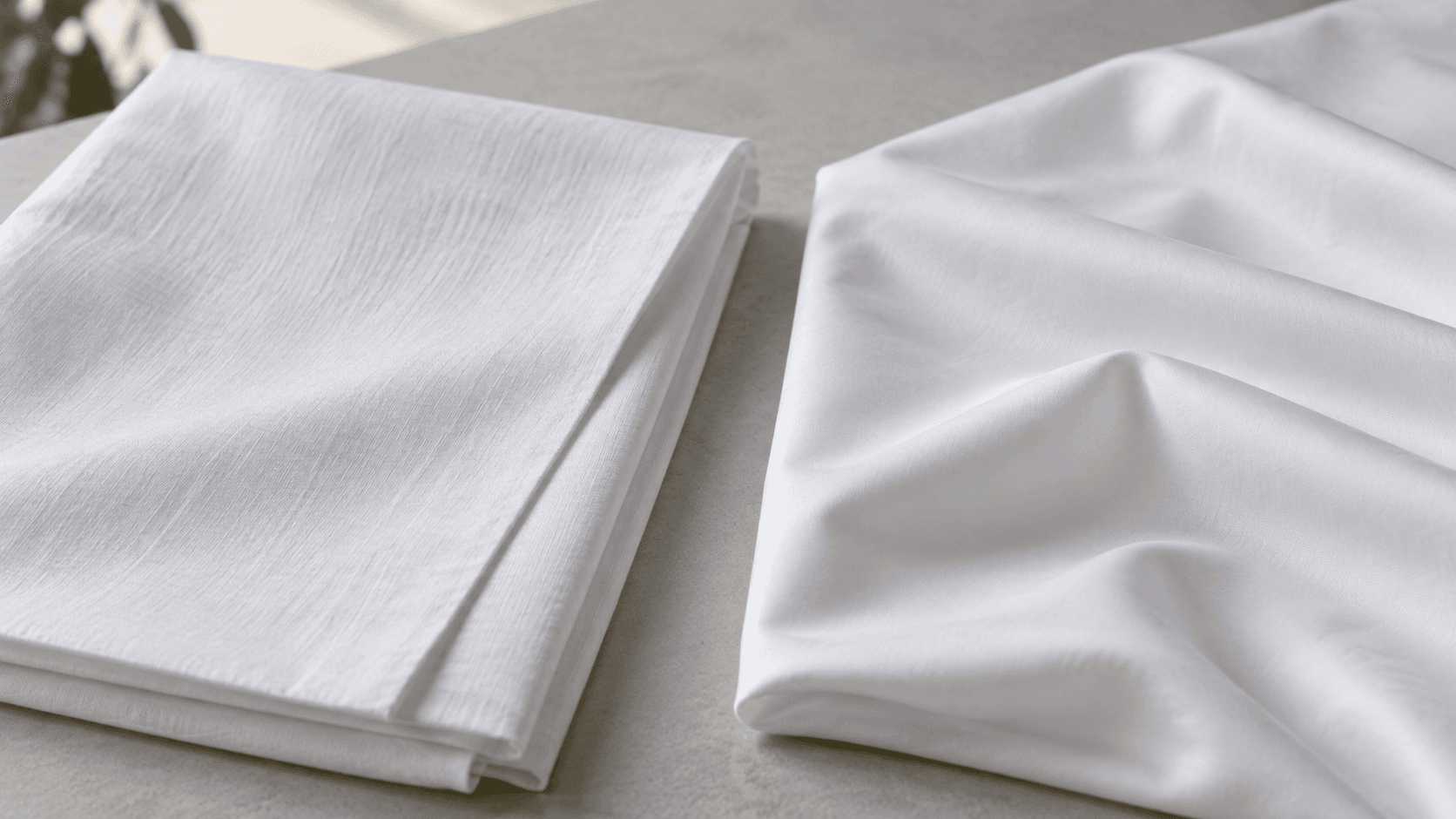
Choose percale for a crisp, matte brief and sateen for a smoother, subtly lustrous one. Compare finished samples under the same fabric, size and care conditions before committing to either range.
Choose for the brief, then compare like with like
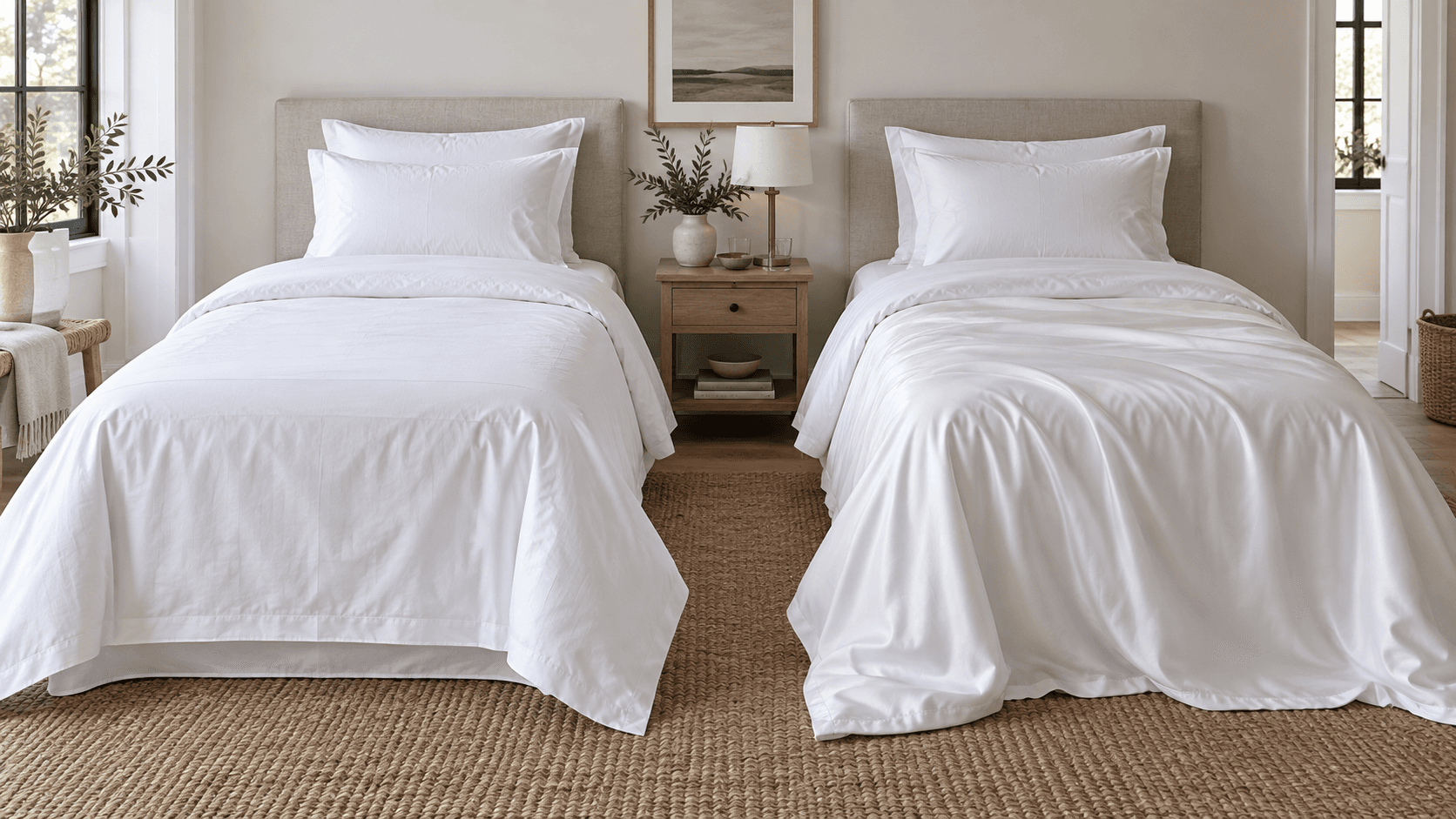
If the line needs a dry, crisp hand and a matte, tailored bed, start with percale. If the design needs a smooth touch, softer folds and a little surface sheen, start with sateen. These are weave choices, not fibre grades: either can be made from different cotton yarns and finished in different ways. The buying decision belongs to the finished sample in its intended room, retail presentation and laundry route.
| Decision | Cotton percale | Cotton sateen | What to compare on samples |
|---|---|---|---|
| Weave and surface | Plain weave; usually matte and structured | Satin-family weave; smoother face and more fluid drape | Confirm fibre, weave and finish on the written sample card |
| First touch | Crisp, dry hand is the usual appeal | Smooth, soft hand is the usual appeal | Handle finished samples side by side, not loose greige fabric |
| Made bed | Sharp folds and low sheen | Softer folds and subtle sheen | Photograph both in the same light and room setup |
| Care decision | Creases may be more visible depending on finish | Face can show different abrasion or snag behaviour | Wash by the intended process; inspect appearance and dimensions |
| Range fit | Crisp hospitality or classic cotton story | Smooth retail or guest-room presentation | Ask your actual customer or housekeeping team to select |
What the weave changes—and what it does not
Percale uses a plain weave with frequent interlacings; sateen uses longer surface floats that create a smoother-looking face. CottonWorks' sheet guide describes the different surfaces and also warns against using thread count as a single quality score. Fibre, yarn, weight, finish, sewing and laundering still shape the result. That is why a higher thread-count sateen and a lower-count percale are not a controlled weave comparison.
Avoid buying a promise such as ‘percale always lasts longer’ or ‘sateen always sleeps warmer’. For hotel use, ask how the sample looks and fits after the property's actual wash and drying route. For retail, also assess how the fabric feels out of pack and whether care instructions suit the buyer. If temperature or durability is a product claim, agree a relevant test and acceptance target for that specific construction.
Build a useful two-sample comparison
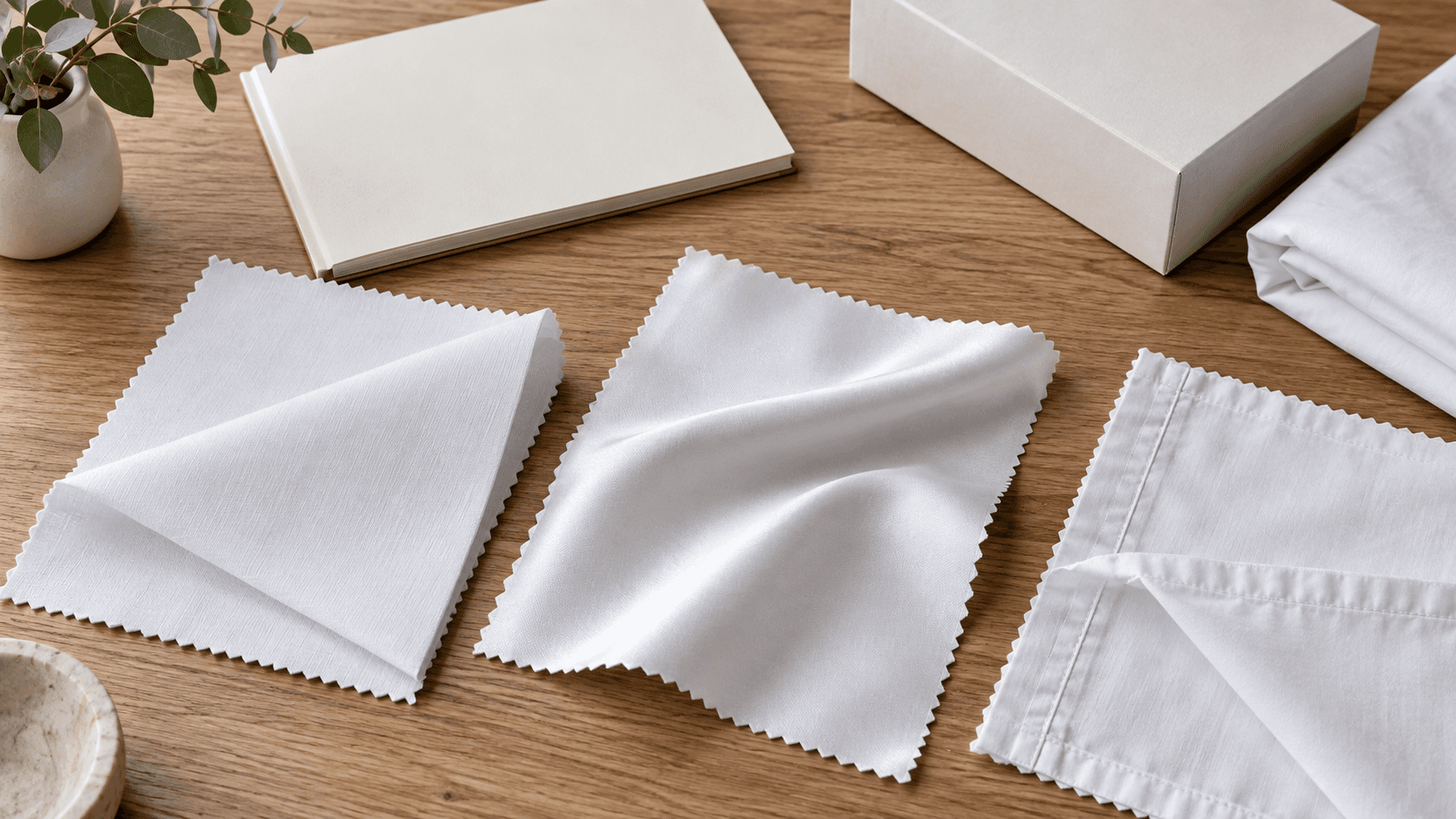
Request one percale and one sateen sample in the same finished item and size—ideally the sheet or set you intend to sell. Hold fibre composition, colour, seams, packaging and care route constant where possible. If yarn or weight differs, list that difference instead of attributing every result to the weave. Evaluate both samples before washing and after the agreed care sequence.
| Sample field | Percale entry | Sateen entry | Decision note |
|---|---|---|---|
| Identity | Sample code / fibre / weave | Sample code / fibre / weave | Keep sample cards with the physical pieces |
| Construction | Yarn description, density or stated count, weight, finish | Same fields | Mark any non-weave difference |
| Finished item | Components and measured dimensions | Same components and dimensions | Check fit on the intended bed |
| Before care | Hand, sheen, opacity, seams, first dimensions | Same observations | Review under identical light |
| After agreed care | Dimensions, surface, seams, hand | Same observations | Record the wash/dry route and choose against the brief |
Send an RFQ that returns comparable prices
Give suppliers one base SKU: finished components, target market, exact dimensions, colour, fibre requirement, sample/finish reference, sewing details, care route, size-and-colour quantities, unit pack and delivery basis. Ask for percale and sateen as two named options against that same base. Require deviations—different yarn, finish, weight, packaging or minimum quantity—to appear on separate lines. A price without those fields cannot settle the weave decision.
From weave brief to purchase choice
- 01
1 · Choose the target hand
Write ‘crisp and matte’ or ‘smooth with soft drape’ in the merchandising or guest-room brief.
- 02
2 · Request matched constructions
Ask for a percale and a sateen finished sample with both construction cards and named differences.
- 03
3 · Use the real care route
Fit, wash, dry and inspect both samples under the route used by the intended customer.
- 04
4 · Quote the same finished SKU
Keep dimensions, components, colour, quantity, pack and delivery basis constant; price weave options separately.
- 05
5 · Approve one reference
Record the selected sample code and its written construction for the purchase order and repeat buy.
Where the site's actual range fits
The listed White 300TC Cotton Sateen Bedding Set is a relevant sateen product reference. The cotton-bedding-sets category is the practical starting point for a broader cotton range, but the current product catalogue does not identify a directly comparable percale SKU. Ask for a percale development option against the same written brief rather than assuming an existing product photo represents percale. Send the sample matrix above with your enquiry.
Frequently asked questions
- Is percale a fibre and sateen a finish?
- No. They describe weave structures. State cotton fibre content, yarn and finish separately on each sample card.
- Which weave should a hotel choose?
- Start with percale for a crisp, matte room brief or sateen for a smoother drape. Fit and launder both finished samples using the property's actual process before selecting a construction.
- Can I compare two suppliers by thread count alone?
- No. Request fibre, yarn description, weave, weight or density, finish, finished dimensions and the same care trial. A count without the rest is not a matched comparison.
- How should percale and sateen appear on an RFQ?
- Put them on separate option lines under one base SKU with the same components, size, colour, quantities, packaging and delivery basis. List every construction deviation.
- Does BeddingTextilePro list a matching percale product?
- The current catalogue lists a white cotton sateen set and a cotton-bedding category, but no clearly identified matching percale SKU. Send the target construction and ask about a percale sample option.
Sources & references
Featured products
Shop by category
Explore our services
Sourcing bedding for your market?
Send one finished-SKU brief and your target hand; request paired percale and sateen samples with separate quote lines.