TL:DR
For most wholesale bedding, reactive dyeing is the default choice: it bonds covalently with cotton for the best wash durability and soft hand-feel on repeatedly laundered sheets. Specify yarn-dyed for woven stripes, checks or two-tone patterns with deep fade-resistant color, and reserve lower-cost pigment dyeing for budget or lightly washed lines.
How reactive, pigment and yarn-dyed methods differ in colorfastness, hand-feel, cost and wash durability, and which to spec for your bedding program.
For most wholesale bedding, spec reactive dyeing: it forms a covalent bond with cotton fiber, so it delivers the best wash durability and soft hand-feel for repeatedly laundered sheets. Choose yarn-dyed when you need woven stripes, checks or two-tone patterns with deep, fade-resistant color. Reserve pigment dyeing for low-cost solids, fashion washes or lyocell/blends where a faster, cheaper surface color is acceptable.
Why the dyeing method decides bedding quality
Bedding is laundered more often and more aggressively than almost any other textile a buyer sources. A duvet set may see 60 to 100 hot washes over its life, plus body oils, perspiration and occasional bleach. The dyeing method you specify determines whether color survives that abuse, how soft the fabric feels against skin, and how much you pay per set. Get it wrong and you inherit complaints about faded, streaked or crocking sheets long after the PO is closed.
The three methods buyers meet most often for cotton and cotton-blend bedding are reactive, pigment and yarn-dyed. They differ in one fundamental way: where and how the color attaches to the fiber. That single difference drives every downstream property below.
How each dyeing method works
Reactive dyeing (piece-dyed)
Woven greige fabric is dyed in a jet or jigger after weaving. Under alkaline, heated conditions the reactive group on the dye forms a true covalent chemical bond with the hydroxyl (-OH) groups of the cellulose fiber, becoming an integral part of the fiber rather than sitting on top of it. That chemical bond is why reactive-dyed cotton typically rates 4-5 for wash fastness and around 6 for lightfastness. It is the industry default for solid-color and printed sheeting.
Pigment dyeing / printing
Pigments are insoluble color particles that do not bond with the fiber. They are glued to the fabric surface by a resin binder and cured with heat. This gives a fast, low-cost process and the soft faded aesthetic buyers want in stonewashed or vintage looks. The trade-off is durability: because color lives on the surface, the binder abrades with washing and rubbing, so wash and crocking fastness are lower and the hand can feel slightly stiffer where binder loads are high. Modern binders have narrowed the gap, but it remains real.
Yarn-dyed (color woven in)
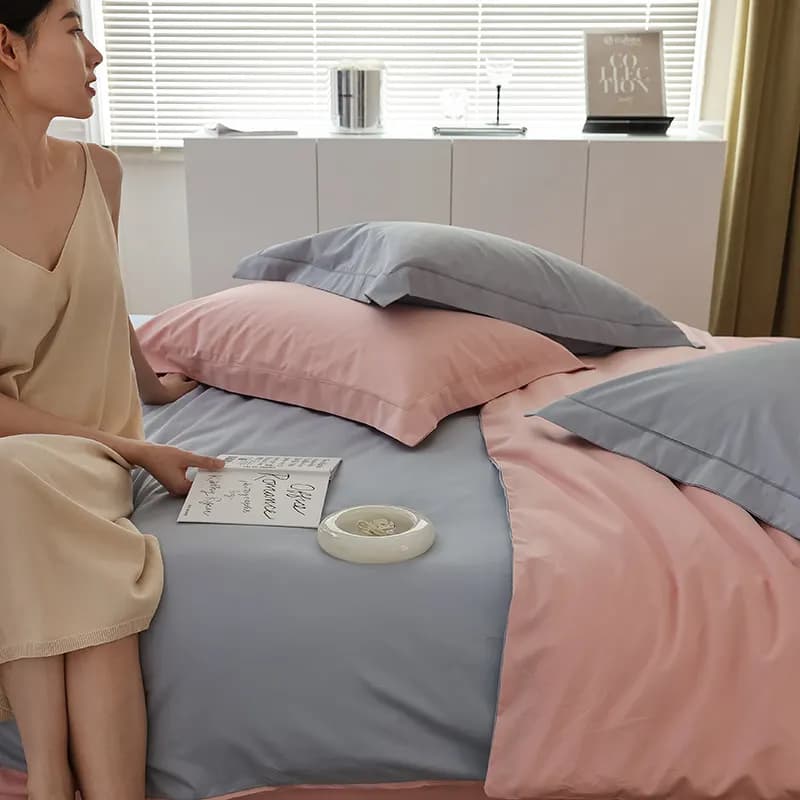
Here the yarn is dyed first — usually with reactive dye in package or hank form — and then woven into the fabric. Because each thread is saturated to the core before weaving, color penetration is deep and even, and patterns such as stripes, plaids and two-tone sateens are built into the weave itself rather than printed on. Yarn-dyed goods give the strongest color depth and among the best fastness, at a higher cost and longer lead time.
| Reactive | Pigment | Yarn-dyed | |
|---|---|---|---|
| How it works | Dye covalently bonds to cellulose after weaving (piece-dyed) | Pigment particles glued to fabric surface by a resin binder | Yarn dyed (usually reactive) before weaving; color woven in |
| Colorfastness (wash) | Excellent, typically AATCC TM61 grade 4-5 | Fair to moderate; binder abrades over washes | Excellent; deep penetration resists fading |
| Crocking / rub | Good | Lower, especially dark shades (AATCC TM8) | Good to excellent |
| Hand-feel | Soft, natural, drapes well | Can feel firmer where binder loads are heavy; soft faded look | Soft, full-bodied; texture from weave |
| Relative cost | Moderate | Lowest | Highest |
| Design capability | Solids and printed patterns | Solids, washes, garment-dye effects | Woven stripes, checks, plaids, two-tone |
| Best use for bedding | Everyday sheets, duvet covers, printed sets | Value lines, fashion/washed looks, blends | Premium patterned sets, hotel stripe, two-tone sateen |
Colorfastness and wash durability: what the grades mean
Colorfastness is measured on a 1-5 grey scale, where 5 is no change. Wash fastness is tested to AATCC TM61 (accelerated laundering) or the equivalent ISO 105-C06, and rub-off is tested to AATCC TM8 crocking. For repeatedly laundered bedding, hold suppliers to grade 4 or better on wash and crocking.
- Reactive: covalent dye-fiber bond gives grade 4-5 wash fastness and strong lightfastness — the safest default for sheets that see frequent hot washes.
- Pigment: surface-bound color is inherently weaker to washing and rubbing; specify tested grades and expect gradual, intended fade on washed styles.
- Yarn-dyed: because reactive dye penetrates each yarn to the core before weaving, color depth and wash resistance are excellent and patterns will not print-crack.
For bedding that will be laundered hundreds of times, chase the wash and crocking grade first, then the aesthetic. A pretty shade that crocks onto a pillowcase is a return, not a sale.

Cost, lead time and hand-feel trade-offs
Cost generally rises from pigment (lowest) to reactive (moderate) to yarn-dyed (highest). Pigment is cheapest because it skips a full dyehouse cycle, but you pay for it in durability. Reactive sits in the middle and is the workhorse for solids and prints. Yarn-dyed costs more in dye, yarn handling and weaving setup, and lead times run longer because color is committed before the loom — but the patterned, premium result justifies it for hotel and higher-tier retail programs.
- 1.Pick reactive for the bulk of solid and printed sheet, duvet and pillow programs.
- 2.Pick yarn-dyed when the design lives in the weave — stripes, checks, two-tone sateen, or hotel-grade patterned sets.
- 3.Pick pigment for value price points, garment-dye and intentionally washed looks, always with a tested fastness spec attached.
How to spec dyeing safely with your factory
Put the requirement in the PO, not just the tech pack. State the dye method, the target Pantone (or approved lab dip), the fiber content, and the minimum AATCC/ISO grades for wash and crocking. Ask for the mill's colorfastness test report and confirm dyestuffs are certified to a recognized chemical standard so restricted substances are controlled. For skin-contact bedding, OEKO-TEX STANDARD 100 covers the finished article for harmful substances, while OEKO-TEX ECO PASSPORT verifies the dyes and auxiliaries themselves upstream.
BeddingTextilePro dyes to spec on our locked, dedicated lines at large-scale Nantong finishing mills: reactive dyeing with Pantone color matching and OEKO-TEX-supported dyestuffs, plus yarn-dyed and pigment options — with OEM/ODM lab dips and full colorfastness reports from a 100-set minimum per color and size combination, so you lock in the exact method and fastness your program needs before bulk.
Frequently asked questions
- Which dyeing method is most colorfast for bedding?
- Reactive dyeing and yarn-dyed (which usually uses reactive dye on the yarn) are the most colorfast because the dye forms a covalent bond with the cotton fiber, typically rating AATCC TM61 grade 4-5 for wash fastness. Pigment dyeing sits color on the surface and is less wash- and rub-resistant.
- Is pigment-dyed bedding bad quality?
- Not necessarily. Pigment dyeing is cheaper and gives a soft, faded aesthetic that suits washed or vintage styles, but its color is surface-bound, so wash and crocking fastness are lower than reactive or yarn-dyed. It is a good fit for value lines and fashion washes when you attach a tested fastness spec.
- What is the difference between yarn-dyed and piece-dyed bedding?
- Yarn-dyed means the yarn is dyed before weaving, so color is woven into each thread and patterns like stripes and checks are built into the fabric with deep penetration. Piece-dyed (typically reactive) means the woven fabric is dyed afterward, which is efficient for solids and prints but colors the surface of an already-formed cloth.
- What colorfastness grade should I require for wholesale bedding?
- For bedding that is laundered frequently, require at least grade 4 on the 1-5 grey scale for both wash fastness (AATCC TM61 / ISO 105-C06) and crocking (AATCC TM8), and ask the mill for the test report. Reactive and yarn-dyed goods reach these grades comfortably; pigment styles need verification.
Sources & references
- 1.AATCC Test Method Standards (TM61 laundering, TM8 crocking)
- 2.Reactive dye covalent bonding with cellulose (peer-reviewed, PMC)
- 3.Reactive Dyes: Classification and Dyeing Mechanism (Textile Learner)
- 4.OEKO-TEX ECO PASSPORT (dyes and auxiliaries certification)
- 5.OEKO-TEX STANDARD 100 (harmful substances in textiles)
Shop by category
Explore our services
Sourcing bedding for your market?
Factory-direct quotes, 100-set minimum per color and size combination, full OEM/ODM customization. We reply within one business day.