TL:DR
Specify printed cotton bedding on two separate axes: how colour is applied (for example, digital inkjet or rotary screen) and which colourant/fixation system is proposed (such as reactive dye or pigment with binder). The suitable route depends on the base cloth, artwork repeat and scale, colourways, hand and appearance target, finishing sequence, costed order quantity and sample approval—not a universal metre break-even or blanket durability claim. Send the same artwork, product construction and acceptance questions to each supplier, then compare identified strike-offs before bulk approval.
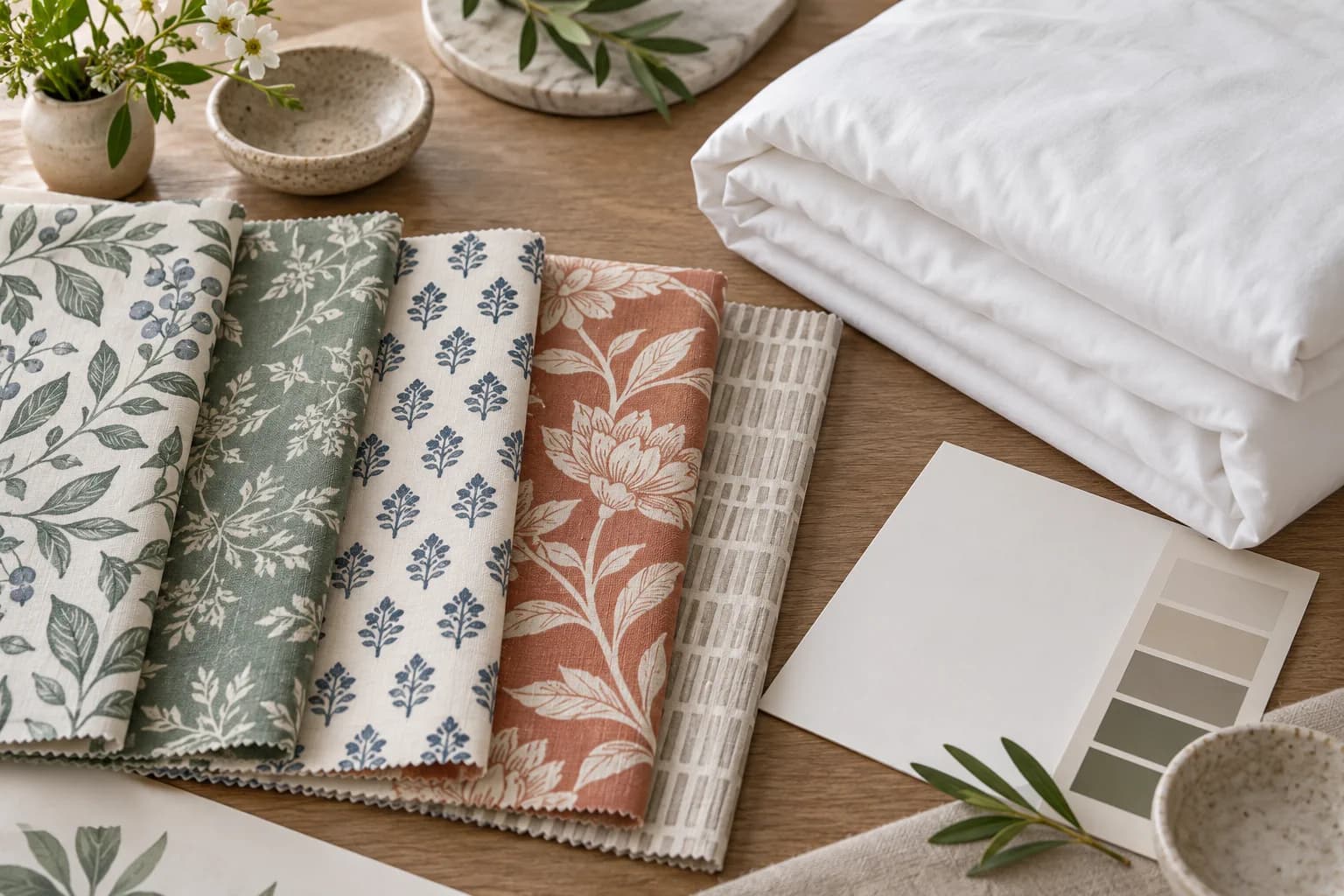
A buyer-side print brief that separates machine method from colour chemistry and ties artwork, base cloth, finish and sample approval to one bedding line.
A comparable printed-bedding brief must separate the application method from the colour chemistry. Digital inkjet and rotary screen describe how a pattern is placed on cloth; reactive dyes and pigments describe colourant systems with different fixation and after-treatment needs. Neither axis alone tells you the finished fabric’s hand, colour result or care performance. Lock the base cloth, artwork file and repeat, colourways, finished bedding construction, quoted quantity, finishing route and sample acceptance criteria before asking suppliers to recommend a method.
Do not compare three unlike labels as if they were one choice
| Decision axis | Option | What the buyer must confirm | What the label does not prove |
|---|---|---|---|
| Application method | Digital inkjet | Artwork dimensions, file/version, base cloth preparation, ink family, fixation and finishing route | A fixed cost, colour result, production speed or low order minimum |
| Application method | Rotary screen | Repeat size, screen/color separation plan, colourway count, setup charges and strike-off route | That the design fits an available screen or that volume makes it cheaper |
| Colour system | Reactive dye | Fibre compatibility, pretreatment, fixation, afterwashing and buyer-required evidence | A specific fastness grade or performance on an untested bedding construction |
| Colour system | Pigment with binder | Binder/curing route, surface appearance and hand target on the proposed cloth | A universal lower-cost route or a guaranteed hand/care result |
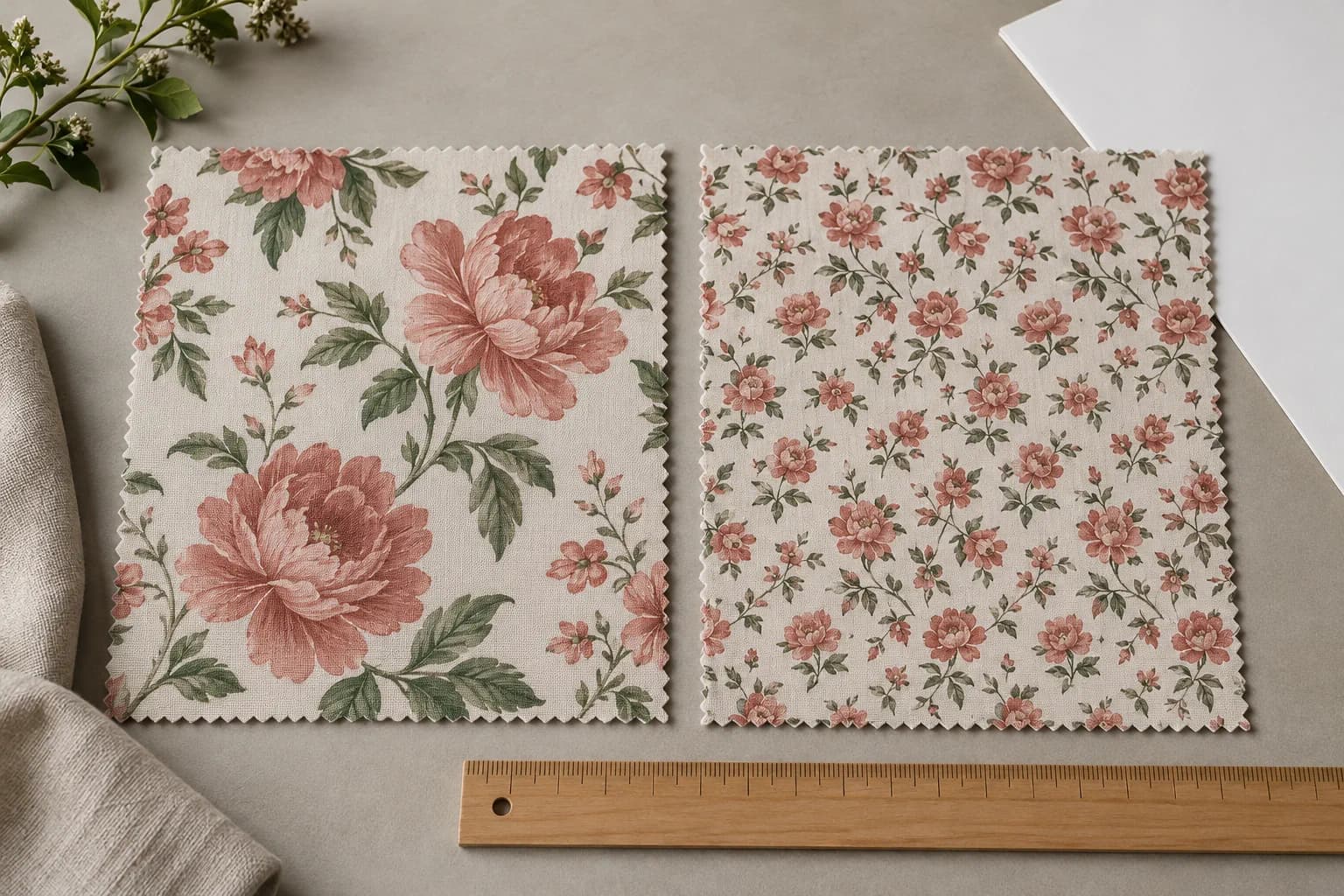
Give every supplier the same artwork and construction
Attach the original artwork or controlled file link, revision, repeat dimensions, orientation, placement or all-over status, colourway count and reference swatches. State whether the design may be re-scaled, recoloured or separated, and who owns approval of any adjustment. Record the finished fabric composition and weave, usable width if it affects marker or cutting, print side, intended bedding components, seam placement and destination care requirements. If the design is engineered or directional, identify the placement and matching points on a diagram.
A quote is only comparable when suppliers price the same base cloth and fabric quantity basis. Ask them to name the proposed print method, colourant, pretreatment, fixation, afterwash or curing steps, finishing, minimum charge basis, setup or screen cost, sample fee, quoted quantity per colourway, exclusions and quote validity. Do not accept an assumed break-even point from a generic article: equipment, fabric, design, colour count, repeat and finishing alter the commercial comparison.
| RFQ field | Buyer entry / supplier response |
|---|---|
| Product and base cloth | Item/components: [ ]; fibre/weave: [ ]; construction and target hand: [ ] |
| Artwork control | File/link and revision: [ ]; repeat width × height: [ ]; orientation/placement: [ ]; colourways: [ ] |
| Process proposal | Application method: [ ]; colourant system: [ ]; pretreatment/fixation/aftercare: [ ]; assumptions: [ ] |
| Commercial basis | Fabric or finished-set quantity per design/colourway: [ ]; setup/screen/sample charges: [ ]; quote validity: [ ] |
| Sample and decision | Strike-off ID/revision: [ ]; base cloth: [ ]; review conditions: [ ]; deviations: [ ]; approver/date: [ ] |
| Finished order | Size and components: [ ]; pack/label revision: [ ]; destination: [ ]; colour × size quantity rows: [ ] |
| Minimum quantity | At least 100 sets for each colour × size combination; no pooling across colours or sizes |
Approve the strike-off against written criteria
Give each strike-off an ID and link it to the artwork revision, base cloth, process proposal, colourway and date. Review it under consistent lighting and viewing conditions selected by the buyer; compare motif scale, placement, repeat join, registration, colour direction, coverage, visible marks and hand against the written target. Record the observed difference and decision, not a vague “looks good.” If the buyer needs colour or laundering tests, state the method, specimen, conditioning, acceptance threshold and responsible reviewer before sampling. No method name or supplier document is itself a result.
Separate print approval from finished bedding approval
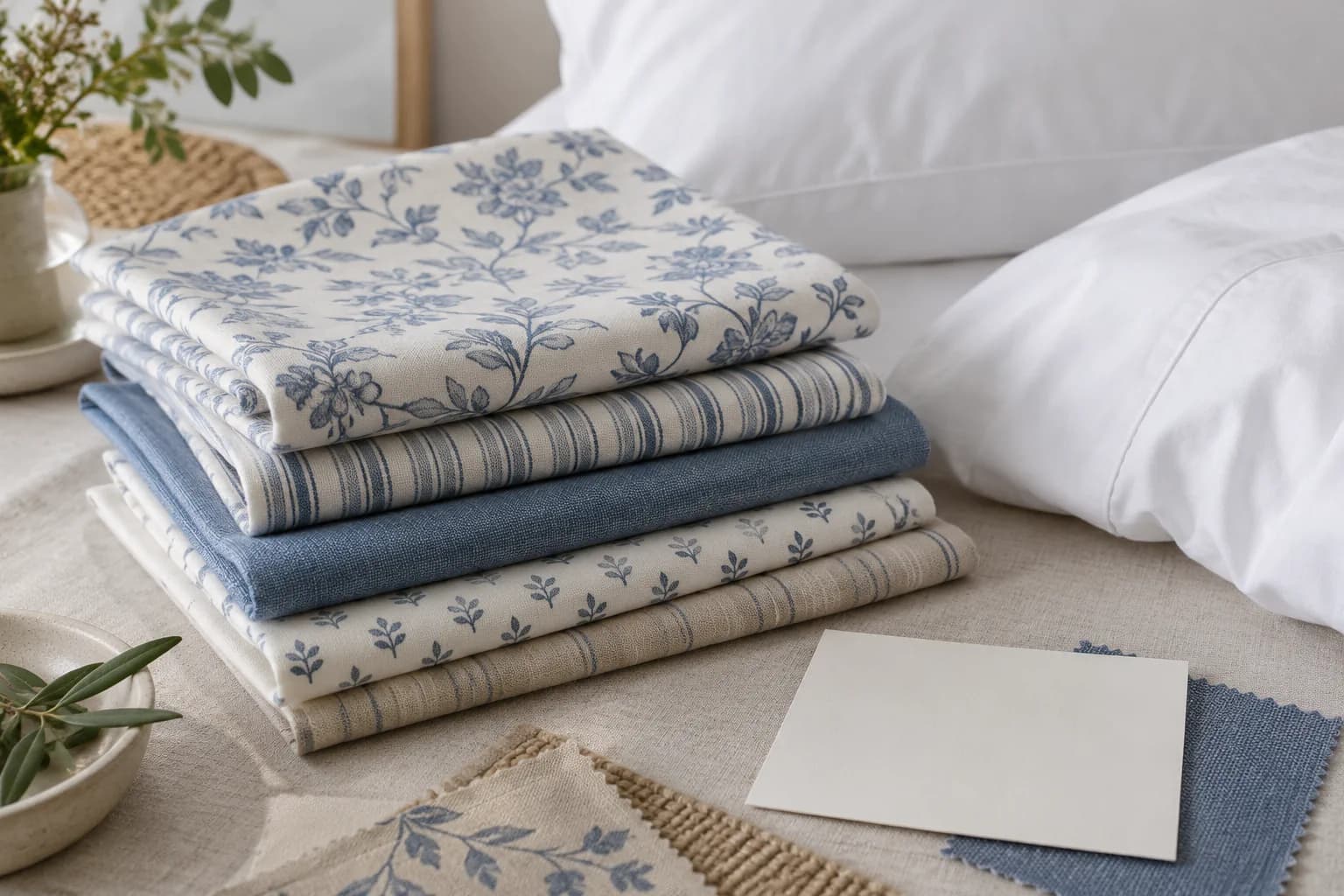
A fabric strike-off helps review the print on a defined substrate; it does not approve finished dimensions, shrinkage, sewing, seam placement, pack or an entire colour × size matrix. Keep the approved print reference and the finished-set sample tied to the same revision, and record any change in cloth, print route, finish, colour, repeat or sewing as a new approval question. The separate colour-fastness and shrinkage guide explains how buyers specify test scope; it does not provide a universal pass threshold for your project.
From artwork to a controlled bedding order
- 01
1 · Freeze the brief
Name the product, base cloth, artwork revision, repeat, colourways and finished components.
- 02
2 · Request a complete route
Ask for application method plus colourant, preparation, fixation and after-treatment.
- 03
3 · Compare itemised offers
Keep quantities, setup, sample fees, assumptions, finish and validity on the same basis.
- 04
4 · Review identified samples
Record strike-off ID, review conditions, differences, deviations and signed decision.
- 05
5 · Approve the finished set
Check print reference together with size, construction, pack and label revisions.
- 06
6 · Release by variant
Confirm each colour × size row independently and attach the approved references to the PO.
Start with a real cotton bedding route
The cotton bedding category contains real printed and patterned bedding options, including listed floral sateen and tartan-plaid products. Treat them as related catalogue examples, not proof that a proposed custom design uses the same cloth, print route, finish, colour result or commercial terms. Link the item or category you want reviewed, attach the completed print brief and ask for the exact base cloth, process and sample route to be quoted. Keep the 100-set minimum for each colour × size combination separate in every quantity response.
Frequently asked questions
- Is reactive printing the same thing as rotary printing?
- No. Rotary describes an application method; reactive describes a dye chemistry. Reactive colour can be applied through compatible printing equipment, and the supplier should identify the complete process, fixation and after-treatment.
- Is digital printing always cheaper for small bedding orders?
- Not as a universal rule. Compare the actual artwork, colourways, base cloth, quantity basis, setup and screen charges, sample cost, finishing and quote validity. Ask each supplier to price the same controlled brief.
- What should a bedding print strike-off be checked against?
- Use the identified artwork and cloth revision, repeat and orientation, colour reference, review conditions and written acceptance points. Record differences, deviations, reviewer and approval date; specify tests separately if required.
- Does a reactive or pigment label prove wash performance?
- No. A process label does not establish a specific result on your cloth or finished bedding. If performance is a release requirement, define the test method, specimen, care conditions and acceptance threshold, then review evidence for that scope.
- How should printed bedding quantities be quoted?
- List every design and colourway, then show finished-set quantities separately by colour and size. The minimum is 100 sets for each colour × size combination, with no pooling across colours or sizes.
Sources & references
Featured products
Shop by category
Explore our services
Sourcing bedding for your market?
Factory-direct quotes, 100-set minimum per color and size combination, full OEM/ODM customization. We reply within one business day.