TL:DR
Treat Lyocell, TENCEL™ and modal as separate specification fields, not interchangeable style words. First decide whether the request is for generic Lyocell or a documented TENCEL™ fibre claim; then state the blend, yarn/fabric construction, finished components, dimensions, label wording and sample questions. Compare only samples and quotes that answer the same version. Each colour-and-size combination at BeddingTextilePro starts at 100 sets, with no pooling across colours or sizes.
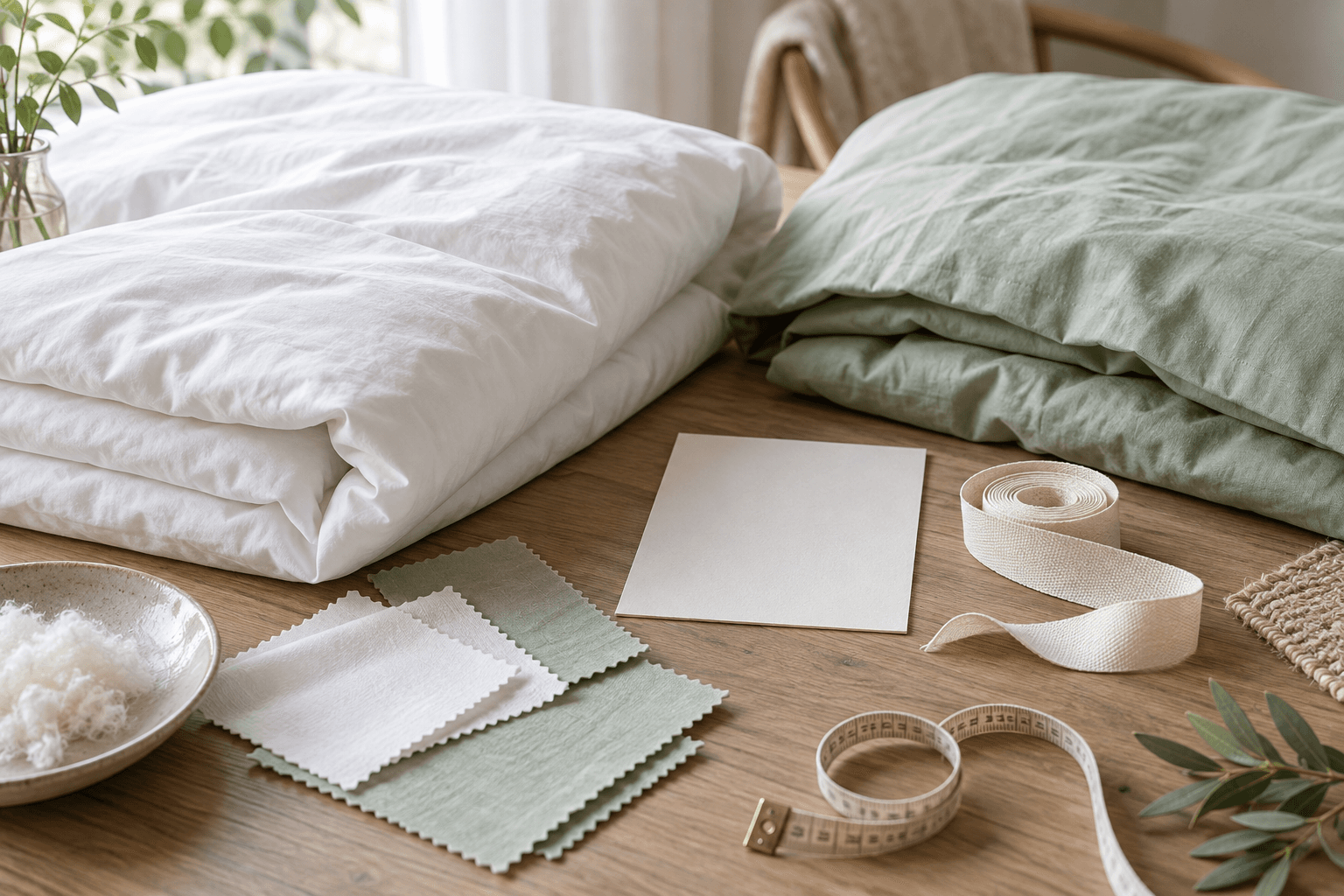
A Lyocell bedding brief is comparable only when the fibre name, any TENCEL™ claim, blend, construction and finished set are written as separate fields.
For a bedding buyer, Lyocell is not a finished specification and TENCEL™ is not a shortcut for every smooth cellulose fabric. Write the fibre identity, any branded-fibre claim, blend, construction, finished set and label wording separately. Then ask suppliers to return the same fields and send a sample that represents that exact version.
Separate fibre name, brand claim and finished fabric
Lyocell is a generic fibre category. TENCEL™ is a Lenzing brand used under its own rules, so a buyer should not put the word into an artwork or label brief unless the fibre and claim can be documented for that product. Modal, viscose and bamboo-derived regenerated cellulose may belong in the comparison, but they are not substitute names for Lyocell. The fabric’s weave or knit, weight, finish and blend still shape the finished hand.
| Field | Buyer writes | Supplier returns | Why it matters |
|---|---|---|---|
| Fibre identity | Generic Lyocell, TENCEL™ claim request, modal or another named fibre | Exact fibre description and claim status | Prevents a marketing name replacing the fibre field |
| Blend | Declared fibre percentages or an open blend question | Proposed percentages and any option | A blend is a different material version |
| Construction | Woven/knit route, yarn or fabric details, finish and hand target | Construction and named deviations | Fibre alone does not define a sheet |
| Finished product | Components, dimensions, closure and colour × size matrix | Quoted SKU and split | Connects fabric to the set being bought |
| Label and proof | Destination-market wording and requested support | What can be supplied for that exact version | Stops an unverified claim entering packaging |
Build a material brief a supplier can answer
Start with the customer and use case, then name the desired hand and appearance without turning them into a promise. Add the composition request, construction fields that matter, finished dimensions, components, colour reference, packaging and destination. If a value is unknown, mark it open and ask for a clearly labelled option rather than accepting an assumption.
| Brief line | Buyer input | Sample question |
|---|---|---|
| Fibre and claim | Generic fibre name; whether a branded claim is requested | Does the sample match the declared fibre and permitted claim route? |
| Blend and construction | Percentages, weave/knit, finish and intended hand | Which field differs from the active brief? |
| Finished set | Pieces, finished dimensions, closure and size system | Does the sample represent this exact SKU? |
| Colour and packaging | Colour reference, label carrier, artwork and unit pack | Which pack and label version is being reviewed? |
| Commercial scope | Units by colour × size, destination and delivery basis | Which option or exclusion changes the quote? |
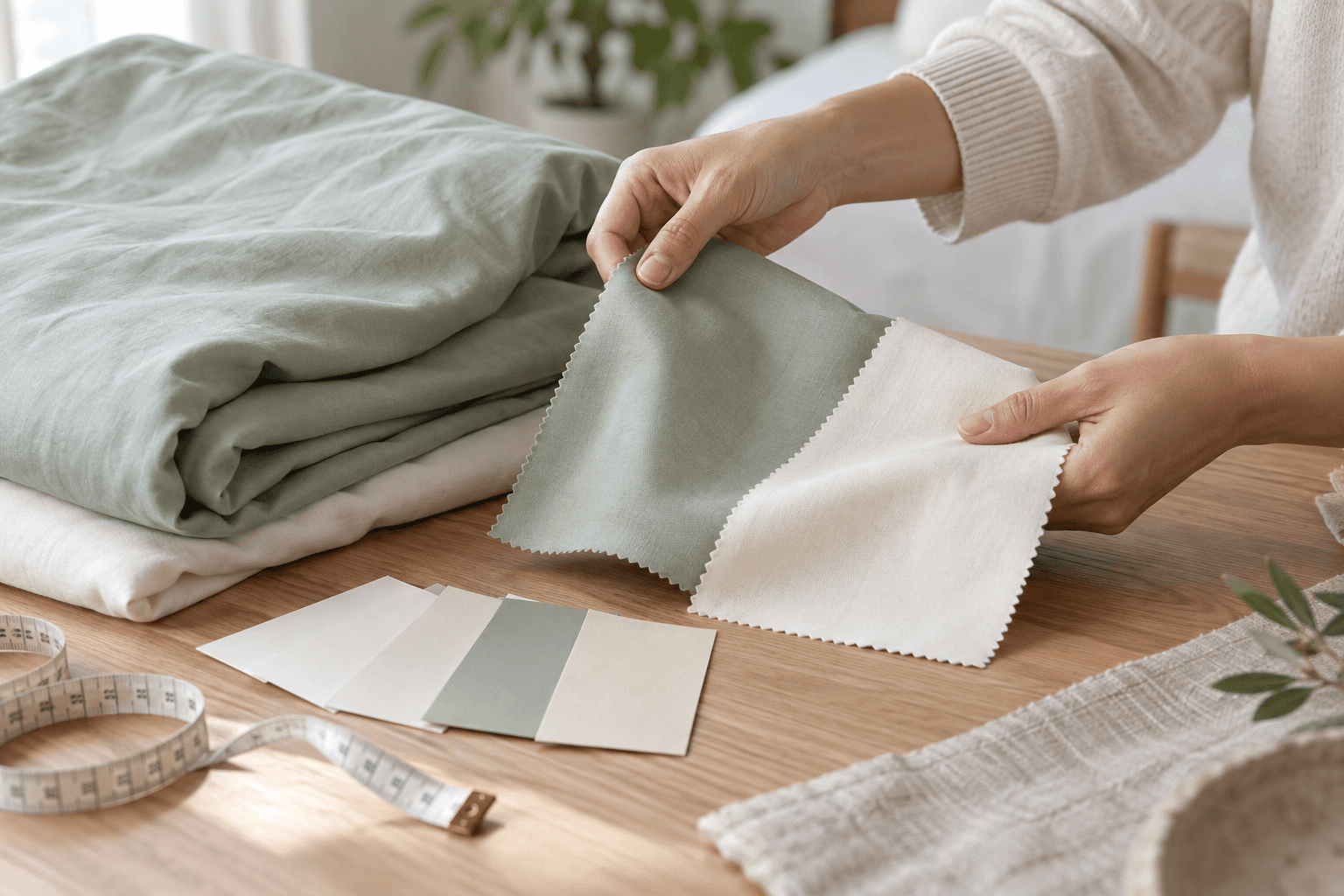
Use a matched sample comparison
Compare samples only after their identity is visible. Put the requested fibre or blend, construction, finish, colour, dimensions and pack version beside each sample. Review the hand and drape as buyer observations, then decide whether to keep the base version, request a named alternative or ask a follow-up question. A soft feel in one sample does not establish how another construction will perform.
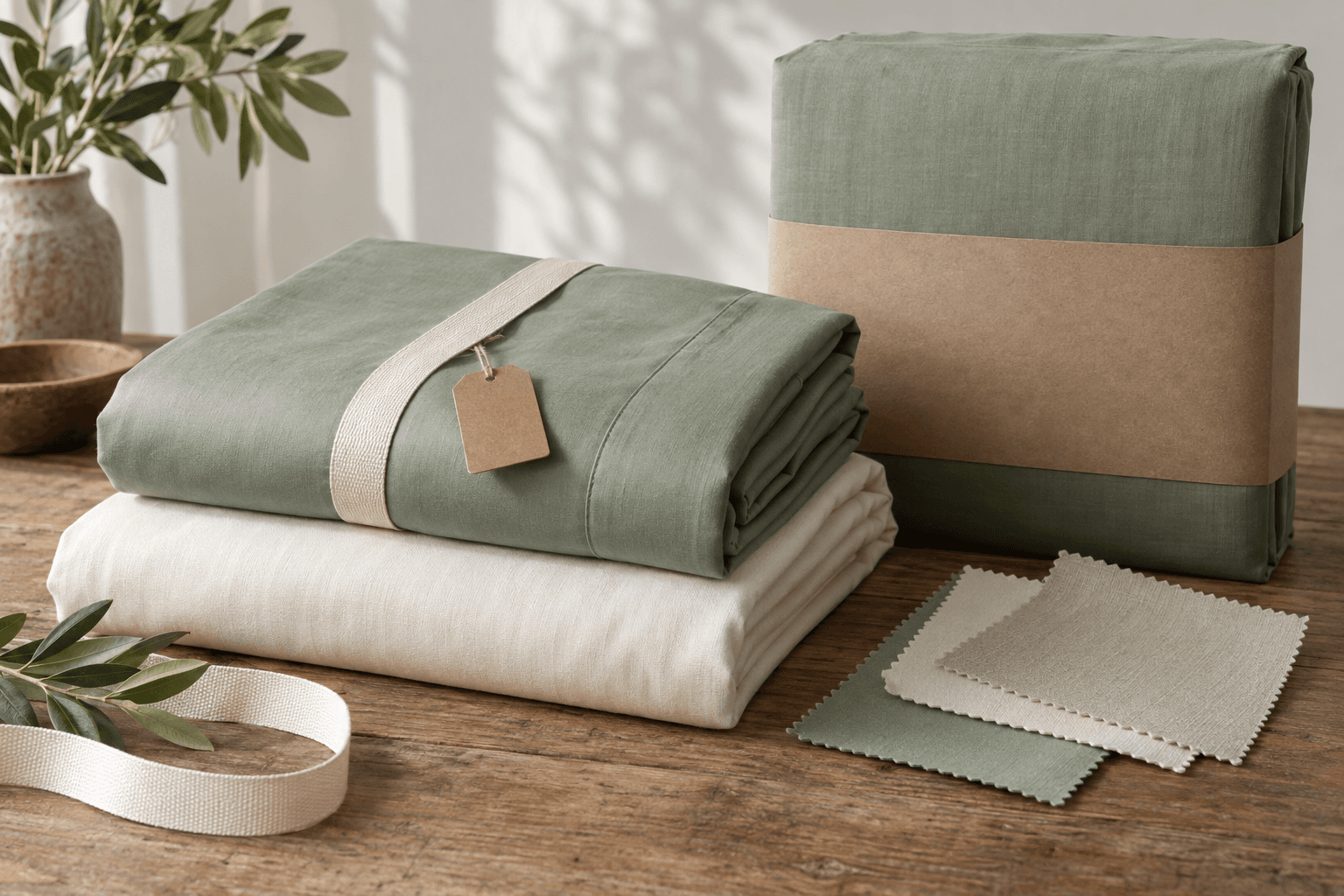
Keep label wording with the approved product version
Attach label wording and artwork to the same revision as the selected material and sample. For a TENCEL™ reference, obtain the evidence and permission route appropriate to the actual fibre/product before using the claim. For a generic Lyocell product, use the accurate generic fibre description. Destination-market labelling requirements, product composition and commercial packaging must all agree before bulk release.
Lyocell bedding buyer route
- 01
1 · Name the material request
Separate generic Lyocell, branded claim and other fibre names.
- 02
2 · Set the finished SKU
List components, dimensions, construction and colour × size split.
- 03
3 · Write label and pack fields
Keep artwork and claim wording attached to the product version.
- 04
4 · Compare matched samples
Review only samples with visible identity and decision questions.
- 05
5 · Quote one active version
Keep options and exclusions separate from the base SKU.
- 06
6 · Release the product file
Link specification, sample decision, label, quantities and delivery handover.
Start a Lyocell bedding enquiry
Use the Lyocell/TENCEL bedding category as a related starting point, then send the finished set, generic or branded fibre request, blend/construction fields, label question, destination and quantity by colour × size. If no exact on-site SKU matches, describe it as a related category rather than an exact product. The useful next response identifies which material and product version is being discussed.
Frequently asked questions
- Is TENCEL™ the same as Lyocell?
- Lyocell is a generic fibre category. TENCEL™ is a Lenzing brand, so a branded claim needs to be handled as its own documented product and label field rather than used as a generic synonym.
- Can I compare Lyocell and modal bedding as the same material?
- No. Keep the fibre name, blend, construction and finish visible for each option. They may be compared for a range decision, but one should not silently replace the other in a specification.
- What belongs in a Lyocell bedding specification?
- State fibre identity, any brand-claim request, blend, construction, finished components and dimensions, colour, labels, packaging, quantity by colour × size, sample question and destination.
- How should I review a Lyocell bedding sample?
- Record the sample’s SKU revision, declared fibre/blend, construction, finish, dimensions, pack version and the exact decision it is intended to support before comparing it with another sample.
- What is the minimum order by Lyocell bedding variant?
- The minimum is 100 sets for each colour-and-size combination. Quantities from different colours or sizes cannot be pooled.
Sources & references
Featured products
Shop by category
Explore our services
Sourcing bedding for your market?
Factory-direct quotes, 100-set minimum per color and size combination, full OEM/ODM customization. We reply within one business day.