TL:DR
Thread count is simply warp yarns plus filling yarns per square inch, a density measure, not a quality grade. For cotton sheeting the honest sweet spot sits around 200 to 400 single-ply TC; above that, gains flatten and inflated 600 to 1000-plus counts usually rely on multi-ply yarn tricks. Wholesale buyers should spec by yarn and weave, not headline numbers.
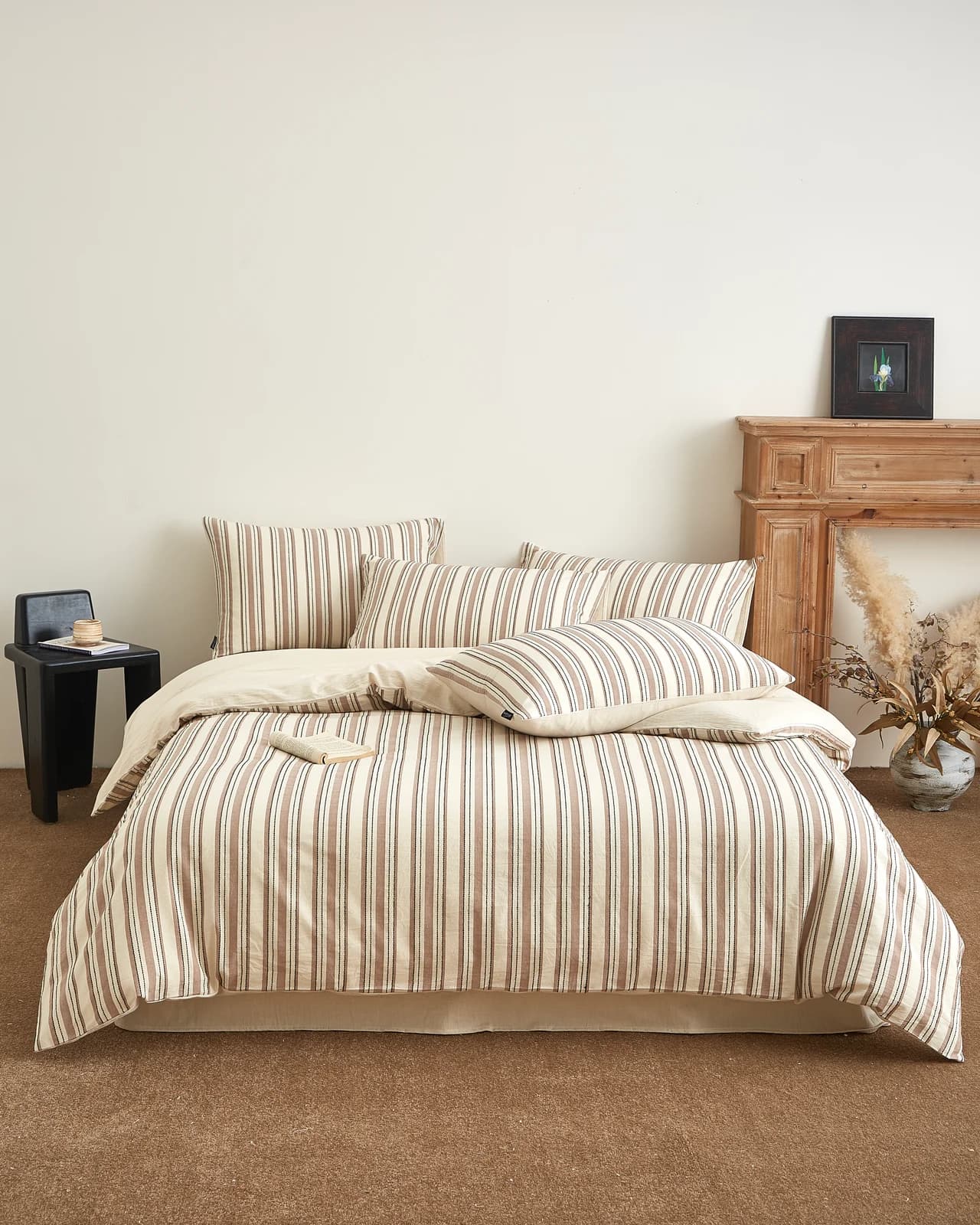
A 1000TC sheet often hides a 300TC fabric. Here is what thread count really measures, how ply-counting inflates the number, and how to spec bedding that resists the marketing trap.
Thread count is simply the number of warp yarns (ends) plus filling yarns (picks) woven into one square inch of fabric. It is a density measure, not a quality grade. The honest quality sweet spot for cotton sheeting sits around 200 to 400 single-ply TC. Above that, gains flatten fast, and counts of 600 to 1000-plus are usually inflated by ply-counting rather than better fabric.
What thread count actually measures
Under ASTM D3775, the standard test method for fabric count of woven fabric, thread count is the sum of warp ends and filling picks per unit distance, counted under magnification while the fabric is held at zero tension and free of folds. That is the whole definition. It tells you how tightly the cloth is set, not how good the cotton is, how smooth the yarn is, or how the sheet will feel after fifty washes.
A plain-weave percale might run 200 to 300TC; a denser sateen might run 300 to 400TC. Both can be excellent. Density alone does not decide comfort or durability, which is why a well-made 280TC percale routinely outperforms a flimsy 800TC sheet in lab wash-and-wear testing.
How inflated counts mislead buyers
The trick is ply-counting. A single-ply yarn is one strand. A multi-ply yarn twists two, three, or four thinner strands together before weaving. The honest ASTM practice is to count each finished yarn as one unit regardless of how many plies it contains. But some suppliers count every internal ply separately.
So a fabric genuinely woven at 300TC from 2-ply yarn gets relabeled 600TC. Use 3-ply and it becomes 900TC. The cloth never changed; only the arithmetic did. When Good Housekeeping tested sheets, it found labels exaggerated by three to five times, including a sheet marked 1500TC that measured roughly 300 threads per square inch. The US Federal Trade Commission has ruled such labeling can deceive consumers, and in later action treated grossly inflated counts as false advertising.
The sweet spot is 400. Spending more on higher counts is unnecessary — focus on the fiber and the weave instead. — Consumer Reports textile testing
Why yarn, weave, and finish matter more
Three factors beat raw thread count for real-world quality, and none of them show up in the headline number.
- Yarn quality: long-staple combed cotton spun into fine, even single-ply yarn is smoother and stronger than short-staple yarn padded out with extra plies. Fiber length and combing drive softness far more than density.
- Weave: percale (one-over-one-under) is crisp, cool, and breathable; sateen (multiple warp floats) is silkier and denser. The weave you choose should match the end use, not a number.
- Finish: mercerizing, singeing, and controlled shrinkage decide luster, pilling resistance, and how the sheet holds up after repeated laundering — critical for hospitality linens.
There is also a physical ceiling. You can only pack so many honest single-ply yarns into a square inch before the cloth becomes stiff and airless. Practical single-ply sheeting tops out near 500 to 600TC; genuine 800TC-plus single-ply is rare and heavy. Numbers well beyond that are a signal to ask how they were counted.
| Thread count | What it really is | Real-world quality |
|---|---|---|
| 200-300TC | Standard single-ply percale density | Crisp, cool, breathable, durable; excellent everyday and hotel value |
| 300-400TC | Denser single-ply percale or sateen | The quality sweet spot; smooth hand with good longevity |
| 400-500TC | High-density single-ply sateen | Silky and luxurious if fiber is genuine long-staple; diminishing returns begin |
| 500-600TC | Near the honest single-ply ceiling | Possible with fine combed cotton; verify it is single-ply, not padded |
| 600-800TC | Often 2-ply counted as separate strands | Usually an inflated 300-400TC fabric; heavier, not better |
| 800-1000TC+ | Ply-counting or pick-inflation | Marketing number; frequently a 250-350TC cloth in disguise |
How B2B buyers should spec to avoid being misled
Do not order to a bare TC number. Write a specification that pins down the variables that actually change the fabric, so a supplier cannot substitute an inflated count for real quality.
- 1.State single-ply explicitly: require single-ply construction and specify TC as counted under ASTM D3775 (finished yarns per inch, not internal plies).
- 2.Specify the fiber: name long-staple combed cotton and, where relevant, the staple length; combed beats carded for pilling and softness.
- 3.Add GSM alongside TC: grams per square meter captures fabric weight and body that a thread count alone hides.
- 4.Name the weave and finish: percale or sateen, plus mercerized or pre-shrunk finish and a shrinkage tolerance for laundered linens.
- 5.Require test evidence: a fabric-count test report and an OEKO-TEX Standard 100 certificate confirm both the honest count and chemical safety.
- 6.Ask for sealed reference samples: approve a physical swatch and hold it as the quality benchmark for every production run.
The bottom line for wholesale bedding
Higher thread count is not a proxy for quality once you pass the honest 400TC range. Spec to yarn, weave, finish, GSM, and a verified ASTM count, and you will buy better sheets for less than a chase after four-digit numbers. BeddingTextilePro specs honest single-ply 200/300/400TC combed cotton, ASTM-counted and OEKO-TEX certified, factory-direct from Nantong at 100-set minimum per color and size combination with full OEM/ODM support.
Frequently asked questions
- Is higher thread count always better for bedding?
- No. Thread count is warp plus filling yarns per square inch, a density measure rather than a quality grade. Once you pass roughly 400TC in honest single-ply cotton, comfort and durability gains flatten, and very high counts are usually inflated by counting multi-ply strands separately. Yarn quality, weave, and finish decide real-world quality.
- How do multi-ply yarns inflate thread count?
- A multi-ply yarn twists two to four thin strands together before weaving. ASTM D3775 says each finished yarn should count as one unit, but some suppliers count every internal ply. A genuine 300TC fabric woven from 2-ply yarn then gets relabeled 600TC, or 900TC with 3-ply. The cloth is unchanged; only the number is inflated.
- What is the best thread count for wholesale sheets?
- For single-ply combed cotton, 200-300TC percale is crisp and durable, while 300-400TC is the quality sweet spot for a smoother hand. Genuine single-ply tops out near 500-600TC. Anything advertised at 800-1000TC-plus should be questioned, as it is usually a lower-count fabric inflated by ply-counting.
- How should a B2B buyer spec bedding to avoid inflated counts?
- Require single-ply construction and thread count measured under ASTM D3775 (finished yarns, not plies). Specify long-staple combed cotton, add a GSM target, name the weave and finish with a shrinkage tolerance, and demand a fabric-count test report plus an OEKO-TEX Standard 100 certificate. Approve sealed reference samples as the production benchmark.
Sources & references
Shop by category
Explore our services
Sourcing bedding for your market?
Factory-direct quotes, 100-set minimum per color and size combination, full OEM/ODM customization. We reply within one business day.