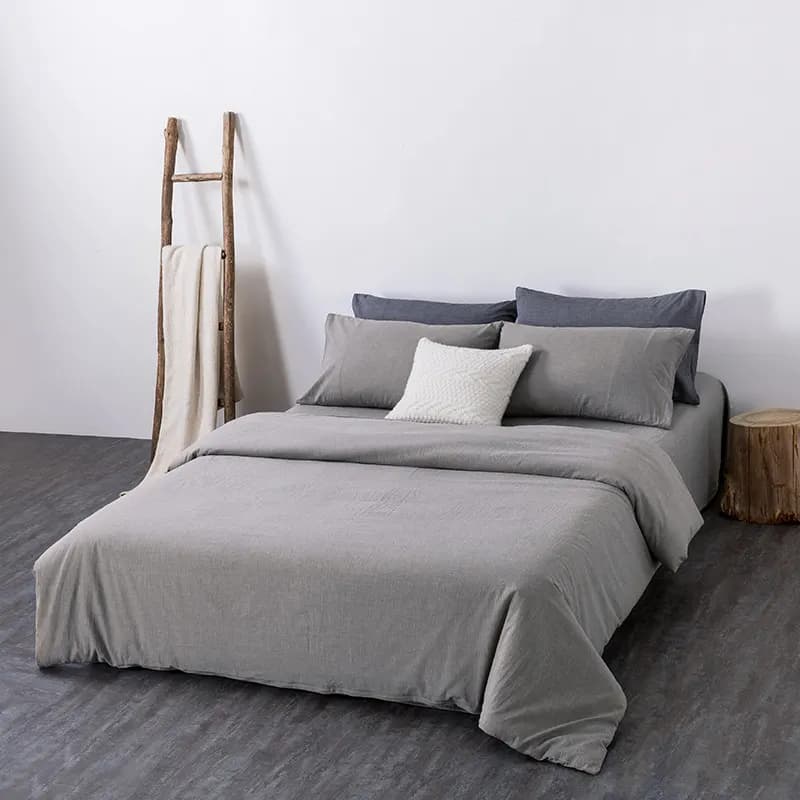
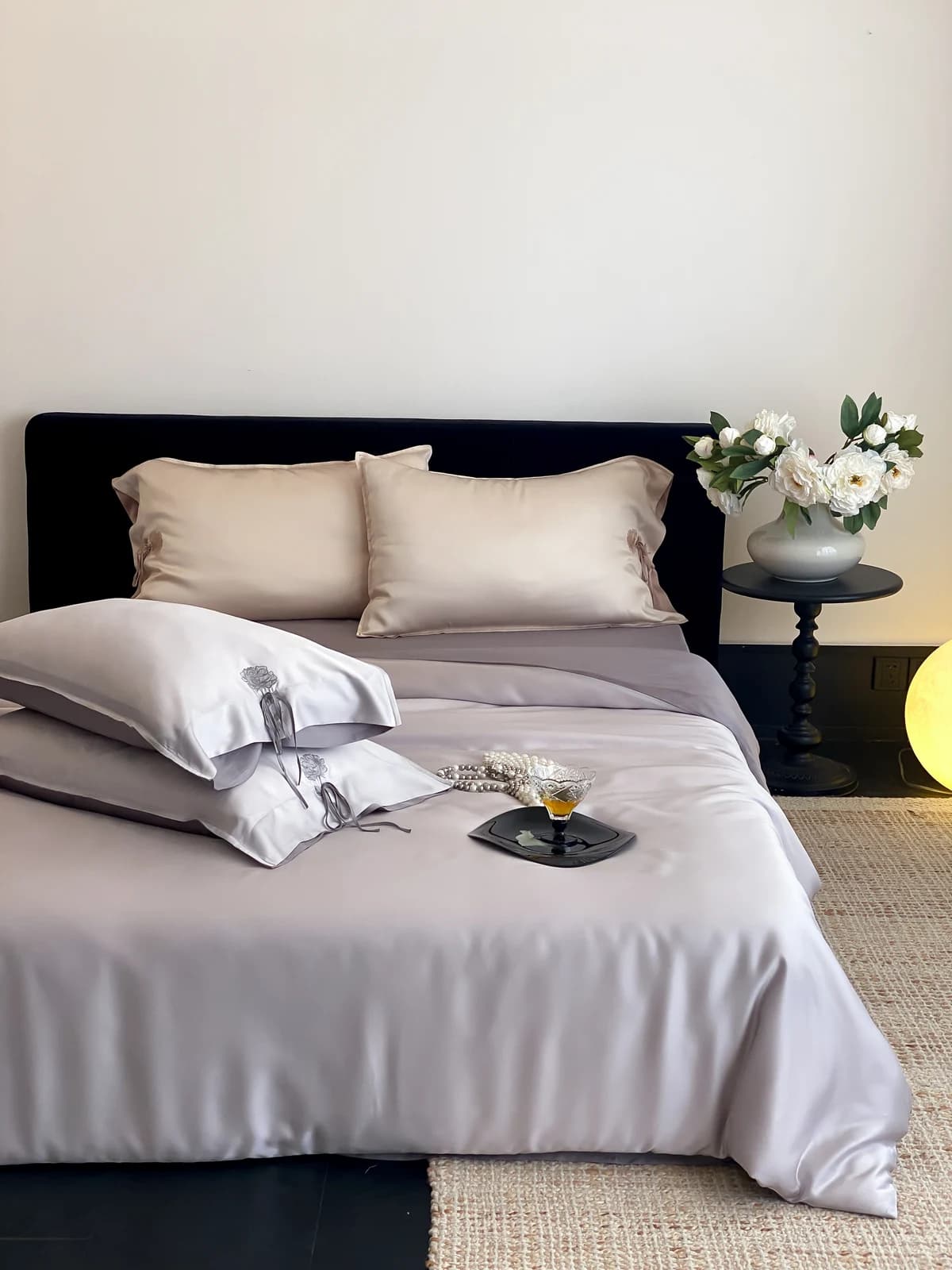
TL:DR
Student housing bedding is a bulk, cost-per-bed decision: specify a hard-wearing fabric (a durable cotton or a poly-cotton blend), the right institutional sizes such as twin XL, a wash-cycle durability target, and whatever flame-retardancy your local fire code requires — commonly BS 7175 in the UK or the 16 CFR mattress rules in the US. Then tender it against MOQ, samples and an inspection standard.
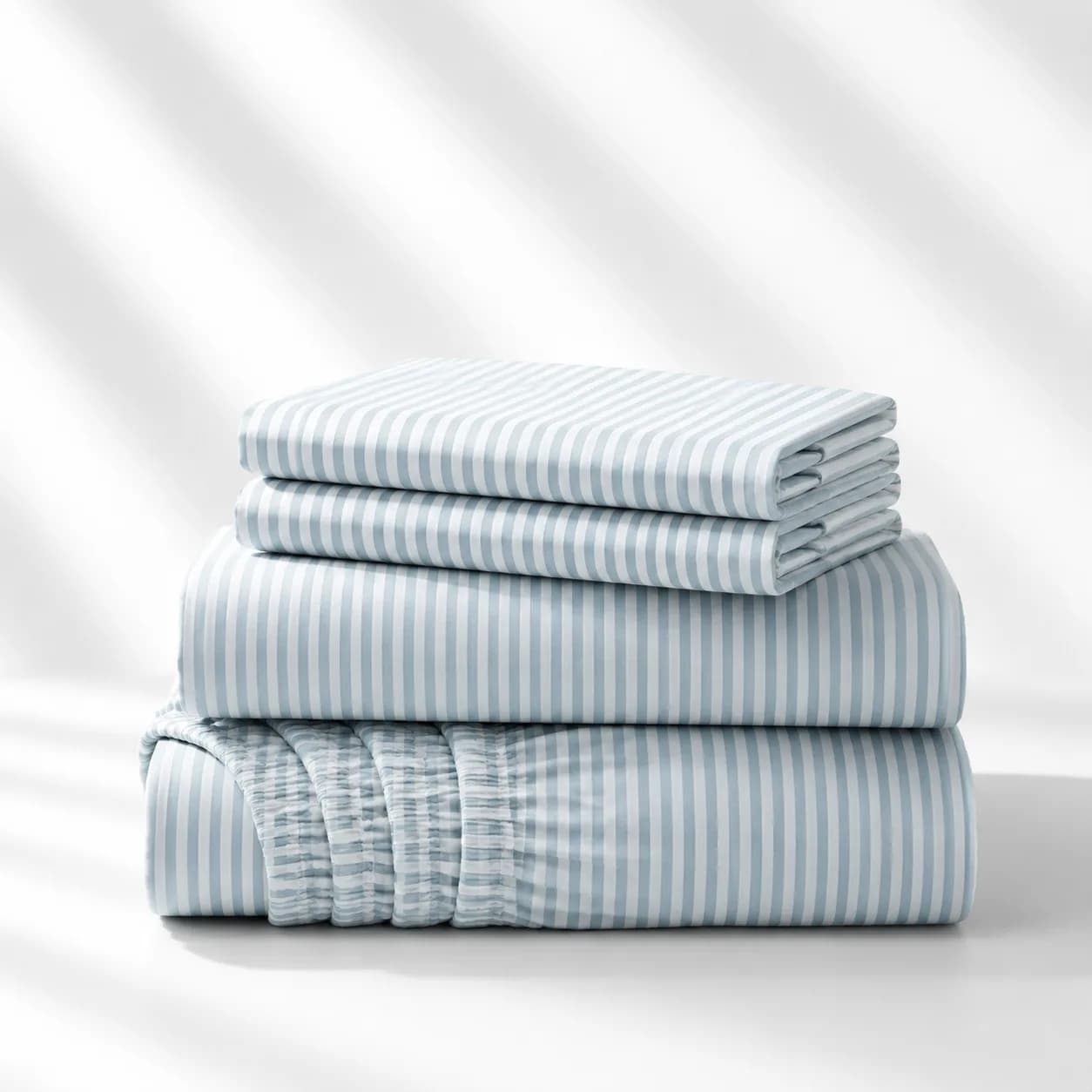
Dormitory bedding is bought by the hundred and lives in a shared commercial laundry. Here is the spec that decides cost per bed — fibre, durability, XL-twin sizing and fire safety — and how to run a bulk student-housing tender.
Student housing bedding is not retail bedding bought in quantity — it is an institutional purchase with its own rules. It is bought by the hundred or the thousand, it turns over with each academic year, and every set lives in a shared commercial laundry that would destroy a consumer sheet in a term. The decision that matters is cost per bed over the life of the linen, and it is set by four things: the fabric's durability, the right institutional sizing, whatever fire safety your building code demands, and the terms of the bulk order itself. This guide walks through each, and how to run the tender.
What makes dormitory bedding a distinct spec
Three things separate dormitory linen from the same product sold at retail. First, laundry: university and student-accommodation linen is washed hot and often, so it must tolerate repeated high-temperature washing without excessive shrinkage, wear or colour loss. Second, sizing: student beds are frequently longer than a standard double or twin — the twin XL is the common campus size in the US, and bunk and high-sleeper frames add their own fitted-sheet depth requirements. Third, safety: soft furnishings in some institutional buildings must meet a flammability standard that a home duvet never has to. Get those three right and the bulk economics follow.
The bulk dormitory bedding specification
Specify each item as its own line with its own construction and size. A thin or ambiguous spec is what turns a large order into a fitment problem across a whole building.
| Line item | Specification to lock | Why it decides cost per bed |
|---|---|---|
| Fitted & flat sheet | Fibre, weave, size (twin XL etc.), pocket depth for the frame | Wrong pocket depth on a bunk or XL frame strips an entire building's order |
| Duvet cover / bedspread | Fibre, closure, size, wash durability | Closure and fabric decide how many wash cycles it survives |
| Pillowcase | Style, size, matching construction | Cheapest item, highest loss rate — order in the right ratio |
| Fibre choice | Durable 100% cotton vs poly-cotton blend (e.g. 50/50) | Blend lowers cost and drying time; cotton wins on comfort and breathability |
| Durability | Wash-cycle target, shrinkage tolerance, colourfastness grade | Cost per bed is purchase price divided by wash cycles survived |
| Fire safety | Flammability standard required by the building's fire code | A non-compliant lot cannot be installed — the most expensive failure of all |
Durability and wash life: the number that sets cost per bed
The honest metric for institutional linen is not unit price but cost per bed per year — the purchase price divided by the number of wash cycles the fabric survives before it must be retired. That reframes the fibre choice. A 50/50 poly-cotton blend resists shrinkage, dries faster and often lasts more wash cycles, which is why so much institutional linen is blended. A durable 100% cotton — a coarser, hard-wearing count rather than a fine premium one — breathes better and feels more comfortable against the skin, at some cost in drying time. Neither is simply right; the choice depends on whether the property prioritises laundry throughput or student comfort.
| Durable 100% cotton | Poly-cotton blend (e.g. 50/50) | |
|---|---|---|
| Comfort / breathability | Higher — absorbent, breathable | Lower — can feel warmer, less absorbent |
| Shrinkage | More, unless pre-shrunk | Less — dimensionally stable |
| Drying time / laundry cost | Slower, higher energy | Faster, lower energy |
| Wash-cycle life | High with the right count | Often highest — resists abrasion |
| Unit cost | Slightly higher | Lower |
| Best for | Comfort-led accommodation, premium halls | High-throughput laundries, maximum cost control |
Fire safety and compliance you can be asked to prove
This is the requirement most buyers underweight until a fire officer asks for evidence. Whether bedding must be flame-retardant depends on the building's risk level and the local fire code — dormitories, halls of residence, hospitals and hotels are often treated differently from private homes. The points to establish before you order:
- Confirm the standard your building requires — in the UK, BS 7175 covers the ignition resistance of bedcovers and pillows; in the US, federal mattress flammability rules (16 CFR Parts 1632 and 1633) apply to mattresses, and local fire codes govern the rest.
- Distinguish inherent from treated flame retardancy: inherently flame-resistant fibres keep their performance for the life of the product, whereas some chemical treatments can lose efficacy after repeated commercial laundering.
- Ask for the test evidence, not just a claim — a certificate tied to the actual fabric and construction you are buying.
- Specify colourfastness and pre-shrinking alongside fire safety, so a compliant set still survives the wash without greying or shrinking out of fit.
- Where skin-contact chemical safety matters, request OEKO-TEX STANDARD 100 documentation for the fabric.
Running a bulk dormitory bedding tender
Once the spec is fixed, the order is a procurement exercise. Walk it through these steps so the bulk price ties to a specification you can hold the supplier to.
Sourcing dormitory bedding in bulk
- 01
1 · Fix sizes to the actual frames
Measure the beds — twin XL, bunk, high-sleeper — and set fitted-sheet dimensions and pocket depth to them. Size errors are the most common and most expensive bulk mistake.
- 02
2 · Choose fibre on cost per bed
Decide between durable cotton and a poly-cotton blend based on whether comfort or laundry throughput leads, then set the yarn count and density.
- 03
3 · Set a wash-cycle durability target
State the wash-cycle life, shrinkage tolerance and a colourfastness grade so the linen is judged on how it ages, not how it looks new.
- 04
4 · Confirm the fire requirement in writing
Establish the flammability standard your building needs and require test evidence tied to the exact fabric — before, not after, the order.
- 05
5 · Lock MOQ, samples and inspection
Agree the 100-set minimum for each color and size combination, approve pre-production samples in the real spec, and set an AQL inspection so the delivered lot matches what you signed off.
Sourcing dormitory bedding direct from Nantong
BeddingTextilePro supplies student-housing and dormitory linen on a source-factory-direct supply model from Nantong, China — the country's largest home-textile cluster — with locked, dedicated production lines at large-scale mills, goods shipping direct from the mill at mill pricing, and our own in-line QC on the line. For a bulk institutional order that means no intermediary markup on hundreds of beds, a single accountable partner for the lot, and repeat-order consistency as each academic year turns over. We are wholesale only with a 100-set minimum per color and size combination, full OEM/ODM development for fabric, blend, institutional sizing and packaging, and we support OEKO-TEX STANDARD 100 documentation on ranges where the mill holds current certification. Flame-retardant construction is available where your fire code requires it — specify the standard and we build and evidence to it. Start at /hotel-linen for contract and institutional linen, send your bed sizes and volumes, and our export team replies within one business day.
The bottom line for student-housing buyers
Treat dormitory bedding as an institutional purchase, not retail in bulk. The price that matters is cost per bed over the life of the linen, and it is set by a hard-wearing fabric, the right campus sizes, a wash-cycle durability target and whatever flame-retardancy your building code demands. Fix those in a written spec, tie the bulk price to an MOQ, samples and an inspection standard, and a large order stops being a fitment-and-compliance risk and becomes a repeatable annual programme.
BeddingTextilePro is a Nantong B2B supplier of bedding sets, summer quilts and hotel linen on source-factory direct supply — locked, dedicated production lines at large-scale Nantong mills, goods shipping direct from the mill — with a 100-set minimum per color and size combination, full OEM/ODM customization and OEKO-TEX support. Request a wholesale quotation and our export team will reply within one business day.
Frequently asked questions
- What size is student dormitory bedding?
- It varies by market, but campus beds are often longer than a standard double or twin. In the US the twin XL is the common dormitory size, and bunk and high-sleeper frames add their own fitted-sheet depth requirements. Always measure the actual frames and set the fitted-sheet dimensions and pocket depth to them before ordering in bulk — a size error repeats across the whole building.
- Is cotton or poly-cotton better for dormitory bedding?
- It depends on the priority. A 50/50 poly-cotton blend resists shrinkage, dries faster and often survives more wash cycles, which suits high-throughput institutional laundries and the tightest cost control. A durable 100% cotton breathes better and feels more comfortable against the skin, at some cost in drying time. Choose on cost per bed over the life of the linen, weighing laundry economics against student comfort.
- Does student housing bedding need to be flame retardant?
- It can, depending on the building's risk level and the local fire code — dormitories and halls of residence are often treated differently from private homes. In the UK, BS 7175 covers the ignition resistance of bedcovers and pillows; in the US, federal rules 16 CFR 1632/1633 apply to mattresses and local fire codes govern the rest. Confirm the required standard and ask for test evidence tied to the actual fabric before you order.
- What is the minimum order for dormitory bedding?
- It depends on the supplier and the level of customisation. Buying mill-direct, a 100-set minimum per color and size combination is typical, with full OEM/ODM control over fabric, blend, institutional sizing and packaging. Approve pre-production samples in the real specification and set an AQL inspection standard so a large bulk lot matches what you signed off before it ships.
Sources & references
Featured products
Shop by category
Explore our services
Sourcing bedding for your market?
Factory-direct quotes, 100-set minimum per color and size combination, full OEM/ODM customization. We reply within one business day.