TL:DR
Healthcare and senior-care bedding must survive repeated high-temperature thermal-disinfection washing (often 71°C / 160°F) and harsh disinfectants without degrading or fading, so specify a durable cotton or poly-cotton blend, colourfastness to bleach, and the right sizes. Require hygiene evidence (HLAC/TRSA processing, OEKO-TEX on the fabric) and balance infection control against resident comfort and dignity.
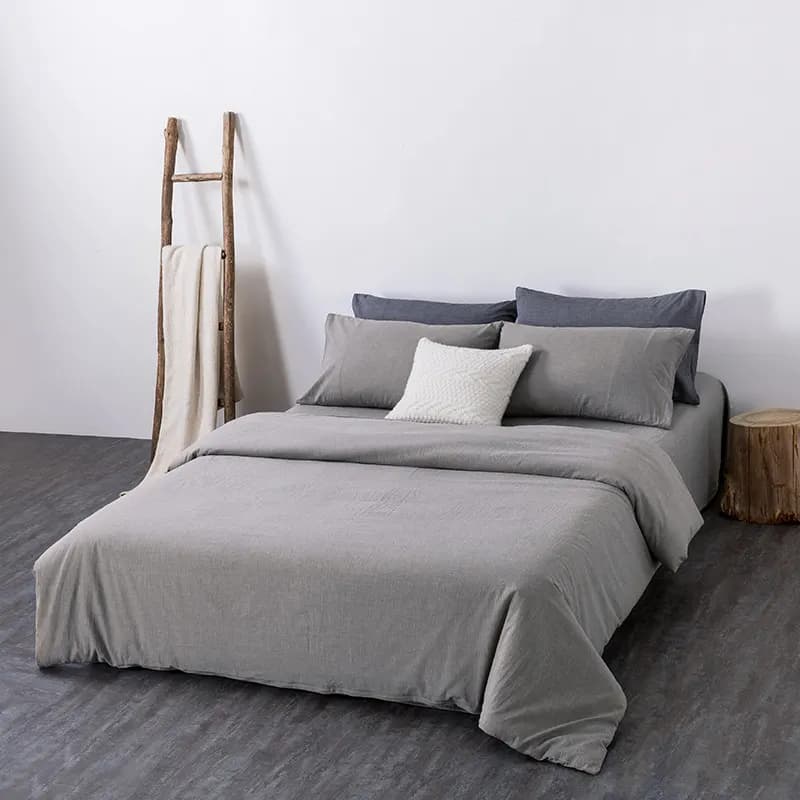
Healthcare and senior-care linen has to survive thermal-disinfection washing and harsh disinfectants while staying comfortable for residents. Here is how to specify the fabric, the hygiene standards to require, and how to buy for cost per use.
Healthcare and senior-care bedding is a demanding sourcing segment because it has to do two things at once: survive an infection-control laundry that would shred ordinary linen, and stay comfortable and dignified for a resident who may spend most of the day in bed. The linen is washed hot, often with strong disinfectants, and turned over constantly, so the real cost is cost per use across a punishing wash regime. This guide covers the fabric that stands up to it, the hygiene and infection-control standards buyers are held to, and how to keep resident comfort in the specification rather than sacrificing it to durability.
Why healthcare and senior-care linen is its own spec
Medical and care linen is defined by the laundry it must endure. Best practice washes healthcare bedding hot — often at 71°C / 160°F or above — specifically to kill bacteria and viruses, and frequently with chlorine bleach or other strong disinfectants. Fabric that is not built for it fades, hardens or degrades long before it has earned its purchase price. On top of that sit infection-control rules on how the linen is processed and handled, and a duty of comfort and dignity to the resident. A spec that optimises only for durability, or only for softness, fails one of those masters.
The healthcare bedding specification
List each item separately with its construction, size and the wash regime it must survive. In care settings the item list is wider than a hotel's — draw sheets and waterproof protectors sit alongside the standard set.
| Line item | Specification to lock | Why it matters in a care setting |
|---|---|---|
| Flat & fitted sheet | Fibre, weave, size, pocket depth for care beds | Must survive thermal-disinfection washing without shrinking off the mattress |
| Draw sheet / slide sheet | Strength, size, laundering compatibility | Used for repositioning; failure is a manual-handling and safety issue |
| Pillowcase & duvet cover | Fibre, closure, colourfastness to bleach | Repeated disinfectant washing must not grey or weaken them |
| Waterproof / incontinence protector | Breathable barrier, wash temperature rating | Protects the mattress; must tolerate the same hot wash |
| Fibre choice | Durable cotton vs poly-cotton blend | Blend resists high-temperature wear; cotton is more breathable and absorbent |
| Colour & finish | Colourfastness to washing and bleaching, no drift between batches | Faded, mismatched linen reads as poor care and fails repeat orders |
Thermal disinfection: the wash cycle that decides the fabric
The wash is the specification. Because healthcare linen is thermally disinfected at high temperature and often bleached, the fibre and dye must be chosen to survive it. This is where the cotton-versus-blend decision is sharper than in any other segment. A poly-cotton blend resists high-temperature abrasion and dimensional change well and holds up over many aggressive cycles. A durable 100% cotton is more breathable and absorbent — which matters for a resident lying in it all day, and for wicking perspiration — but must be a hard-wearing construction and colourfast to bleach to last. Specify the wash temperature and disinfectant regime up front so the supplier proposes a fabric that survives your laundry, not a showroom sample.
| Durable 100% cotton | Poly-cotton blend | |
|---|---|---|
| Comfort / breathability | Higher — absorbent, breathable for long bed stays | Lower — less absorbent, can feel warmer |
| High-temperature durability | Good with a hard-wearing count | High — resists abrasion and shrinkage |
| Bleach / disinfectant tolerance | Good if colourfast; whites bleach cleanly | Good; check dye and finish rating |
| Drying time / laundry cost | Slower, higher energy | Faster, lower energy |
| Best for | Resident comfort, senior-care rooms | High-turnover clinical laundries, cost control |
Hygiene, infection control and certification
Healthcare buyers are accountable for how linen is processed, not just what it is made of. The evidence most often required covers both the textile and the laundry:
- Accredited laundry processing — in the US, the Healthcare Laundry Accreditation Council (HLAC) accredits laundries that process healthcare textiles, and the TRSA Hygienically Clean Healthcare certification verifies performance through inspection and microbial testing.
- Thermal-disinfection compatibility — fabric rated to survive repeated hot washing (commonly 71°C / 160°F or above) without degrading.
- Colourfastness to bleaching and washing, so disinfectant cycles do not grey whites or fade colours.
- OEKO-TEX STANDARD 100 documentation on the fabric, relevant for linen in prolonged skin contact with vulnerable residents.
- Batch-to-batch consistency in size, colour and construction, so replacements match existing stock across repeat orders.
How to brief a healthcare linen supplier
Specifying healthcare and senior-care bedding
- 01
1 · State the wash and disinfection regime first
Give the wash temperature and any bleach or disinfectant used. The laundry regime, not the showroom feel, is what the fabric has to be chosen against.
- 02
2 · Choose fibre on cost per use
Decide between a durable cotton for resident comfort and a poly-cotton blend for maximum high-temperature durability, then set the yarn count and density.
- 03
3 · List the full care item set
Include draw sheets, waterproof protectors and any care-specific items alongside the standard set, each with its own size and wash rating.
- 04
4 · Require hygiene and colourfastness evidence
Ask for colourfastness to washing and bleaching, OEKO-TEX documentation on the fabric, and evidence of accredited laundry processing where relevant.
- 05
5 · Lock MOQ, samples and inspection
Agree the 100-set minimum for each color and size combination, approve pre-production samples in the real specification, and set an AQL inspection so the delivered lot matches what you signed off.
Comfort and dignity in senior care
Durability and hygiene are necessary, but they are not the whole brief. A senior-care resident may lie in the same bedding for most of the day, so absorbency, breathability and a soft hand directly affect skin health and comfort, and calm, home-like colours affect dignity and mood in a way a clinical white ward does not. Moisture management matters here as much as in any spa or hotel linen: breathable, absorbent cotton helps wick perspiration and reduce the moisture against the skin that contributes to discomfort. Keep comfort and appearance in the specification as named requirements, not as whatever is left after durability is satisfied.
Sourcing healthcare and senior-care linen from Nantong
BeddingTextilePro supplies healthcare and senior-care linen on a source-factory-direct supply model from Nantong, China — the country's largest home-textile cluster — with locked, dedicated production lines at large-scale mills, goods shipping direct from the mill at mill pricing, and our own in-line QC on the line. For a care provider that means no intermediary markup, a single accountable partner for the lot, and batch-to-batch consistency so replacements match existing stock. We are wholesale only with a 100-set minimum per color and size combination and full OEM/ODM development for fabric, blend, care-specific items and sizing, and we support OEKO-TEX STANDARD 100 documentation on ranges where the mill holds current certification. On harmful substances we are precise about scope: a third-party test report on our 100s cotton fabric (report JST-CW202301688, Jiangsu Provincial Textile Product Quality Supervision & Inspection Research Institute, CNAS L0450 / CMA) met GB 18401-2010 Class B on a client-submitted sample; for a healthcare programme we commission testing on the specific goods being ordered. Start at /hotel-linen for contract and institutional linen, send your wash regime and volumes, and our export team replies within one business day.
The bottom line for healthcare buyers
Source healthcare and senior-care bedding against the laundry it has to survive and the resident who has to live in it. Specify a fabric built for thermal-disinfection washing and bleach — durable cotton for comfort, a poly-cotton blend for maximum high-temperature durability — require colourfastness and hygiene-processing evidence, and keep comfort and dignity in the spec as named requirements. Buy on cost per use, hold the supplier to a wash-cycle target and an inspection standard, and the linen protects both your infection-control record and your residents' comfort.
BeddingTextilePro is a Nantong B2B supplier of bedding sets, summer quilts and hotel linen on source-factory direct supply — locked, dedicated production lines at large-scale Nantong mills, goods shipping direct from the mill — with a 100-set minimum per color and size combination, full OEM/ODM customization and OEKO-TEX support. Request a wholesale quotation and our export team will reply within one business day.
Frequently asked questions
- What fabric is best for healthcare and senior-care bedding?
- The fabric must survive thermal-disinfection washing (often 71°C / 160°F or above) and strong disinfectants without degrading or fading. A poly-cotton blend resists high-temperature abrasion and shrinkage and lasts well; a durable 100% cotton is more breathable and absorbent, which matters for residents lying in bed for long periods, but must be a hard-wearing, bleach-colourfast construction. Choose against your actual wash regime and cost per use.
- What temperature is healthcare bedding washed at?
- Best practice washes healthcare linen hot — commonly 71°C / 160°F or above — to kill bacteria and viruses, frequently with chlorine bleach or other disinfectants. That is why the fabric and dye must be specified to survive repeated high-temperature, high-disinfectant cycles: the wash regime, not the showroom feel, decides which linen is fit for a care setting.
- What hygiene standards apply to healthcare linen?
- Accountability covers both the textile and the laundry. In the US, the Healthcare Laundry Accreditation Council (HLAC) accredits laundries processing healthcare textiles, and the TRSA Hygienically Clean Healthcare certification verifies performance through inspection and microbial testing. Buyers should also require thermal-disinfection-compatible fabric, colourfastness to bleaching, and OEKO-TEX STANDARD 100 documentation for linen in prolonged skin contact.
- How is senior-care bedding different from hospital bedding?
- Both must survive infection-control laundering, but senior care leans harder on comfort and dignity because residents often spend most of the day in bed. That raises the priority of absorbency, breathability and a soft hand for skin health, and of calm, home-like colours over a clinical look. Specify comfort and appearance as named requirements alongside durability and hygiene, rather than treating them as optional.
Sources & references
Shop by category
Explore our services
Sourcing bedding for your market?
Factory-direct quotes, 100-set minimum per color and size combination, full OEM/ODM customization. We reply within one business day.