TL:DR
Receive hotel linen against the current purchase order: count cartons, then units by SKU and size, check visible condition, and record where each accepted line goes. Put mismatched or damaged goods on hold with a clear photo and owner; move identified stock to its assigned store. Send the supplier one concise exception list that states the affected line, quantity and requested next step.

A shift-ready way to count a hotel-linen delivery, put identified stock away and resolve exceptions without losing the order trail.
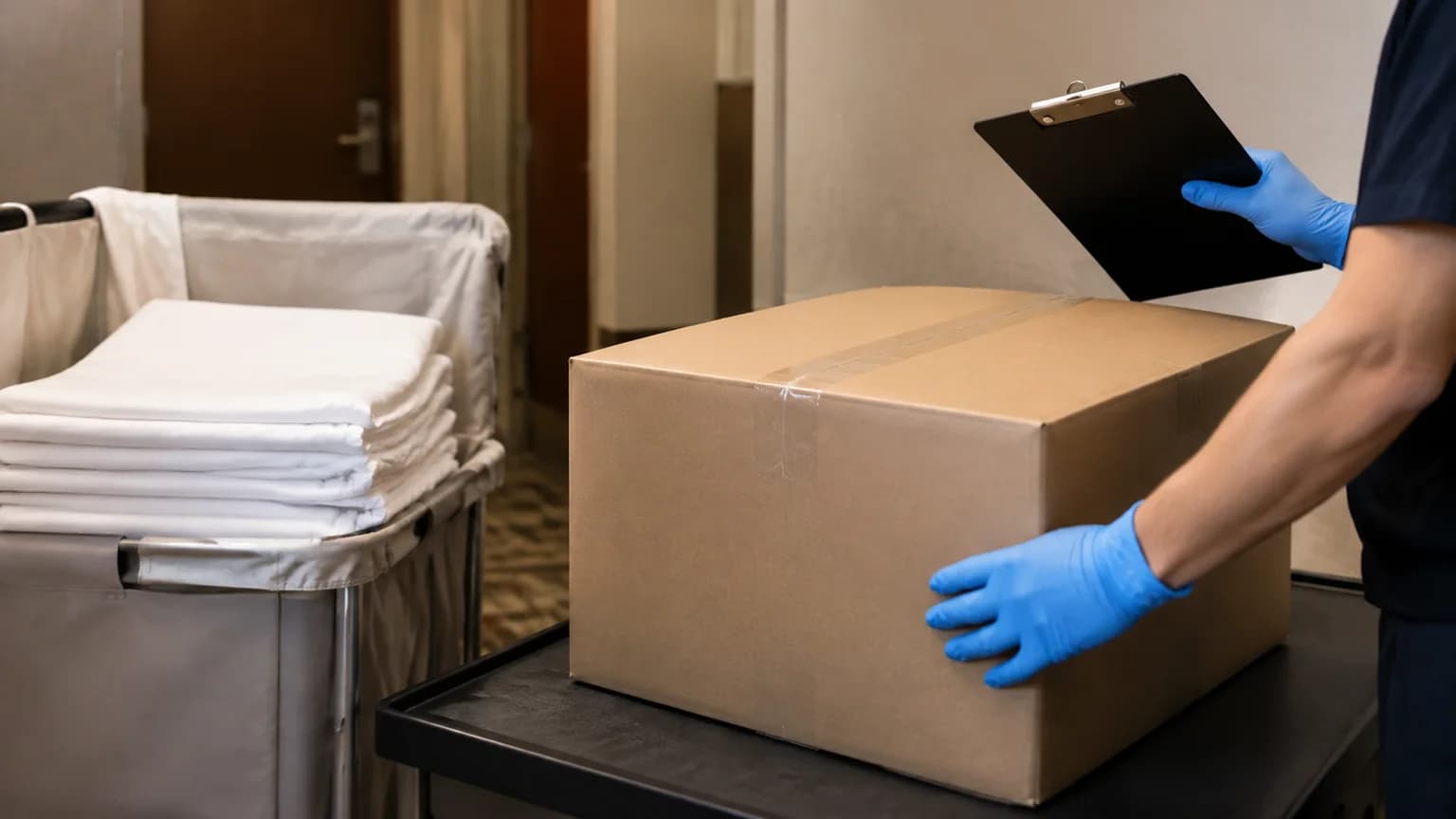
Start a hotel linen delivery with the current PO and item list at the receiving point. Count cartons against the delivery note, then check the units inside by hotel SKU and size. Give every line a destination: clean store, named department or hold area. A single receiving sheet should show what arrived, where it went and which difference needs a decision.
Set up the receiving point before the truck arrives
Put the latest PO, size list and packing information beside the delivery area. Name one person to count, one place for identified stock and one clearly marked hold area for unknown or damaged goods. The goods-received note used in procure-to-pay work links the delivery to the order and discrepancy follow-up; keep that practical purpose rather than turning the receiving table into a technical inspection report.
| At the receiving point | Record now | Next decision |
|---|---|---|
| Cartons match the delivery note | Carton count, reference and visible condition | Open or allocate under the hotel's checking plan |
| A size or SKU does not match | PO line, carton mark and observed item | Keep the affected stock on hold and ask for clarification |
| A carton is wet or torn | Location, visible damage and photo reference | Separate the affected carton for local review |
| Units are identified and counted | Item, size, accepted count and store location | Hand over to the linen room or department |
| Quantity is short or over | Ordered, declared and observed counts | Send one itemised exception list to the supplier |
Count cartons first, then count the linen units
A correct grand total of cartons can still hide a mixed size run. Compare the physical cartons with the delivery note, then check the declared pieces per pack against the items you observe under the hotel's receiving plan. Keep cartons, inner packs and individual pieces in separate quantity columns. If the delivery is too large for a full piece count, record the actual check coverage and leave the rest under the hotel's agreed review process.
| Receiving-sheet column | Example of what to enter | Action if different |
|---|---|---|
| Order reference | PO line and active hotel item/SKU | Find the current order version |
| Declared delivery | Cartons, packs and units shown on the packing list | Preserve the supplier's stated basis |
| Observed delivery | Physical cartons and checked units by size | Record the measured difference |
| Visible condition | Dry/intact or a specific tear, wet mark or stain | Photograph and hold affected goods |
| Location and owner | Linen store, floor store or hold area; receiver name | Stop unidentified stock moving into use |
| Follow-up | Question, contact, date and agreed next step | Keep the exception open until resolved |
Match every case to the hotel SKU
Follow one identity chain: PO line → hotel SKU and size → declared case or pack → observed piece. Do not substitute a marketing collection name for the hotel's item code. Where GS1 identifiers are in use, an SSCC identifies a logistics unit and a GTIN identifies a trade item; the hotel still needs the ordered SKU, size and count to agree with the physical delivery. A missing or conflicting mark is a question to resolve, not a reason to guess.
| Identity layer | Where to look | Write on the receiving sheet |
|---|---|---|
| PO line | Current order or approved item list | Buyer SKU, size, ordered units |
| Carton | Delivery label and packing list | Carton reference and declared contents |
| Inner pack | Pack label or approved pack plan | Declared pieces per pack and any mixed assortment |
| Observed piece | Checked physical article | Actual item, size and count seen |
| Decision | Hotel's receiving rule | Store destination or hold owner and question |
Move clear stock; keep exceptions visible
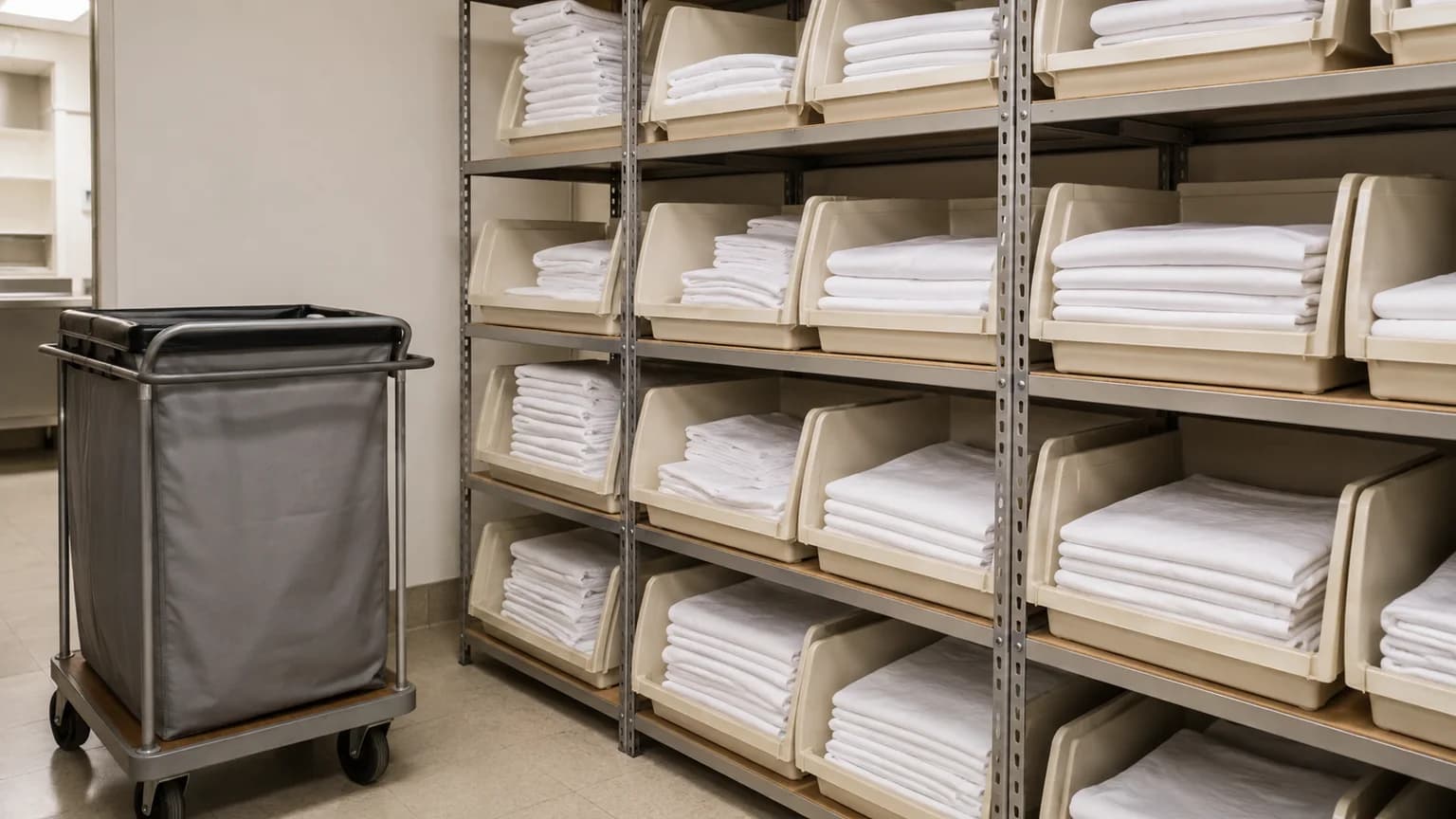
Once a line is identified and counted, write its store or department destination and hand it to the receiving owner. Put wet, torn, unknown or mismatched goods in a separate hold area. A photo should show the mark or visible problem alongside the carton reference. Send one short exception message with the affected PO line, observed quantity, question and requested response; leave liability or product-quality decisions to the contract and any agreed inspection.
Hotel linen receiving in six moves
Delivery to linen store or exception hold
- 01
1 · Open the right order
Use the current PO, item/SKU list and delivery reference.
- 02
2 · Count cartons
Compare physical cartons with the delivery note and note exterior damage.
- 03
3 · Count checked units
Record pieces by hotel SKU and size, with the quantity basis visible.
- 04
4 · Route clear stock
Write the named store or department destination and handover owner.
- 05
5 · Hold differences
Separate the affected goods and capture one clear exception record.
- 06
6 · Close the loop
Send the supplier the itemised question, then retain the agreed resolution with the PO.
Keep the signed delivery note, counted receiving sheet, exception photos and supplier response with the same PO reference. If a packing list is corrected after delivery, retain both versions so the store team can see which count was observed and which detail was later clarified.
Ask the supplier a question they can answer
For a shortage or mismatch, send BeddingTextilePro the PO line, buyer SKU, size, carton reference, declared and observed counts, visible-condition photo if relevant, and the receiving team's contact and proposed next step. For a future hotel-linen order, include the item list and pack breakdown in the buying brief so the same fields can be checked quickly on arrival.
Frequently asked questions
- What should be ready before a hotel linen delivery arrives?
- Bring the current PO, item/SKU and size list, packing information, receiving sheet, named store destination and a place to hold damaged or unidentified goods.
- Should the team count cartons or individual linen pieces?
- Count both, but keep them in separate columns. Cartons confirm the delivery units; checked pieces by SKU and size show what the hotel can allocate. Record how much of a large delivery was actually opened and counted.
- What if the carton label and linen size disagree?
- Record both descriptions with the PO line and carton reference, hold the affected goods, and ask the supplier to clarify the conflict before that stock is mixed with identified linen.
- How do I report a damaged or short hotel-linen delivery?
- Send one itemised message with the PO line, SKU/size, declared and observed quantities, carton reference, clear photos when useful, and the next decision requested from the supplier or carrier.
- When can received linen move into the store?
- Move a line after it has been identified, counted to the hotel's receiving rule and assigned a destination. Keep unresolved differences separate for the named review owner; a receiving signature alone is not a product-quality approval.
Sources & references
Featured products
Shop by category
Explore our services
Sourcing bedding for your market?
Factory-direct quotes, 100-set minimum per color and size combination, full OEM/ODM customization. We reply within one business day.