TL:DR
Choose bedding packaging around the complete folded set and its sales route, not the mattress size or a box photograph. Record internal fit, closed external dimensions, gross weight, materials, closure, carton arrangement and approval version separately. Compare alternatives against the same contents and handling requirements, then approve a packed physical sample before releasing artwork or bulk packing.
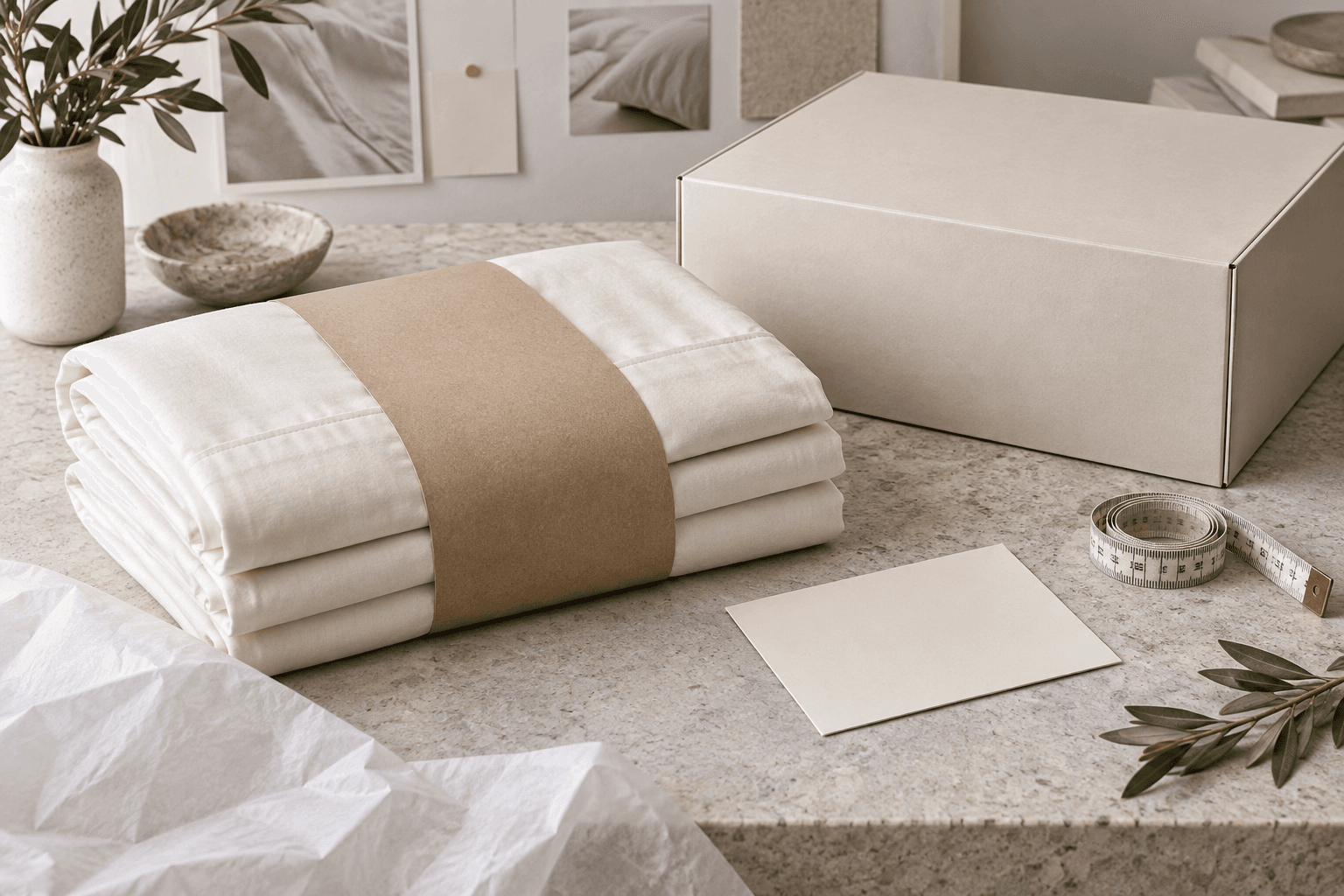
Turn a packaging idea into measured, version-controlled alternatives that suppliers can quote on the same basis.
A useful bedding packaging brief starts with the complete folded set, the sales channel and the physical job of each packaging layer. Measure the actual configuration, distinguish internal fit from closed external dimensions, and compare material, closure, protection and packing costs on one revision. A King-size label or an attractive reference box cannot tell a supplier how much space your folded duvet cover, sheet and pillowcases require.
Separate fit, shelf presentation and shipment data
Create a sample ID for each component combination and folding sequence. Record whether the measurement includes inserts, inner protection and the final closure. Measure the folded unit without forcing it into a proposed box, then review the proposed pack around that unit. Any allowance should be agreed from a physical trial, not copied from another size or fibre. A fitted-sheet elastic edge or an extra pair of pillowcases can change the shape even when the bed-size name stays the same.
| Record | What to measure | What it decides |
|---|---|---|
| Folded product | Complete components, fold sequence, dimensions and unit | The actual item the pack must hold |
| Internal fit | Usable internal space, opening, closure and agreed clearance | Whether packing, closing and removal work without damage |
| Closed unit pack | External dimensions, orientation and gross weight | Retail/fulfilment item data and handling |
| Closed outer carton | External dimensions, gross weight and units/arrangement | Warehouse and transport handover |
For exchanged item data, agree the measurement convention with the receiving partner. The GS1 Package and Product Measurement Standard distinguishes retail and non-retail levels and defines measurement orientation; shelf display orientation is not automatically the data orientation. Its August 2026 release is a reason to confirm the current reference, not to relabel a supplier’s unmeasured estimate as GS1-compliant.
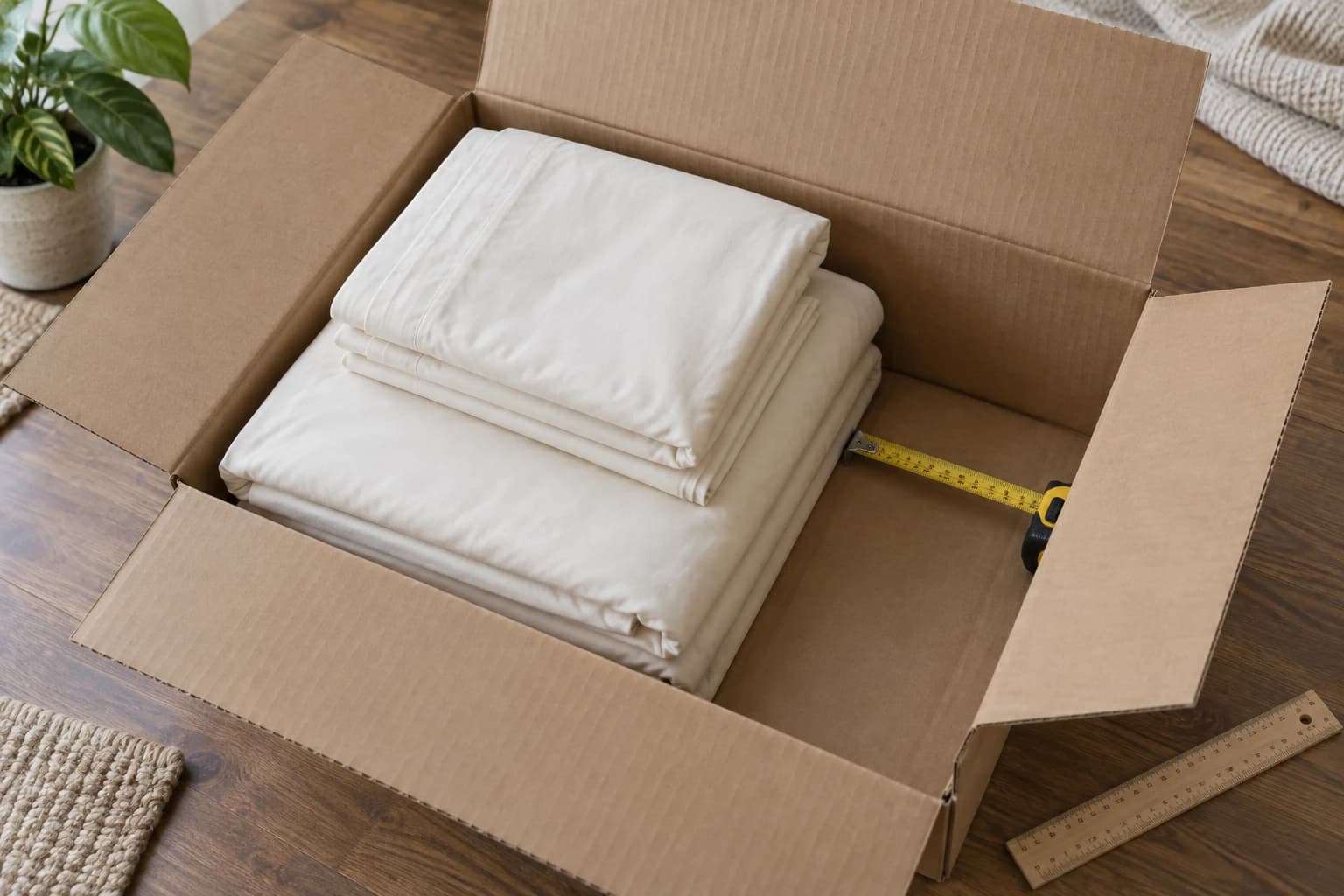
Choose a format by the constraint it must solve
| Route | Reason to consider it | Confirm before selection |
|---|---|---|
| Sleeve or band with inner protection | Visible textile and a compact retail presentation | What protects exposed fabric; sleeve movement and SKU identification |
| Flexible closed bag | Product visibility and a defined unit pack | Opening, closure, seams, material specification and receiving rules |
| Folding carton | Controlled shelf shape and printable faces | Internal fit, board specification, closure and separate shipping protection |
| Corrugated shipping pack | An outer pack matched to the delivery route | Unit arrangement, closure, handling assessment and receiver acceptance |
Do not treat a retail carton as an approved parcel shipper. State whether a fulfilment partner adds an outer package, whether the unit is displayed directly, and what happens during inspection or an authorised return. Ask for a route-appropriate assessment if transport protection matters. ISTA distinguishes early screening from distribution simulations and member-specific procedures; opening a sample at your desk does not establish an ISTA test result or marketplace approval.
Copy this measurable packaging request
| Field | Buyer entry | Supplier response / approval |
|---|---|---|
| Identity | [SKU; colour; finished size; components; specification revision] | [same scope confirmed / exception] |
| Folded unit | [sample ID; fold sequence; measured dimensions + unit] | [measurement basis; missing sample] |
| Format alternatives | [option A / B; unit-pack and outer-pack roles] | [material; construction; closure; internal fit] |
| Closed measurements | [required convention; receiving limits if supplied] | [external unit/carton dimensions; gross weights; arrangement] |
| Market / information | [destination; channel; artwork owner; item-data owner] | [material/component list; weights; evidence requested] |
| Quantity / quote | [sets per colour × size; packs per artwork version] | [unit material; setup/tooling; insert; packing; carton; sample; currency; validity] |
| Approval | [approver; review points; required sample version] | [sample ID; deviations; decision; date; change owner] |
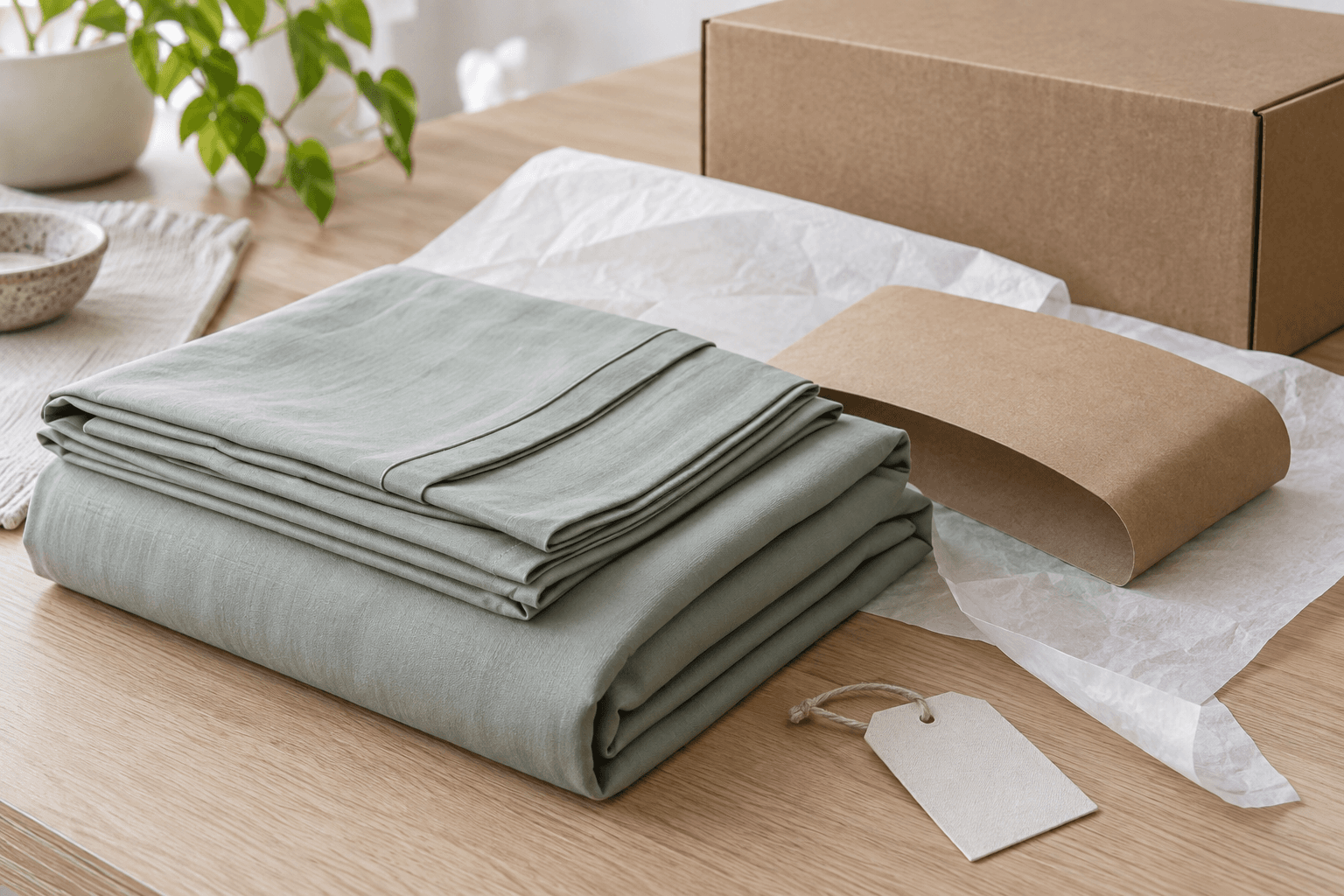
Approve the packed sample, not only the artwork
Use the intended components and fold, close the sample normally, then inspect bulging, crushed corners, rubbing against closures, exposed textile and movement inside the pack. Open it, remove every component and check whether the pack can be reclosed when that is part of the intended handling. If compression is proposed, agree the trial conditions and review the unpacked appearance before choosing it; do not assume that a smaller parcel guarantees acceptable recovery. Record observations against the sample version, with photographs and a named decision owner.
Release one controlled packaging version
- 01
1 · Fix the contents
Identify components, colour, finished size, fold and sample ID.
- 02
2 · Compare equivalent options
Request the same quantities, packaging layers and itemised quotation basis.
- 03
3 · Check physical use
Review fit, closure, removal, handling and agreed receiving requirements.
- 04
4 · Sign and control changes
Approve sample and artwork revisions together; recheck affected dimensions after a change.
For EU destinations, include the packaging component/material list, weights, destination and responsible reviewer in the brief. The European Commission describes the PPWR as applying in phases from August 2026; later labelling and design provisions have different dates. Ask the market-responsible party which obligations apply to this pack and transaction. A paper appearance, recycling symbol or supplier statement alone is not evidence that the complete packaging meets every destination rule.
Send the same pack brief with the product enquiry
Use the private-label bedding and contact links below with your selected real product, component list, folded sample measurements, packaging alternatives, destination and colour × size quantities. The minimum is 100 sets for each colour × size combination, with no pooling across colours or sizes. Ask the supplier to distinguish bedding-set quantities from packaging production/setup quantities and identify any exception. Compare the returned scope before comparing the total: a bag-only price is not comparable with a price that includes inserts, packing labour and outer cartons.
Frequently asked questions
- Can I choose a bedding box from the mattress size?
- No. Measure the complete folded configuration, including every component and insert. Then agree internal fit and record closed external dimensions separately for the selected packaging version.
- Can one packaging format cover every bedding size?
- Only after the actual configurations are checked. Review fit, presentation, closure and movement for each size; do not assume that one approved sample covers different component counts or folds.
- Is a retail bedding box ready for ecommerce delivery?
- Not automatically. Confirm who adds the shipping layer, the delivery route, receiver rules and any requested assessment of the complete product-and-package combination.
- What makes two bedding packaging quotations comparable?
- The same product/fold, materials, closure, dimensions, artwork revision, quantity basis and packaging layers. Separate setup, sample, packing and outer-carton charges from the unit packaging price.
- How should I state order quantities in the packaging brief?
- List sets separately for each colour × size combination; each requires at least 100 sets and combinations cannot be pooled. Show packaging quantities and artwork versions separately and request confirmation of their quotation basis.
Sources & references
Shop by category
Explore our services
Sourcing bedding for your market?
Factory-direct quotes, 100-set minimum per color and size combination, full OEM/ODM customization. We reply within one business day.