TL:DR
Before requesting a bedding lab report, define the buyer question, exact component and sample ID, method and edition, test conditions and acceptance criteria. Ask the laboratory to confirm scope and sample requirements. When the report arrives, reconcile those fields and record exceptions before a named buyer decides whether the evidence supports the intended decision. A sample result is not blanket proof for every colour, component or production lot.
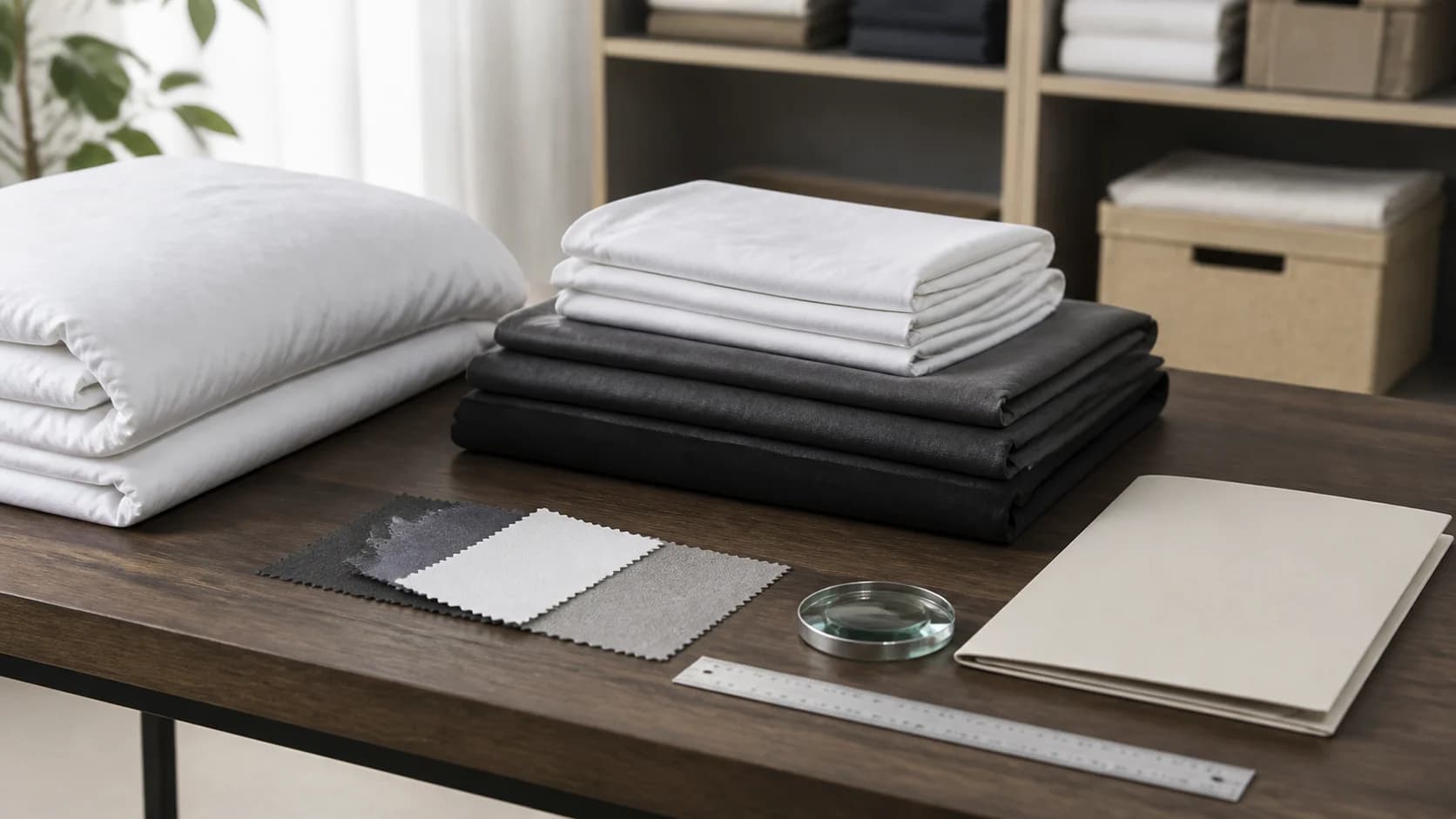
A fillable test-request and report-review workflow for bedding buyers, without treating a report, COA or accreditation mark as blanket proof.
Prepare a bedding lab test request by connecting each buyer question to an identified component, sample, method, conditions and acceptance criterion. Ask the chosen laboratory to confirm what it can undertake and what specimens it needs. On receipt, compare the report with that request before deciding whether to accept, clarify, retest or hold the affected line. A report headed “pass” is not useful if its sample or scope does not answer the purchasing question.
Write the decision before choosing the tests
Start with the intended use and destination: what decision must the evidence support, and who owns the requirement? A brand’s care-label verification, a hotel’s laundering specification and a destination-market restriction may need different evidence. Name the requirement source and revision rather than requesting “all standard bedding tests”. AATCC’s method directory distinguishes different properties and procedures; it is not a universal pass list. Discuss the relevant method and current edition with the laboratory, including any options or preparation conditions that affect the result.
| Buyer question | Request must identify | Do not infer |
|---|---|---|
| Will this component meet our written care specification? | Component, care/conditioning sequence, property, method/edition and buyer limit | That a generic wash report covers every care instruction |
| Does this material answer a composition question? | Which shell, filling, trim or finished component is submitted | That a shell result establishes the filling composition |
| Can we use this result for a changed colour or finish? | Change description, previous sample/report and coverage decision | That another colour or an earlier finish is automatically representative |
| Is a conformity statement required? | Specification, limits, applicable decision rule and agreement | That a number alone is a universal pass or a whole-order approval |
Map the submitted material to a sample register
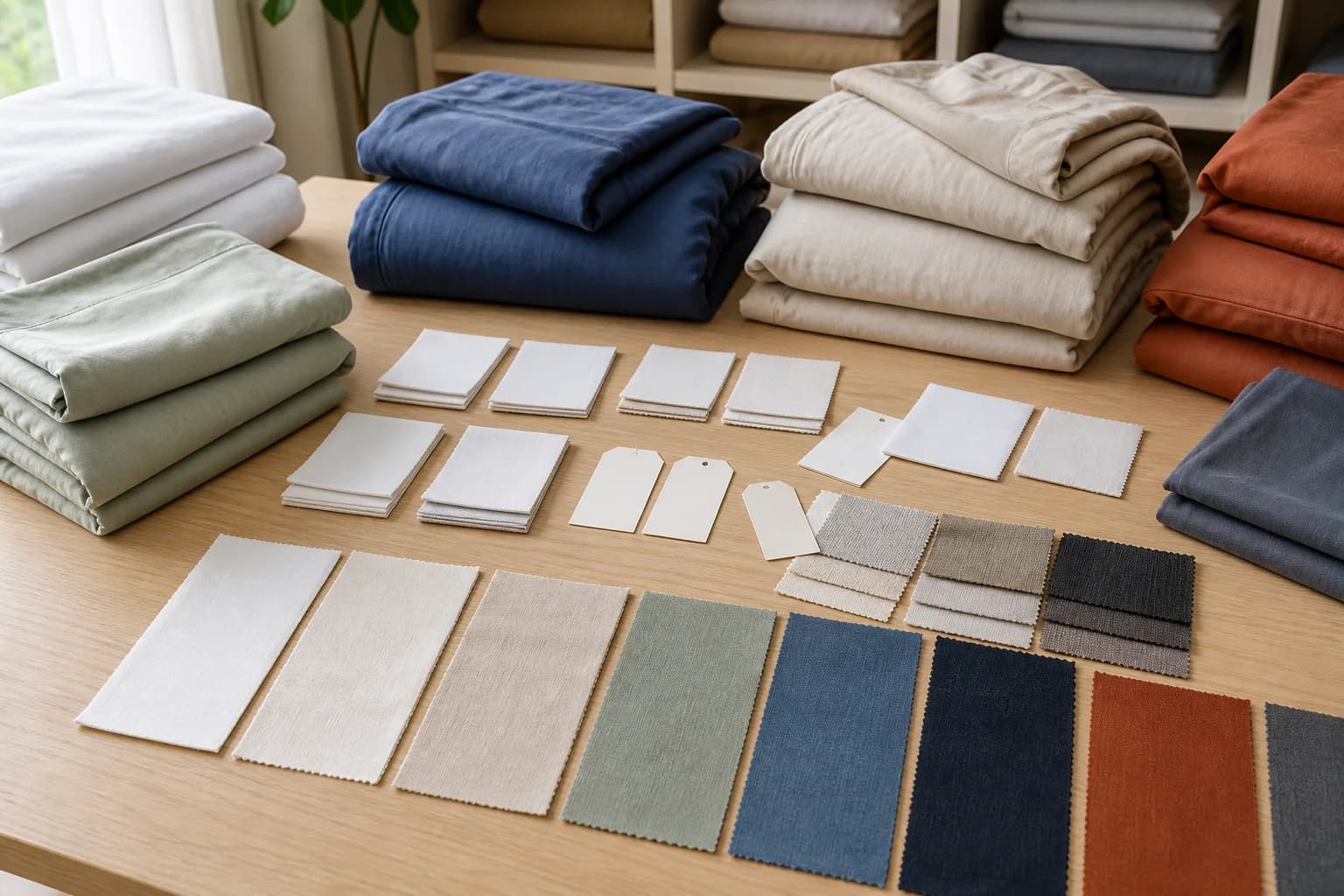
Give every submitted item an ID that survives unpacking at the laboratory. Record SKU, component, colour/design, construction or finish revision, source, collection date and who selected it. Distinguish development material from a production sample and say whether any batch relationship is known. For a filled quilt, ask whether the question concerns the shell, filling, sewn assembly or complete article. Let the laboratory confirm the required size, number and preparation of specimens; do not cut everything into convenient small swatches before asking.
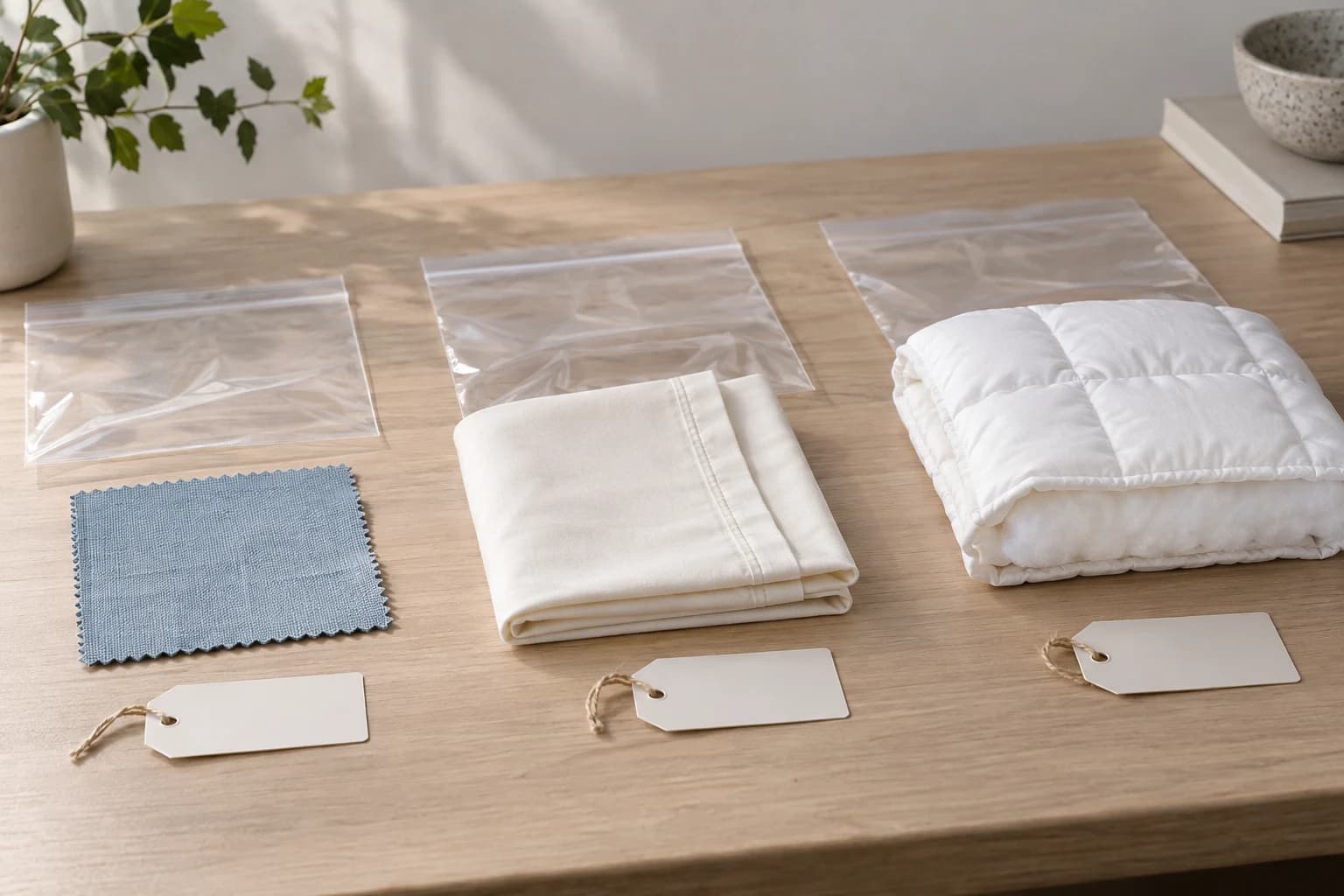
| Sample register field | Fill in before dispatch | Confirm with laboratory |
|---|---|---|
| Identity and relationship | [sample ID; SKU; component; colour; revision] | [identifiers to appear on report] |
| Origin and selection | [development/production; known lot; collector; date] | [received description; any unverified supplier information] |
| Question and requirement | [intended use/market; decision; specification owner/revision] | [method and edition; suitability; scope] |
| Conditions / specimens | [care instructions; finish; relevant preparation] | [options; conditioning; quantity/size; destructive test allocation] |
| Result and criteria | [units; limit/source; numerical result or conformity statement] | [decision rule if applicable; uncertainty/reporting arrangements] |
| Administration | [report recipient; buyer reference; previous report if retest] | [quotation; timing; subcontracting if any; deviations; return/disposal] |
Check laboratory scope, not only a logo
ISO/IEC 17025 addresses laboratory competence, impartiality and consistent operation; it is not a bedding-product certificate. Verify the laboratory entity, location and the relevant activity in its current accreditation scope through the responsible accreditation body. Ask which requested activities fall outside that scope or are subcontracted. ILAC’s G18 guidance concerns describing scope, while G8 concerns decision rules for statements of conformity. If you need a pass/fail statement, make the specification, limits and rule explicit with the laboratory before work starts, rather than adding your own unagreed label to a numerical result.
Retailer submission practice reinforces the importance of traceable inputs: URBN’s published Home Softline request form includes product and sample details, destination, proposed care and prior-report information for retests. Use your laboratory’s current form and the buyer’s actual specification, not another retailer’s package as a default. This worksheet organises the discussion; it does not replace the laboratory’s terms, method instructions or a destination-market compliance assessment.
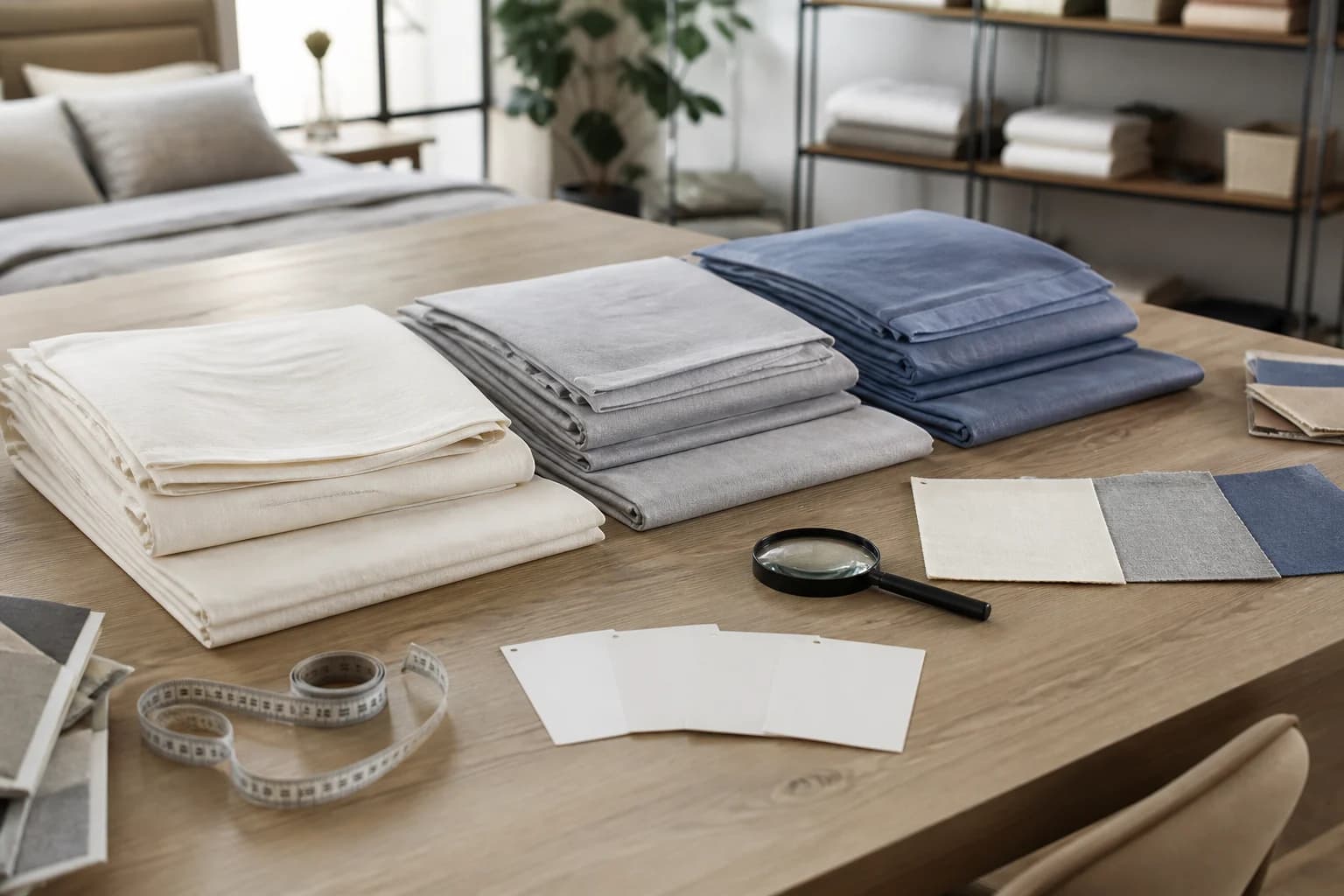
Receive the report with an exception-and-decision record
| Review point | If something does not match | Record before closure |
|---|---|---|
| Report identity / completeness | Request the complete issued report and verify through the issuer | [report number/revision; pages; issuer; verification date] |
| Sample / component / colour | Hold the evidence for the affected line; clarify the link | [sample ID; mismatch; issuer response; affected SKU] |
| Method / conditions / units | Ask what changed and whether the result answers the original question | [request vs report; deviation; technical response] |
| Criteria / statement | Compare with the agreed requirement and applicable rule | [limit source; result; unresolved issue; quality owner] |
| Coverage / final decision | Accept only the supported scope, request clarification or agree retesting | [decision; exclusions; approver/date; next action] |
From question to an auditable buyer decision
- 01
1 · Define
State the product question, requirement owner and intended decision.
- 02
2 · Confirm
Agree sample mapping, laboratory scope, method, conditions and criteria.
- 03
3 · Reconcile
Compare the issued report with the accepted request and identify exceptions.
- 04
4 · Decide
Record supported scope, exclusions, hold/retest actions and the named approver.
A change to fibre, colour, finish, component or source needs a coverage review; do not silently transfer the old result. CNAS published a consultation on textile accreditation-scope descriptions on 23 September 2026, with comments requested by 23 October. As of this review it is a draft, not an effective new testing requirement. The useful purchasing action is to check the currently valid scope and identify the exact activity, not assume a draft changes the status of an existing report.
Request product-linked evidence, not a generic certificate
Use the related cotton set or summer-quilt product entry and the private-label/contact links to send your SKU, intended use and market, component/colour list, specification revision and the questions you need evidence to answer. If you already have a report, include its identifier and the scope you want checked. Ask what documents are actually available and what remains to be commissioned; do not assume every catalogue product has a public batch COA. Keep order quantities separate: the minimum is 100 sets per colour × size combination, with no pooling across colours or sizes. No test method, report template or illustration on this page claims a new certificate, result or laboratory capability for BeddingTextilePro.
Frequently asked questions
- What belongs in a bedding laboratory test request?
- Identify the buyer question, intended use/market, sample and component IDs, method and edition, conditions, criteria/source, report recipient and any requested conformity statement. Ask the laboratory to confirm scope and specimen requirements.
- Does ISO/IEC 17025 accreditation certify the bedding product?
- No. It addresses laboratory competence and operation. Verify the entity, location and relevant activities in the current scope; product conformity and purchasing release require their own applicable evidence and decisions.
- Can a fabric report cover the complete quilt or bedding set?
- Not automatically. Check the submitted component and the report’s described scope. Shell, filling, trim and sewn assembly may answer different questions; agree coverage or additional testing with the responsible laboratory and buyer.
- What should I do if the report sample ID does not match?
- Hold reliance on that report for the affected line, ask the issuer to clarify the relationship, and record the response. Do not edit the report yourself or treat a similar-looking sample as a verified match.
- When should a changed bedding item be reviewed for retesting?
- When fibre, colour, finish, component, construction or source changes may affect the question the report answered. Record the change, previous report and coverage decision; the buyer and laboratory should determine whether clarification or new testing is needed.
Sources & references
Shop by category
Explore our services
Sourcing bedding for your market?
Factory-direct quotes, 100-set minimum per color and size combination, full OEM/ODM customization. We reply within one business day.