TL:DR
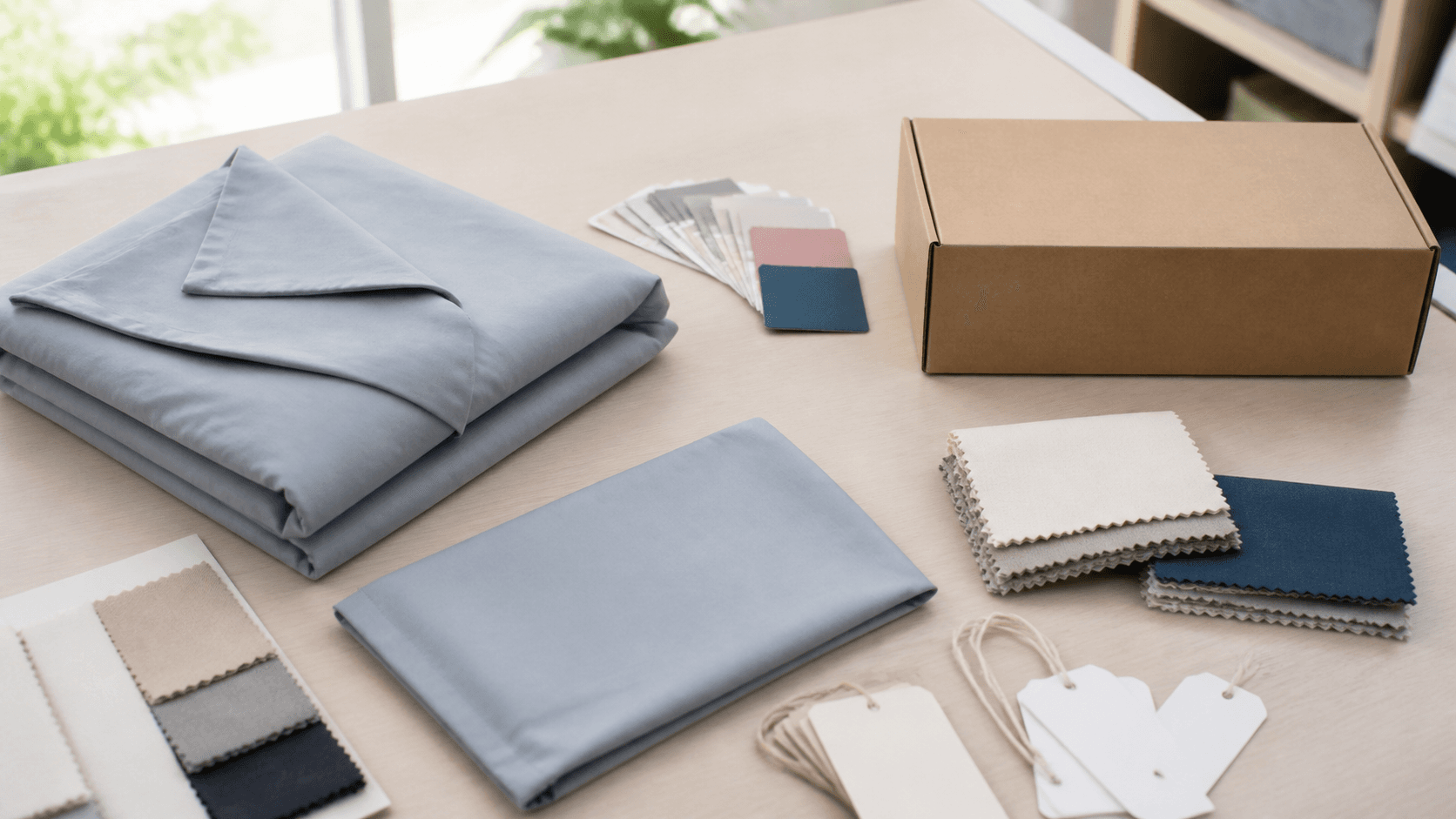
Choose a private label bedding logo carrier by its job: a woven or main label identifies the brand, a care/content label carries required product information, embroidery decorates a defined finished article, and packaging or an insert supports the retail presentation. For every option, record the SKU, exact position, dimensions, colour reference, artwork version and approver. A mock-up, scene or video is a discussion aid—not proof of an approved production result.
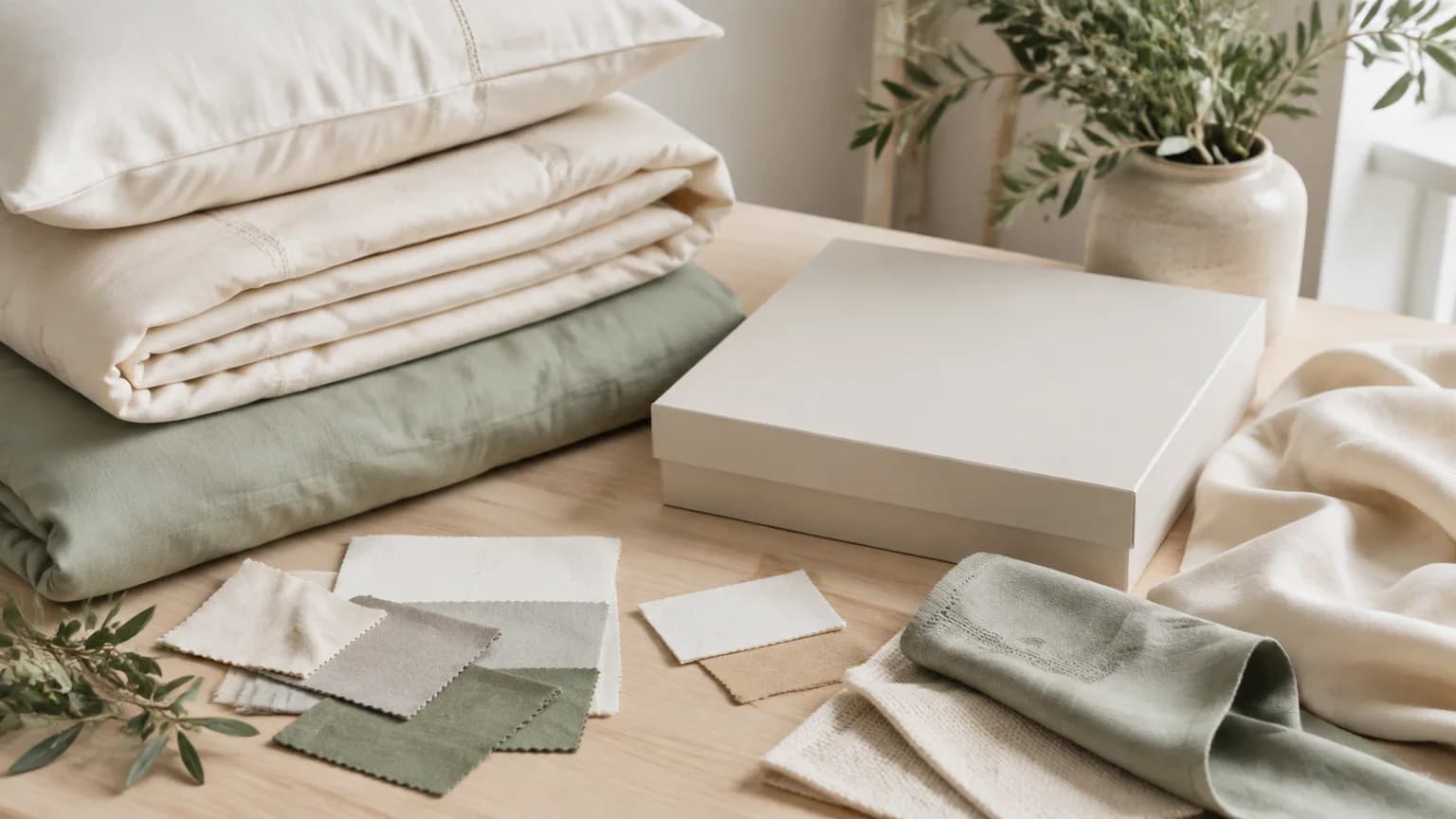
A logo placement decision is a finished-product control: define the carrier, position, size, colour reference, artwork version and approval record before bulk release.
Direct answer: choose private label bedding logo placement by separating identification, required information and decoration. A woven or main label can carry brand identity; a care/content label has a different product-information purpose; embroidery is a visible design element; and packaging or an insert can support retail presentation. For each carrier, approve the finished SKU, exact location, finished size, colour reference, artwork version and sample review route together. A visual mock-up, room scene or video can start a conversation, but it cannot prove an approved production result.
Choose the logo carrier before choosing the location
The first buyer decision is not simply where a mark looks best. It is what the mark must do for the finished article and destination market. Keep brand treatment separate from required fibre, origin or responsible-party disclosures. In the United States, the FTC’s textile-labelling guidance describes required fibre, origin and responsible-business information; EU textile rules also govern fibre-composition labelling. Those sources do not prescribe a universal logo layout. Confirm the applicable market rule with the brand or importer, then approve optional brand treatment against the same final SKU.
| Placement carrier | Best buyer purpose | Control to approve | Do not assume |
|---|---|---|---|
| Woven or main label | Brand identification at a defined seam or edge | Fold type, seam position, finished dimensions, artwork version and legibility review | That a logo label replaces destination-market product disclosures |
| Care/content label | Required product information where applicable | Final SKU, destination brief, language, material and placement | That an early artwork file proves legal compliance |
| Embroidery | Visible decorative brand detail | Exact article panel, scale, thread/colour reference and sample view | That a digital mock-up proves finished appearance or durability |
| Packaging or insert | Retail presentation and range story | Unit pack, artwork version, product identity and market copy | That packaging wording is approved for every product version |
| Outer-carton mark | Handling or SKU recognition in the agreed supply scope | Carton/SKU relationship, version and receiving use | That a carton mark proves contents, condition or product performance |
Create a logo-placement approval record
Put a plain placement diagram and revision ID into the tech pack or controlled approval file. Identify the finished article and component, the carrier type, seam/panel reference, orientation, finished dimensions or proportional rule, colour reference, artwork filename and named approver. Link it to the packaging artwork and representative-sample record where relevant. This prevents a pillowcase, duvet cover, sheet and pack from silently using different versions of a mark.
| Approval field | What the buyer records | Question before release |
|---|---|---|
| Finished SKU | Article, components, size, colour/design and version | Does this placement belong to this exact sellable article? |
| Carrier | Woven label, care label, embroidery, packaging, insert or carton mark | What job does this carrier perform? |
| Position | Named seam, panel, edge or pack surface plus orientation | Can a reviewer locate it without guessing? |
| Scale and colour | Finished dimensions/tolerance question and approved colour reference | Is the proposed treatment visible at the intended scale? |
| Artwork version | Filename, revision, date and owner | Is every related asset using the active version? |
| Sample decision | Representative finished article and open points | Was the physical placement reviewed before bulk release? |
Review the sample at finished-product level
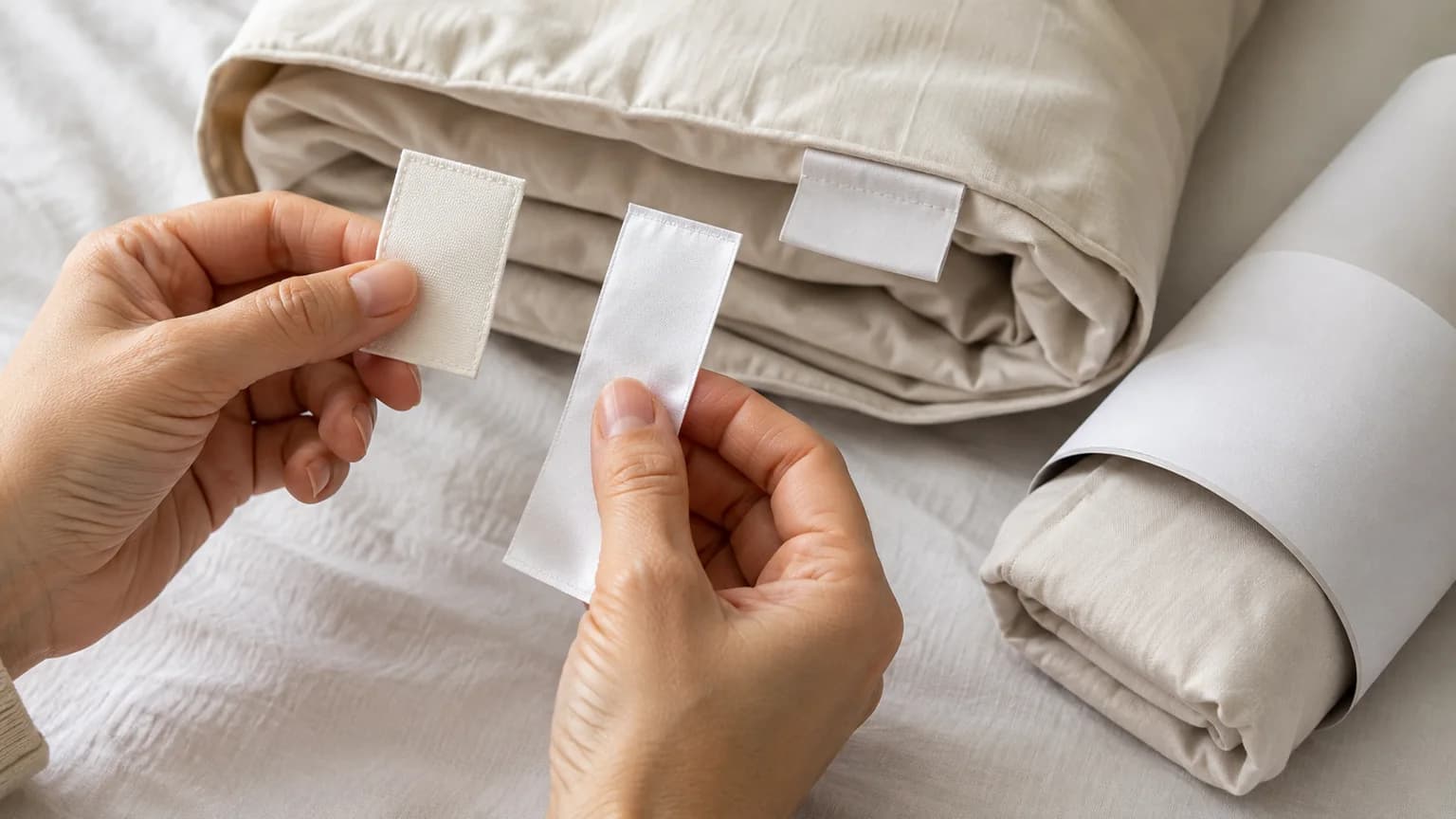
Review the actual proposed article rather than only an enlarged digital proof. Check whether the label is caught securely in the intended seam, whether embroidery sits on the specified panel, and whether the pack carries the intended version. The review should document observations and unresolved questions; it should not be turned into a claim about wash life, colourfastness, shrinkage, a certificate or a future bulk outcome. If the article, placement, artwork or destination changes, reopen the affected approval rather than copying an earlier sign-off.
Private label bedding logo placement flow
From brand brief to controlled placement
- 01
1 · Define the carrier job
Separate brand identity, required product information, decoration and packaging roles.
- 02
2 · Freeze the finished SKU
Name the article, components, size, colour/design and destination before artwork review.
- 03
3 · Mark the location
Record seam/panel, orientation, finished size and colour reference in the controlled file.
- 04
4 · Link every asset
Reconcile label, embroidery, packaging, insert and product-copy versions.
- 05
5 · Review a representative sample
Check the proposed placement on the actual finished article and pack context.
- 06
6 · Release or reopen
Approve the dated version, or reopen review when product, market or artwork fields change.
Buyer handoff: what to send for a quote
BeddingTextilePro is a Nantong trading company coordinating source-factory direct supply, dedicated mill lines and direct mill shipping. Share the target article, market, brand artwork, proposed logo carrier, placement diagram, colour reference, packaging need and sample status through the private-label bedding or contact page. The minimum is 100 sets for each color and size combination; quantities from different colors or sizes cannot be pooled.
Frequently asked questions
- Where should a private label logo go on bedding?
- Choose the carrier by its job: a woven/main label for brand identification, a care/content label for applicable product information, embroidery for a defined decorative panel, and packaging or an insert for presentation. Record the exact placement for the finished SKU.
- Can a logo label replace a care or fibre label?
- No. Brand treatment and destination-market product disclosures have different purposes. Confirm the applicable market requirement with the responsible brand or importer for the final SKU.
- What should a bedding logo-placement tech pack show?
- Show the article and component, carrier type, seam or panel location, orientation, finished dimensions or proportional rule, colour reference, artwork version, sample requirement and named approval owner.
- Does a digital logo mock-up approve production?
- No. A mock-up is useful for discussion but does not prove the finished placement, product version, market wording or future bulk result. Review a representative physical sample before release.
- When should logo placement be approved again?
- Reopen the affected approval when the finished SKU, component, size, artwork, placement, packaging or destination-market requirement changes.
Sources & references
Featured products
Shop by category
Explore our services
Sourcing bedding for your market?
Factory-direct quotes, 100-set minimum per color and size combination, full OEM/ODM customization. We reply within one business day.