TL:DR
Build one verified master specification for the finished bedding article, then add market overlays for fibre composition, care, language, responsible-party and traceability fields. The UAE, Saudi Arabia, EU, UK and Canada each publish different requirements or routes. Use the table as a planning aid, then confirm current scope and language with the destination importer or authority; it is not legal advice.
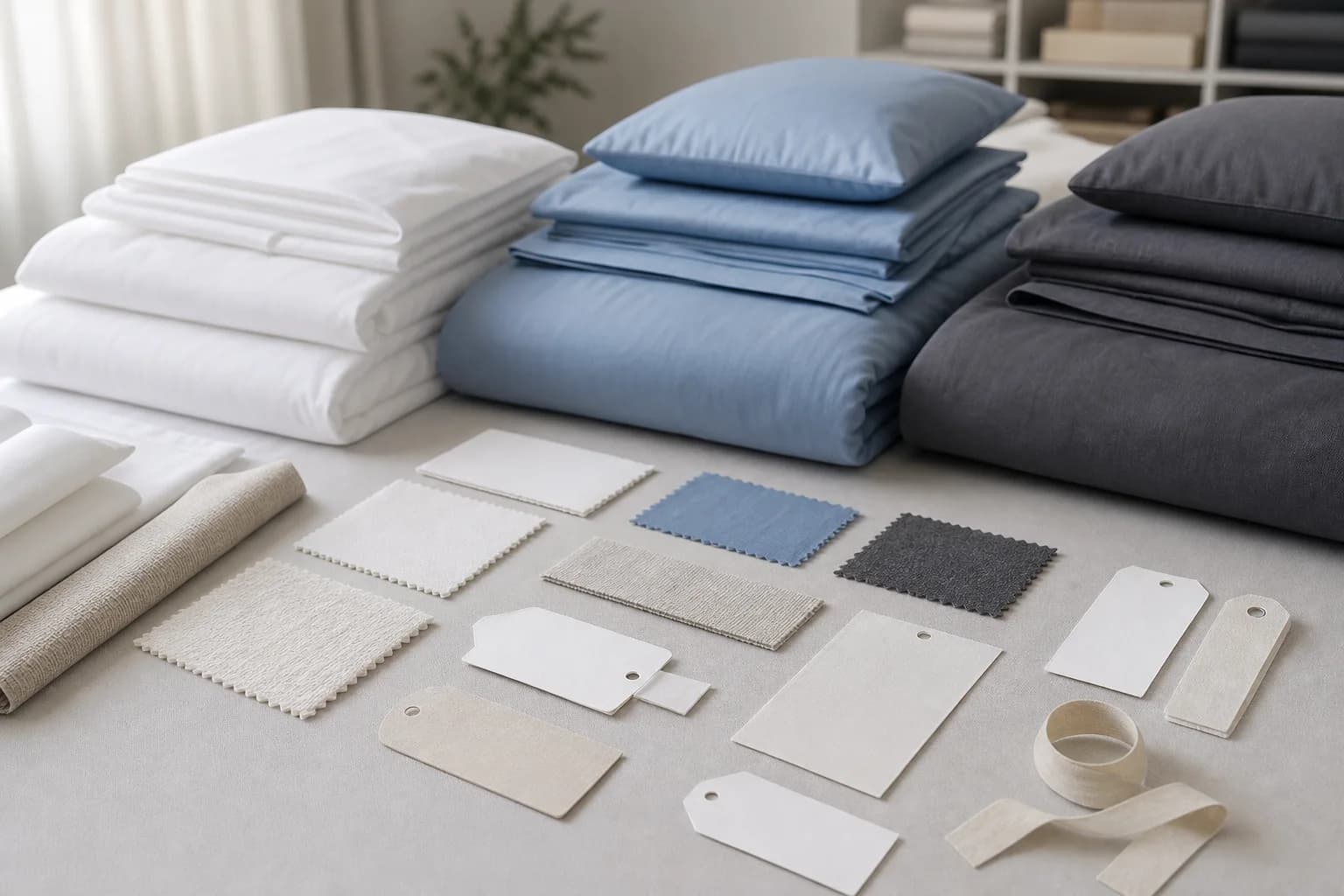
There is no single global bedding label. This buyer matrix separates shared data fields from market overlays so a private-label or hotel-linen team can freeze one accurate master specification before adapting artwork.
Direct answer: do not copy one bedding label around the world. Start with a controlled master specification for the finished article, then add destination overlays for fibre content, care, language, origin, responsible party and traceability. The UAE, Saudi Arabia, EU, UK and Canada have different official rules and conformity paths, so a buyer should confirm the current requirement for the exact SKU before artwork and packaging are released.
The cross-market matrix
| Market | Buyer checkpoint | Practical overlay |
|---|---|---|
| UAE | Textile scope, conformity route, consumer information and traceability | Confirm current ECAS/ESMA route, Arabic information and required origin/party/batch fields with importer |
| Saudi Arabia | HS classification, SASO textile regulation and SABER product/shipment path | Confirm product description, importer record, label fields and certificate route in current SABER workflow |
| EU | Fibre composition, multi-fibre order and animal-origin statement where relevant | Use fibre names and percentages in descending mass order and the required member-state language |
| UK | Fibre content and component disclosure | Show generic fibre names and percentages; include each component where different |
| Canada | Fibre content, dealer identity and bilingual textile label | Use English/French requirements and the applicable permanent-label rule for bed linens |
What belongs in the master specification?
| Data layer | Master record | Market overlay |
|---|---|---|
| Product | SKU, article type, sizes, construction and intended use | Local product description or category wording |
| Materials | Fibre composition, filling, trims and finish actually approved | Required fibre names, order and percentage thresholds |
| Care | Care method supported by the finished construction | Local symbols, language and durability instructions |
| Parties | Trading company, source route, origin and importer record | Dealer/importer identity or responsible-party format |
| Packaging | Carton dimensions, pack count and artwork version | Language, recycling, batch or conformity fields where required |
How to use the matrix during an RFQ
Master specification to market artwork
- 01
1 · Define the article
Freeze the finished SKU, components, sizes, fibre composition and intended use.
- 02
2 · Build the master file
Collect the approved sample, measurement sheet, care basis, origin and responsible-party data.
- 03
3 · Select markets
List destination countries, importer entities, sales channel and shipment timing.
- 04
4 · Add overlays
Map fibre, care, language, origin, traceability and conformity fields to each market.
- 05
5 · Review evidence
Check that every statement is supported by the finished specification or an applicable authority route.
- 06
6 · Release artwork
Version labels and cartons, then reconcile them with the quotation, PO, packing list and retained sample.


Where buyers most often lose control
- Treating a fabric trade name as the fibre declaration
- Reusing an old label after the composition, importer or destination changed
- Adding a certification or sustainability mark before its scope is verified
- Translating words without checking the destination market's required format
- Allowing the carton, care label, invoice and retained sample to carry different versions
Buyer conclusion
A market matrix reduces rework when it is anchored to one accurate finished-product file. BeddingTextilePro is a Nantong trading company coordinating source-factory direct supply, dedicated mill lines and direct mill shipping; it can prepare samples and document handoffs but cannot replace the destination importer or authority. Send the target markets, SKU, composition, sizes and packaging brief through the contact page. The minimum is 100 sets for each color and size combination; quantities from different colors or sizes cannot be pooled.
Frequently asked questions
- Can one bedding label work in every market?
- Usually not. Keep one master specification, then add the language, fibre, care, responsible-party, traceability and conformity fields required by each destination.
- Which fields should be checked first?
- Start with finished fibre composition, article identity, care basis, origin, importer/dealer data and the market's current conformity route. Those fields affect both artwork and the import file.
- Does OEKO-TEX replace market labelling?
- No. OEKO-TEX wording must stay within the verified document scope and does not replace fibre, care, language, origin or conformity requirements.
- Can a private-label buyer reuse the same carton artwork?
- Only after destination, importer, product composition and required markings are unchanged and the current market review confirms the artwork remains accurate.
- Can BeddingTextilePro provide a legal compliance opinion?
- No. It can coordinate source documentation and an RFQ handoff as a trading company. The importer and competent local advisers determine legal requirements for the shipment.
Sources & references
Featured products
Shop by category
Explore our services
Sourcing bedding for your market?
Factory-direct quotes, 100-set minimum per color and size combination, full OEM/ODM customization. We reply within one business day.