TL:DR
Heimtextil Trends 26/27 is not a forecast to copy literally; it is a design direction built around the interaction of craft, material tactility, AI-assisted exploration and smart bedding. Wholesale buyers should turn that direction into quiet base colours, deliberate texture, one controlled digital accent and a testable range brief rather than a generic ‘AI bedding’ claim.
Heimtextil Trends 26/27 puts craft and AI-assisted design in the same conversation. This buyer guide translates the official signals into bedding colours, textures, construction choices and an RFQ-ready range brief.
Heimtextil Trends 26/27 gives bedding buyers a useful design signal: ‘Craft is a verb’ treats craft as an active process, not a decorative look. The official trend programme connects AI-supported design and traditional material techniques, while the wider fair programme places the Trend Arena near Bed, Bath & Living and adds a Smart Bedding focus. For a wholesale range, the takeaway is practical: use digital tools to explore options faster, then make the final product earn its place through hand-feel, construction, repeatability and a clear commercial brief.
What does Heimtextil Trends 26/27 actually say?
Messe Frankfurt and Alcova frame the 26/27 direction around the meeting of high-tech and craftsmanship. AI can help generate, compare and refine colour or pattern routes, but the trend material stresses selection, intention and material experience. It also points to a more active relationship between people and machines: the designer remains responsible for editing the result and deciding what can be made, sold and lived with. That distinction matters in bedding, where a beautiful screen image still has to become a stable shade, a comfortable surface and a construction that can be produced at wholesale quantities.
| Trend signal | Buyer translation | |
|---|---|---|
| Craft as process | Tactile, irregular and materially specific surfaces | Specify weave, yarn, finish, hand-feel and acceptable variation |
| AI-assisted exploration | Fast iteration of palettes, motifs and combinations | Use it for moodboards, then approve a physical lab dip and strike-off |
| Natural plus synthetic tension | Organic references interrupted by digital accents | Build a calm base range with one controlled high-chroma or graphic option |
| Smart bedding | Comfort, sleep and technology become part of the conversation | Ask for a measurable function, test method and care boundary before claiming performance |
Which colours and materials should a bedding range test?
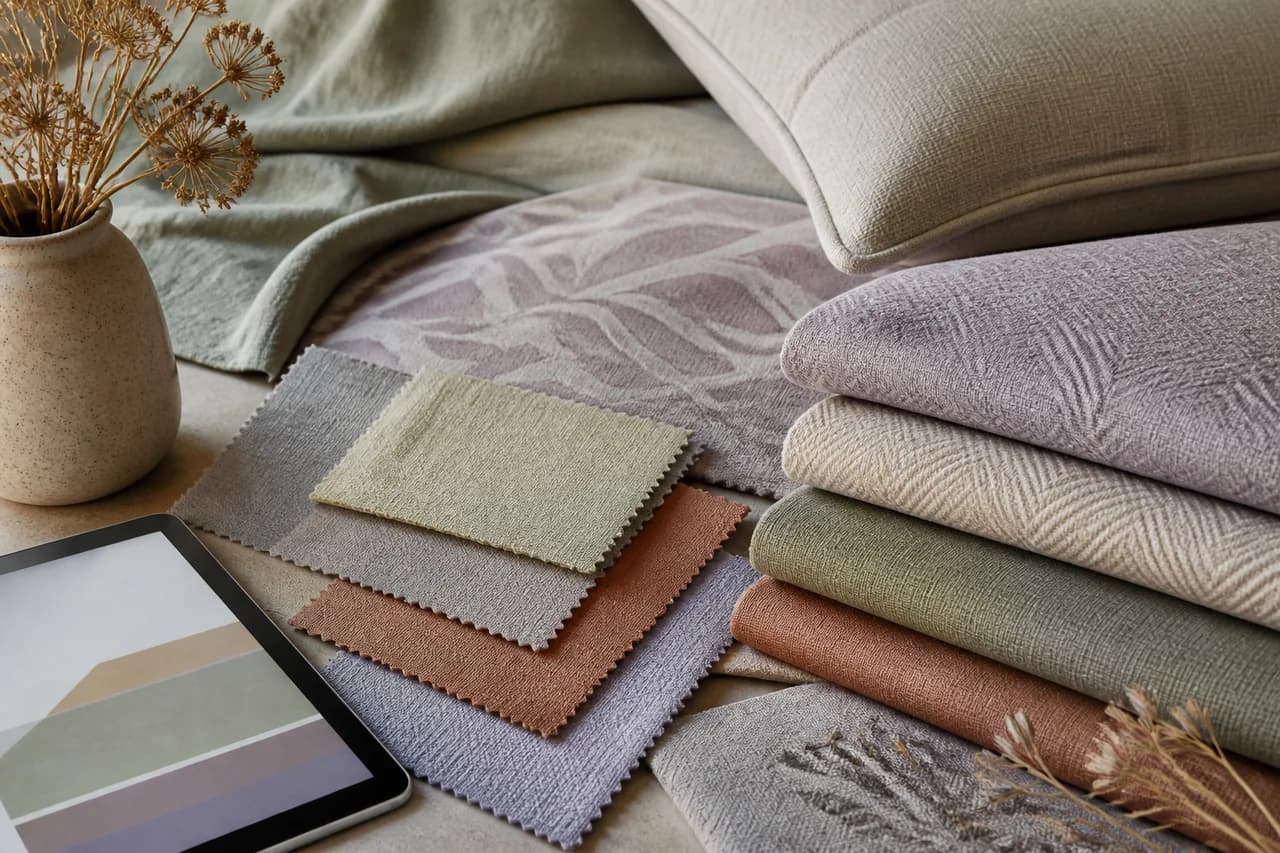
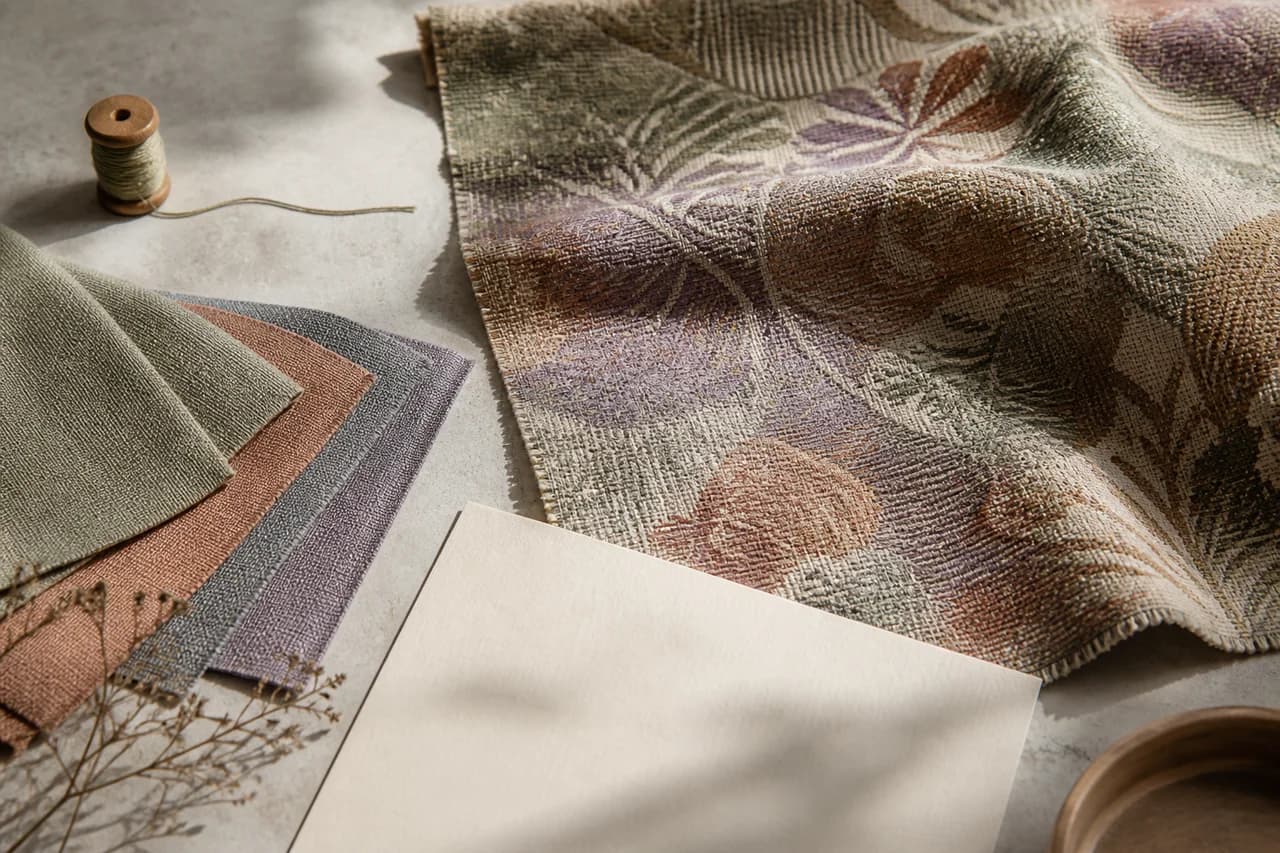
Start with a restrained base: warm grey, mineral white, sage, clay and dusty lilac can carry across sateen, brushed cotton, jacquard and lightweight quilt stories. Then add one deliberate disruption rather than a whole range of unrelated brights. The point is not to reproduce a fair installation; it is to create a recognisable palette architecture that can be sampled, photographed and reordered. For texture, compare yarn-dyed jacquard, waffle or brushed surfaces against a smooth sateen control so the buyer can see where the premium is coming from.
| Range decision | Sample to compare | Acceptance question |
|---|---|---|
| Base palette | Warm neutral, sage, clay, dusty lilac | Do the colours work across sheets, covers and quilts? |
| Tactile hero | Jacquard, waffle or brushed finish | Does texture remain legible after laundering and photography? |
| Digital accent | One graphic or saturated contrast | Can it be produced consistently without overpowering the core? |
| Smart-bedding option | Cooling, moisture or other declared function | Is there a named test, care limit and claim boundary? |
How should a buyer use AI without buying a fantasy?
From trend signal to approved bedding SKU
- 01
1 — Capture the direction
Save the official trend reference and write one sentence describing the buyer, market and price tier it serves.
- 02
2 — Explore digitally
Use AI or digital tools to generate palette and motif alternatives, but mark every image as a concept rather than a product promise.
- 03
3 — Filter for manufacture
Remove designs that depend on impossible repeats, unclear colour separations, unsafe claims or an unworkable finish.
- 04
4 — Sample physically
Approve lab dips, fabric swatches, hand-feel, shrinkage, colourfastness and construction on the actual bedding article.
- 05
5 — Cost and pilot
Set the MOQ, packaging, lead time and inspection points, then pilot a controlled SKU before expanding the palette.
What belongs in the RFQ?
A useful RFQ names the commercial job before it names the trend. Include target market, size set, composition, weave or finish, colour references, tolerance, wash test, packaging, MOQ, sample approval, inspection method and delivery window. If the brief includes cooling or other smart-bedding functionality, define the claimed effect and the independent evidence required. Do not use ‘Heimtextil-inspired’ or ‘AI-designed’ as a substitute for a specification. Our B2B team can develop a range through locked, dedicated production lines at large-scale Nantong mills, with goods shipping direct from the mill and a 100-set minimum per color and size combination; the final brief still controls what is approved.
The buyer’s conclusion
Use Heimtextil Trends 26/27 as a disciplined prompt: combine tactile craft with carefully edited digital exploration, build a calm colour system, and add smart-bedding functions only when the evidence is clear. The strongest wholesale range will not look like an AI moodboard. It will show a coherent palette, a physical hand, repeatable construction and a brief that a mill, QC team and buyer can all read the same way.
BeddingTextilePro is a Nantong B2B supplier of bedding sets, summer quilts and hotel linen on source-factory direct supply — locked, dedicated production lines at large-scale Nantong mills, goods shipping direct from the mill — with a 100-set minimum per color and size combination, full OEM/ODM customization and OEKO-TEX support. Request a wholesale quotation and our export team will reply within one business day.
Frequently asked questions
- What is the main Heimtextil Trends 26/27 theme?
- The official theme is ‘Craft is a verb’. Heimtextil and Alcova use it to describe how AI-supported design and traditional craft can work together. For bedding buyers, it means treating material experience, editing and production feasibility as part of the design process rather than copying a visual trend.
- Is AI-designed bedding a product category?
- No. AI is a design and exploration tool, not proof of a fabric, finish or performance. A buyer still needs physical samples, colour and construction approvals, test results where relevant, and a production specification that can be repeated at wholesale scale.
- Which bedding colours fit the 26/27 direction?
- A practical starting palette is warm grey, mineral white, sage, clay and dusty lilac, with one controlled digital or high-chroma accent. The exact palette should be tested against the buyer’s market, existing range and fabric construction rather than treated as a universal colour prescription.
- How should smart bedding be specified?
- Name the function, test method, test article, care conditions and claim boundary. ‘Smart’ is not evidence. Cooling, moisture or temperature-regulating claims need product-specific support and should not be implied by a trend report alone.
- Can a wholesale supplier develop Heimtextil-inspired bedding?
- Yes, a supplier can translate the direction into a controlled palette, texture and construction brief. Ask for lab dips, swatches, sample testing, MOQ, lead time and inspection points. Trend language should guide the brief, not replace those approvals.
Sources & references
Featured products
Shop by category
Explore our services
Sourcing bedding for your market?
Factory-direct quotes, 100-set minimum per color and size combination, full OEM/ODM customization. We reply within one business day.