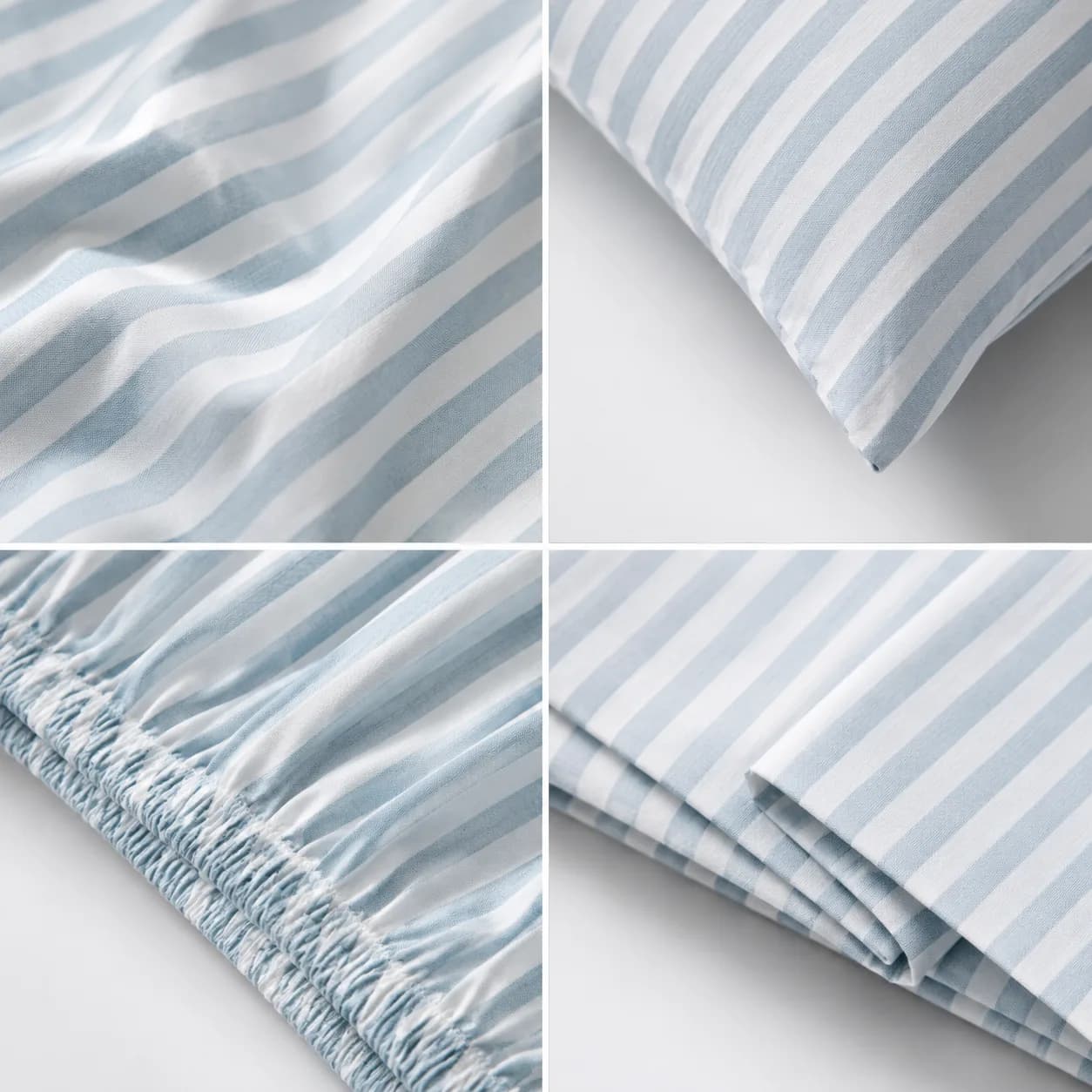
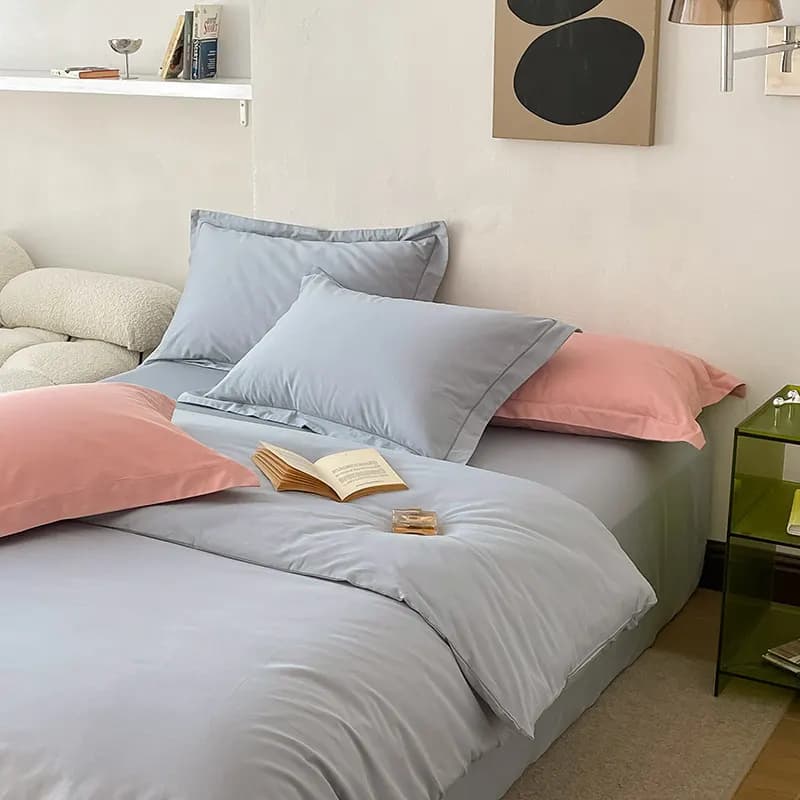
TL:DR
Una tech pack de ropa de cama es el documento de especificaciones que el comprador entrega al proveedor para que la producción coincida con la muestra aprobada. Define dimensiones y tolerancias, tejido (fibra, ligamento, número de hilo, GSM, número de hilos), construcción, color, catas de laboratorio, etiquetas, ensayos, conformidad y un plan AQL con control de versiones.
La tech pack es el único documento que convierte una muestra de ropa de cama aprobada en un pedido de producción repetible. Aquí está cada sección que necesita, apartado por apartado, para compradores de marca privada y de hostelería.
Una tech pack de ropa de cama es un único documento de especificaciones que entregas a un proveedor para que la tirada de producción coincida con tu muestra aprobada, en lugar de con la mejor suposición del taller. Fija cada atributo medible del producto: dimensiones acabadas y tolerancias, tejido (fibra, ligamento, número de hilo, GSM, número de hilos), construcción, colorido y catas de laboratorio, logotipo, etiquetas y embalaje, ensayos y conformidad, un plan de inspección AQL y un registro de revisiones. Redáctala bien y las disputas tendrán una referencia objetiva; omítela y cada discusión de calidad se convierte en tu palabra contra la de la fábrica.
Esta guía recorre cada sección que necesita una tech pack de ropa de cama, con las cifras y tolerancias concretas que un comprador OEM con experiencia debería estar indicando. Se aplica tanto si pides un único juego nórdico de marca privada como un programa completo de lencería hotelera, y da por hecho que ya has aprobado una muestra física. Si no lo has hecho, lee primero cómo pedir muestras de ropa de cama de China antes de la producción y luego vuelve para codificar lo que aprobaste.
¿Qué es una tech pack de ropa de cama?
Una tech pack (工艺包, literalmente 'paquete de proceso') es un archivo de especificaciones técnicas que indica a un fabricante exactamente cómo construir un producto, no solo qué construir. En confección es práctica habitual; en ropa de cama es igual de crítica y con demasiada frecuencia se omite. Una tech pack de ropa de cama es el documento controlado que traduce tu muestra aprobada en instrucciones repetibles, de modo que una línea de producción que fabrica 5.000 juegos nórdicos en el segundo mes haga el mismo producto que aprobaste en el primer mes.
El núcleo de la tech pack es la lista de materiales (BOM). Una lista de materiales es un listado detallado de cada componente físico del producto acabado, por dentro y por fuera: tejido de la funda, relleno si lo hay, hilo de costura, cremalleras o cierres de botón, etiquetas de marca tejidas, etiquetas de cuidado y composición, etiquetas colgantes, bolsas de polietileno y cajas, cada uno con su especificación y ubicación. Todo lo demás en la tech pack, de las dimensiones a los ensayos, describe cómo se ensamblan y verifican esos componentes.
Tech pack frente a orden de compra frente a ficha técnica
Los compradores confunden habitualmente estos tres documentos y luego se preguntan por qué la producción se desvía. Una tech pack se diferencia de una orden de compra en que especifica cómo se fabrica el producto, no solo qué y cuánto; una ficha técnica aislada es solo un fragmento de una tech pack. Los tres funcionan juntos: la tech pack define la intención, la orden de compra compromete cantidad y precio, y cualquier ficha técnica suelta aporta detalle a la tech pack.
| Tech pack | Orden de compra | Ficha técnica aislada | |
|---|---|---|---|
| Qué define | Cómo se fabrica el producto: tejido, construcción, tolerancias, color, etiquetas, ensayos | Qué y cuánto: SKU, cantidad, precio unitario, fecha de envío, condiciones | Un solo conjunto de atributos, a menudo un único tejido o talla, sin instrucciones de fabricación |
| Peso comercial | Intención técnica; referenciada por la orden de compra y el contrato de suministro | El pedido comercial vinculante y las condiciones de pago | Solo datos de referencia; no es un pedido y no vincula a nadie |
| Quién la posee y mantiene | El comprador (marca o importador), bajo control de versiones | El equipo de compras del comprador | A menudo el taller o el proveedor de tejido, no el comprador |
| Qué falla sin ella | La producción se desvía de la muestra y las disputas de calidad no tienen referencia | No hay cantidad, precio ni fecha de entrega acordados | El comprador depende de especificaciones verbales; todo es ambiguo en la inspección |
Las ocho secciones que necesita toda tech pack de ropa de cama
Una tech pack de ropa de cama completa tiene ocho secciones de trabajo. Cada una cierra una brecha concreta donde la producción tiende a desviarse de la muestra. La tabla siguiente es la anatomía: qué debe especificar cada sección y el error más común que deja pasar defectos por la inspección.
| Sección de la tech pack | Qué especifica | Error común |
|---|---|---|
| Encabezado y bloque de revisiones | SKU, nombre del estilo, número de versión, fecha, contactos de comprador y proveedor | Sin número de versión, así que el taller cose desde un borrador obsoleto |
| Dimensiones y tolerancias | Tamaño acabado y cosido por SKU, cada uno con una tolerancia de más/menos en cm | Indicar el tamaño del colchón en lugar del tamaño acabado y cosido, y sin tolerancia |
| Tejido y lista de materiales | Fibra, ligamento, número de hilo, GSM, número de hilos y acabado, por componente | Solo el número de hilos, sin ligamento ni número de hilo, así que la densidad no es verificable |
| Construcción | Tipo de costura, densidad de puntada (SPI), profundidad de dobladillo, cierre y método de esquina | 'Coser con esmero' en lugar de una especificación medible de costura y puntada |
| Colorido y cata de laboratorio | Código Pantone TCX o TPG, tolerancia delta-E, referencia de cata aprobada, luz de observación | Aprobar el color en una pantalla en lugar de en una cata física de laboratorio |
| Logotipo, etiqueta y embalaje | Arte de la etiqueta tejida, texto de etiqueta de cuidado, composición y origen, doblado, bolsa, caja | Una etiqueta de cuidado que infringe la ley de etiquetado del mercado de destino |
| Ensayos y conformidad | OEKO-TEX, solidez del color, encogimiento, formación de pilling y el plan AQL | Sin plan AQL, así que aceptar o rechazar en la inspección se vuelve subjetivo |
| Registro de revisiones | Cada cambio, quién lo hizo, cuándo cambió y por qué | Ediciones silenciosas, así que nadie puede saber qué versión es la actual |
Dimensiones y tolerancias: especifica el tamaño cosido, no el de la cama
El error de dimensión más común es indicar el tamaño de un colchón o de una cama y esperar que la fábrica deduzca el producto acabado. Indica la dimensión acabada y cosida de cada SKU y da a cada medida una tolerancia. Una tolerancia es el rango de más o menos dentro del cual una medida sigue siendo aceptable; el silencio implica tolerancia cero, lo que eleva las tasas de rechazo e invita a la discusión. Para ropa de cama confeccionada por corte y cosido, una tolerancia de aproximadamente más o menos 1 a 1,5 cm en paneles pequeños y más o menos 1,5 por ciento en paneles grandes es una banda común y viable (orientativa; confírmala frente a tu propio estándar de ajuste).
Construye una tabla de medidas por SKU y por talla. Para una funda nórdica, especifica el ancho y largo totales, la posición del cierre y la longitud de la abertura. Para una sábana bajera, especifica el panel plano más la profundidad del bolsillo de esquina, porque la profundidad del bolsillo es lo que determina si la sábana encaja en un colchón de 25 cm o de 35 cm. Para las fundas de almohada, especifica el cuerpo de la funda más cualquier solapa o dobladillo tipo housewife. Recuerda que la funda de un nórdico relleno se corta mayor que su tamaño acabado indicado para que no se contraiga al rellenarla; anota ese margen explícitamente para que el control de calidad no marque como sobredimensionada una mercancía con la talla correcta. Los programas hoteleros en particular deberían fijar con rigor la profundidad del bolsillo y la construcción del dobladillo, ya que una profundidad de bolsillo incorrecta puede echar a perder el pedido de lencería de toda una propiedad. Consulta la página del programa de lencería hotelera para las convenciones de tallaje que se repiten entre propiedades.
El tejido y la lista de materiales
La línea del tejido es donde las tech packs vagas cuestan más dinero, porque un solo número nunca describe una tela. Especifica todo el conjunto: fibra y ratio de mezcla (por ejemplo, 100 por ciento algodón peinado), ligamento (percal, satén o sarga), número de hilo, número de hilos y GSM, además del acabado (mercerizado, calandrado, cepillado, resistente a las arrugas). El número de hilos es la cantidad de hilos de urdimbre y trama por pulgada cuadrada y solo tiene sentido junto al número de hilo y el ligamento; el GSM (gramos por metro cuadrado) es el peso del tejido y es la señal de densidad más honesta. Indica una tolerancia de GSM, comúnmente más o menos 5 por ciento (orientativa).
Como orientación aproximada para sábanas de algodón: la ropa de cama de percal suele situarse en torno a 110 a 140 GSM con aproximadamente 200 a 220 de número de hilos, mientras que el satén de algodón se sitúa más alto, en torno a 300 a 400 de número de hilos (rangos orientativos, no un sustituto de tu propio tejido aprobado). Si no tienes claro por qué dos tejidos de 300 de número de hilos pueden sentirse completamente distintos, lee qué significa el GSM en ropa de cama y la guía sobre la verdad del número de hilos antes de fijar estas cifras. Cada línea de tejido ambigua repercute además directamente en el precio, así que una BOM ajustada es lo que te permite leer una cotización de ropa de cama y su desglose de costes línea por línea.
Enumera la BOM en una tabla con una fila por cada componente: tejido principal de la funda, cualquier tejido secundario o de reverso, relleno, hilo de costura (con número tex o de tícket y color), cierre (galga y longitud de cremallera, o tipo y número de botones), etiqueta tejida, etiqueta de cuidado y composición impresa, etiqueta colgante, bolsa de polietileno y caja máster. Da a cada uno una referencia de proveedor o de muestra aprobada, una cantidad por juego acabado y una nota de ubicación. Una línea de BOM que falta es un componente que falta en la línea de costura, lo que se convierte en un reproceso o en un envío incompleto.
Especificaciones de construcción y costura
La construcción es donde 'se veía igual en la muestra' se desmorona en silencio en la producción. Sustituye los adjetivos por especificaciones medibles. Indica el tipo de costura y el margen de costura (por ejemplo, costura francesa en las costuras laterales del nórdico, margen de 1 cm), la densidad de puntada en puntadas por pulgada (SPI), la profundidad del dobladillo, el método de inglete de esquina y la construcción del cierre. Para ropa de cama, de 10 a 12 SPI en las costuras principales es un rango típico y duradero (orientativo); con pocas puntadas las costuras se abren con el lavado, y con demasiadas perforas y debilitas la tela.
Señala los puntos de tensión explícitamente: topes de cremallera y presillas en las aberturas del nórdico, esquinas reforzadas en las sábanas bajeras, y la profundidad de la solapa y el cierre en las fundas de almohada (housewife, Oxford o sobre). Si un detalle de construcción importa para la durabilidad bajo lavado comercial, dilo, nombra el ensayo que debe superar y fotografía la costura de la muestra aprobada para que el taller tenga una referencia visual junto a las cifras.
Colorido, Pantone y catas de laboratorio
Nunca apruebes un color de producción desde una pantalla o una imagen impresa. Especifica el color mediante un estándar físico: un código textil Pantone TCX o TPG, o una muestra física que hayas firmado, junto con una tolerancia delta-E y la fuente de luz bajo la cual se juzga el color. Una cata de laboratorio es una pequeña muestra de tu tejido real de producción, teñida a tu color objetivo en condiciones de fábrica, que apruebas antes de que el taller tiña el lote de producción. La fábrica tiñe entonces la producción para que coincida con la cata de laboratorio aprobada, no con el chip Pantone original, así que la cata es el verdadero contrato del color.
Establece expectativas en la tech pack: permite dos o tres rondas de cata de laboratorio para tonos estándar, y espera cuatro o cinco para colores difíciles como rojos vivos, azules marino intensos y verdes neón (orientativo). Acuerda una tolerancia delta-E, comúnmente en el rango de 1,0 a 1,5, y especifica que el color se evalúe bajo luz de día estandarizada y al menos una luz de tienda o fluorescente para detectar el metamerismo. Indica cuántas catas aprobadas requieres y quién conserva la referencia sellada. La aprobación de la cata de laboratorio pertenece a tu fase de muestras, así que intégrala en el proceso de muestra antes de la producción en lugar de descubrir un desajuste de color en el lote de producción.
Etiquetas, embalaje y ley de etiquetado de cuidado
Las etiquetas no son decoración; para la mayoría de los mercados son un requisito legal, y la tech pack es donde las aciertas antes de que se cosan miles de unidades de forma incorrecta. Especifica el arte y la ubicación de la etiqueta de marca tejida, y el texto exacto de la etiqueta de cuidado y composición para cada mercado de destino. En Estados Unidos, las normas textiles de la FTC exigen que la mayoría de los productos textiles lleven la composición de fibras por nombre genérico y peso en orden descendente, el país de origen y la identidad del fabricante o comercializador responsable, además de las instrucciones de cuidado. En la Unión Europea, el Reglamento (UE) n.º 1007/2011 exige una etiqueta duradera y legible que muestre la composición de fibras usando solo los nombres de fibra aprobados, con los porcentajes por peso en orden descendente.
Acierta la ley de destino por mercado, porque una etiqueta conforme para EE. UU. no es automáticamente una etiqueta conforme para la UE, y un ejercicio de reetiquetado sobre mercancía ya desembarcada es caro. Después especifica el embalaje con el mismo rigor: método y dimensiones del doblado, cartón interior, tipo de bolsa de polietileno y cualquier advertencia de asfixia requerida, cabecera o faja, unidades por interior, unidades por caja máster, dimensiones y peso de la caja, y arte del código de barras o marca de expedición. Los programas de marca privada viven o mueren en esta capa de presentación, razón por la cual la página de ropa de cama de marca privada trata el embalaje como parte del producto, no como una idea de última hora.
Ensayos, conformidad y el plan AQL
La sección de ensayos indica, por adelantado, los criterios de aprobación que deben cumplir la mercancía y la inspección, de modo que aceptar o rechazar lo decida el documento y no una llamada telefónica. Especifica los ensayos de seguridad y rendimiento: apoyo de certificación OEKO-TEX donde se requiera, solidez del color al lavado y al frote, cambio dimensional (encogimiento) tras el lavado, formación de pilling y, para cualquier relleno de nórdico, el poder de relleno o la composición. OEKO-TEX STANDARD 100 es una certificación independiente que ensaya los textiles frente a una lista de cientos de sustancias nocivas; la ropa de cama se sitúa en la Clase de producto 2, la clase de contacto directo con la piel, que conlleva valores límite más estrictos que los textiles de hogar sin contacto con la piel.
Después establece el plan de inspección. El AQL (Límite de calidad aceptable) es el porcentaje máximo de unidades defectuosas que puede contener un lote y aun así ser aceptado, y lo define la norma internacional de muestreo ISO 2859-1. Indica tu nivel de inspección y tu AQL por clase de defecto; para ropa de cama, AQL 2.5 para defectos mayores y 4.0 para defectos menores en el Nivel de inspección general II es un plan común y defendible (orientativo). Sin una cláusula de AQL el inspector no tiene ninguna regla que aplicar, y un lote límite se convierte en una negociación en lugar de una decisión. Especifica también un encogimiento máximo, comúnmente en torno al 3 por ciento para ropa de cama de algodón tras el lavado indicado (orientativo), para que una sábana suave y con la talla correcta no se convierta en un rechazo por talla insuficiente tras el primer lavado.
Cómo construir una tech pack de ropa de cama, paso a paso
Construye el documento en el orden en que la fábrica lo usará, y termínalo antes de emitir la orden de compra. El flujo siguiente es la secuencia que vemos funcionar de forma más fiable para programas de ropa de cama OEM y ODM.
Construir una tech pack de ropa de cama, en orden
- 01
1 · Fija la lista de SKU y tallas
Enumera cada SKU y cada talla, y da a cada dimensión acabada y cosida una tolerancia de más/menos en cm. Especifica la profundidad del bolsillo en las sábanas bajeras y el margen de relleno en las fundas de nórdico.
- 02
2 · Redacta la lista de materiales
Una fila por componente: tejido de la funda, relleno, hilo, cierre, etiquetas, etiqueta colgante, bolsa, caja. Añade fibra, ligamento, número de hilo, GSM, número de hilos, acabado y una referencia de proveedor o de muestra aprobada.
- 03
3 · Fija la construcción
Indica el tipo de costura y el margen, la densidad de puntada en SPI, la profundidad del dobladillo, el método de esquina y el cierre. Fotografía las costuras de la muestra aprobada y adjúntalas junto a las cifras.
- 04
4 · Especifica el color y las catas de laboratorio
Da un código Pantone TCX/TPG o una muestra sellada, una tolerancia delta-E, la luz de observación y cuántas catas aprobadas requieres antes del teñido de producción.
- 05
5 · Añade etiquetas, embalaje y conformidad
Fija el texto de la etiqueta de cuidado y composición por mercado de destino (FTC de EE. UU., UE 1007/2011), el requisito OEKO-TEX y todo el empaquetado desde el doblado hasta la caja máster.
- 06
6 · Establece el AQL y firma la aprobación
Indica el nivel de inspección y el AQL por clase de defecto, los criterios de aprobación de encogimiento y solidez del color. Añade un número de versión y abre el registro de revisiones, luego libera la tech pack al proveedor.
Aprovisionar la producción frente a una tech pack fijada
Una tech pack solo vale lo que tu proveedor puede cumplir de ella, así que el modelo de suministro importa tanto como el documento. BeddingTextilePro opera con un modelo de suministro directo de fábrica de origen: operamos líneas de producción dedicadas y reservadas en grandes fábricas de ropa de cama de Nantong, y la mercancía se envía directamente desde la fábrica, así que obtienes precio de fábrica sin margen de intermediario mientras tu tech pack es aplicada por nuestro propio control de calidad en línea. Trabajamos solo al por mayor, con un pedido mínimo de 100 juegos por cada combinación de color y talla, fabricación OEM y ODM completa y apoyo de OEKO-TEX STANDARD 100 en tejidos que cumplan los requisitos. Envíanos una tech pack terminada y te devolvemos una cotización en un día hábil; si solo tienes una muestra o un producto de referencia, te ayudaremos a convertirlo en el documento de especificaciones anterior para que tu primera tirada de producción se coteje frente a un estándar fijo y acordado en lugar de contra el recuerdo de una muestra.
Constrúyela una vez, controla cada revisión
La última sección es la que mantiene honestas a las otras ocho: el registro de revisiones. Un registro de revisiones es un registro fechado de cada cambio en la tech pack, que muestra qué cambió, quién lo cambió y por qué, vinculado a un número de versión que aparece en el encabezado de cada página. Sin él, un ajuste por correo electrónico a una profundidad de dobladillo o a una tolerancia de color se convierte en un cambio invisible, y la fábrica cose una versión que nadie puede demostrar que se acordó. Numera cada versión, registra cada edición y haz que el número de versión sea lo primero que ambas partes comprueban antes de cortar. Haz eso y la tech pack deja de ser papeleo y se convierte en lo que debe ser: la única fuente de verdad que hace que tu producción coincida con tu muestra, pedido tras pedido.
Preguntas frecuentes
- ¿Cuál es la diferencia entre una tech pack de ropa de cama y una orden de compra?
- Una tech pack de ropa de cama especifica cómo se fabrica el producto: tejido, construcción, tolerancias, color, etiquetas y ensayos. Una orden de compra especifica solo qué y cuánto, más el precio y la entrega. La tech pack define la intención técnica y la orden la referencia; la orden de compra es el compromiso comercial vinculante. Necesitas ambos, porque un pedido sin tech pack no tiene ninguna referencia de calidad contra la que inspeccionar.
- ¿Qué detalles del tejido debe incluir una tech pack de ropa de cama?
- Especifica todo el conjunto del tejido, nunca un solo número. Indica la fibra y el ratio de mezcla, el ligamento (percal, satén o sarga), el número de hilo, el número de hilos y el GSM, además del acabado. El número de hilos solo tiene sentido junto al número de hilo y el ligamento, mientras que el GSM mide el peso real del tejido. Da al GSM una tolerancia, comúnmente en torno a más o menos 5 por ciento, y referencia una muestra de tejido aprobada para que el taller coincida con un estándar físico, no solo con números.
- ¿Qué es una cata de laboratorio y por qué la necesita la tech pack?
- Una cata de laboratorio es una pequeña muestra de tu tejido real de producción, teñida a tu color objetivo en condiciones de fábrica, que apruebas antes de que el taller tiña el lote de producción. La fábrica hace entonces coincidir la producción con la cata aprobada, no con el chip Pantone original. La tech pack debería indicar el código Pantone, una tolerancia delta-E en torno a 1,0 a 1,5, la luz de observación y cuántas rondas de cata se permiten antes del teñido de producción.
- ¿Qué AQL debería establecer para un pedido de ropa de cama?
- El AQL (Límite de calidad aceptable) es el porcentaje máximo de unidades defectuosas que un lote puede contener y aun así ser aceptado, definido por la ISO 2859-1. Para ropa de cama, un plan común y defendible es AQL 2.5 para defectos mayores y 4.0 para defectos menores en el Nivel de inspección general II. Indícalo explícitamente en la tech pack; sin una cláusula de AQL el inspector no tiene ninguna regla que aplicar, y los lotes límite se convierten en una negociación en lugar de una decisión.
Fuentes y referencias
- 1.Reglamento (UE) n.º 1007/2011 sobre denominaciones de fibras textiles y etiquetado (EUR-Lex)
- 2.OEKO-TEX STANDARD 100 (resumen oficial del estándar)
- 3.Textile Fiber Products Identification Act (ley de etiquetado de la FTC de EE. UU.)
- 4.Límite de calidad aceptable y muestreo ISO 2859-1
- 5.Unidades de medida textil (número de hilos y número de hilo)
- 6.Gramaje (gramos por metro cuadrado, GSM)
- 7.Sistema de correspondencia Pantone (comunicación estandarizada del color)
Productos destacados
Comprar por categoría
Explora nuestros servicios
¿Abasteciendo ropa de cama para su mercado?
Cotizaciones directas de fábrica, MOQ de 100 juegos por combinación de color y talla, personalización OEM/ODM completa. Respondemos en un día hábil.